 Catahoula
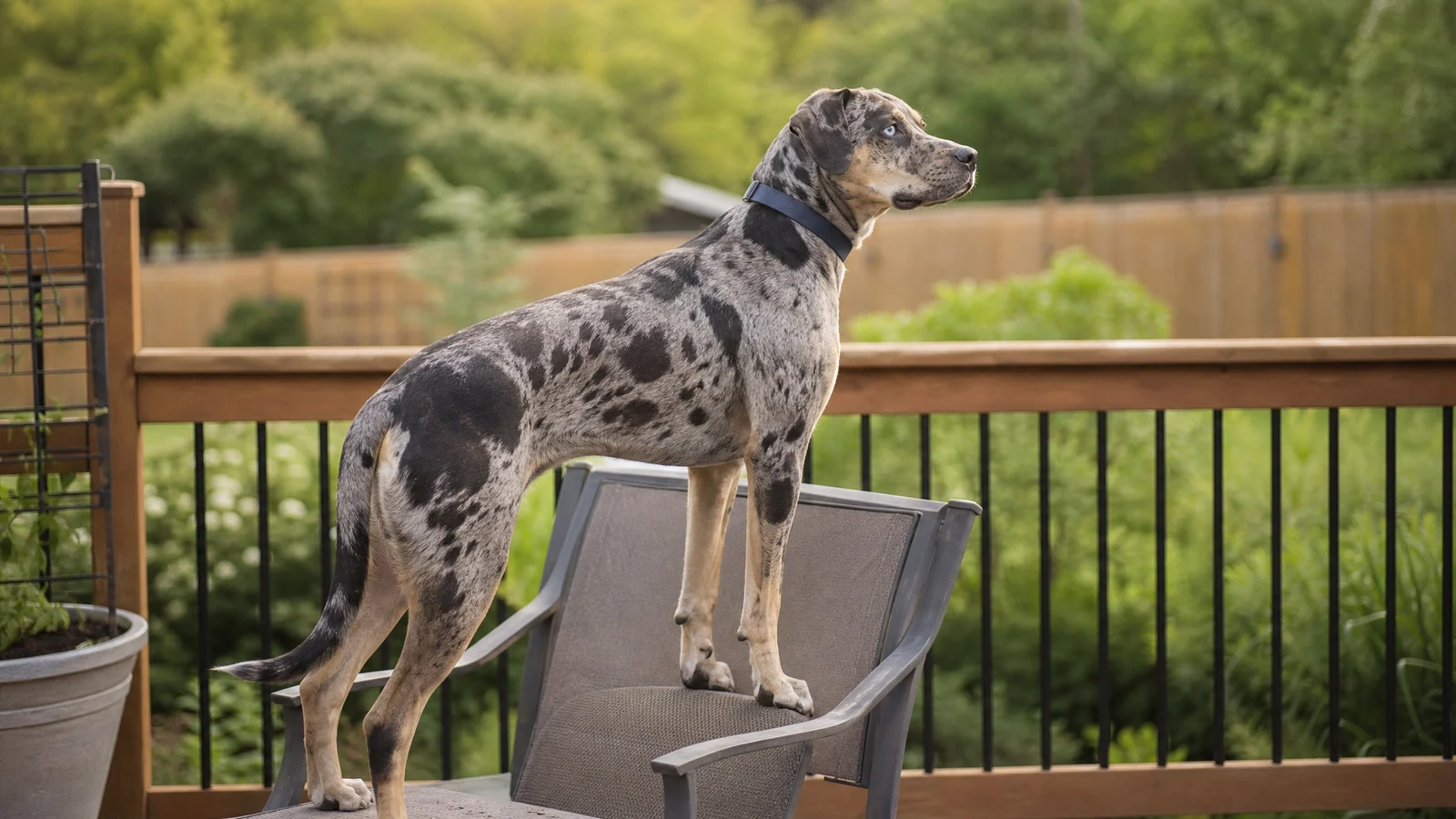
You glance out the window and the dog is standing on top of the patio chair, or hooked over the fence by their front paws, looking thoroughly pleased with themselves. For this breed, that is ordinary.
The breed standard describes a medium to medium-large, well-muscled dog with an impression of agility and endurance. An athlete like that uses their body to solve boredom and to see farther, and every climb that pays off makes the next one likelier. Left unmanaged, that ends in escapes and injuries. Managed well, you get a calm companion who fits smoothly into daily life.
Below, you'll find the plan in the order an owner uses it: inspect the fence before yard access, supervise the first sessions, teach off and place, respond to a fence attempt, maintain the yard and reinforce four paws down.
Catahoula Leopard Dog Fence Prep
Backyard play, preferably fenced, is among this breed's recognized exercise options, and the history explains why. Catahoulas have worked as stock dogs, bay dogs and tree dogs, gathered wild cattle on huge ranches in Venezuela and raced in sled teams in Canada. A dog with that background treats a fence as a question, not an answer. Build the answer before the dog arrives.
Height and Gaps
If your fence was built for a dog who naps through the afternoon, assume it will not hold a Catahoula. Err taller than seems reasonable, especially on sides facing a street, a neighbor's dog or a good view. Then look low: gaps along the bottom edge, at corners and around gate hinges, and any spot where the ground slopes away, all shorten the climb or open a squeeze.
Check the face of the fence too. Horizontal rails and open mesh work like ladder rungs, so if paws can hook into them, add a solid face or an inside barrier. If the dog can reach the top from a standing jump, the fence is too low for this dog, whatever the fence's listed height.
Climbable Objects
Walk the line on both sides and ask what a paw could use as a step or a launch pad. The usual culprits:
- Compost bins, stacked firewood, grills, planters and chairs pushed up against the boards.
- Low shed roofs, raised beds and decks that sit close to the fence.
- Trash cans, woodpiles or parked cars on the neighbor's side that give a dog a landing spot once they are over.
- Tree limbs that hang across the line.
Test the gates last. A latch the dog can nudge open, or a gate you might leave ajar, defeats every other fix, so choose one that closes on its own and can be checked at a glance.
Behavior Problems During Supervised Yard Time
In the first weeks you do not yet know how this dog treats a fence, a gate or a patio chair, so the plan is to prevent rehearsal while you pay for the alternative. The AVSAB position statement concludes that the evidence favors only reward-based methods, whether you are teaching manners or treating behavior problems. Management stops the practice, and treats teach what to do instead.
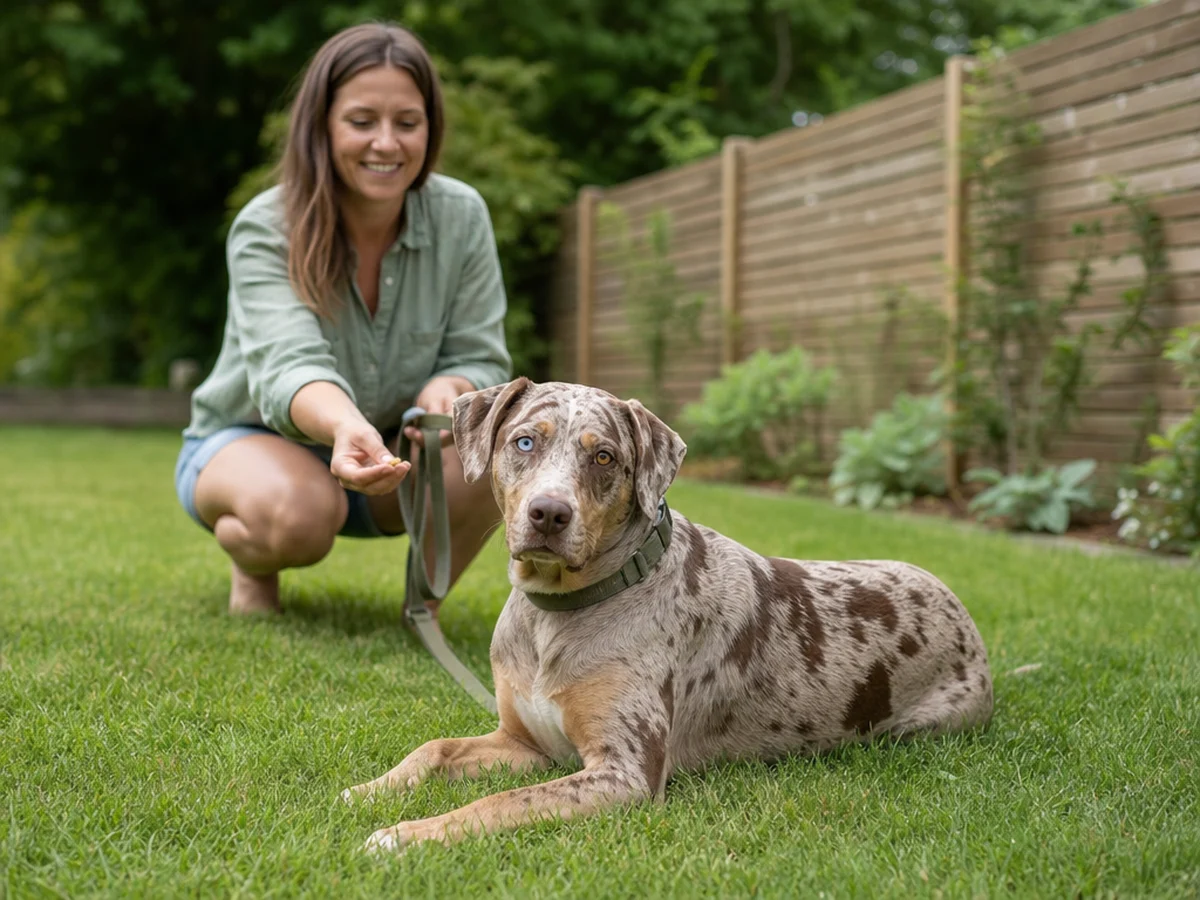
Leashed Yard Time
Even in a fenced yard, clip on a leash for the first visits. Walk the perimeter together and watch where the dog's nose and eyes go. If they linger at one corner, stare into a neighbor's yard or rear up against the boards, you have found the weak spot before it cost you a dog.
Hand over a treat whenever the dog turns from the fence toward you, and end the visit before they invent a game. Move to unleashed play only while you are outside watching, and only after the dog has stopped testing the boundary.
Managing the House
Decide before arrival which tables, counters and sofas are open to the dog, and keep food off every surface. A counter that pays off with food once is worth rechecking every time you leave the room, and a dog with this much stamina will keep checking. Use baby gates or a closed door whenever you cannot watch, so no climb goes unsupervised.
First Rewards for the Floor
Keep treats in a pocket and pay for four paws down whenever you catch it unprompted: the dog standing beside the counter without leaping, staying grounded as a visitor walks in, settling on a rug. Paying only for cues you gave teaches a dog to wait for instructions. Paying for choices teaches them to make the right one.
Give the body a legal outlet as well. Walks several times a day suit this breed better than one long outing, and a regular vet visit early on confirms your dog is sound for athletic play.
Off and Place Solve Behavior Problems
Two cues cover most climbing trouble. Off means come down from this, and place means go to that spot and stay. Together they give a high-drive dog a clear job in place of a vague hope that they will stop climbing. We have trained Catahoulas for a long time, and the cue that sticks is the one that comes with a job. End each session early, while the dog still wants more, because a sharp dog bored by repetition starts improvising.
Building the Off Cue
Begin on a surface that is low and dull, so stepping down is easy to get right. Set up the first repetition before you cue it:
- Let the dog step onto something low, such as a sturdy step or a cushion on the floor.
- Hold a treat at nose level and lower it to the floor so the dog follows it down.
- Say your marker word as the last paw lands, then pay on the floor.
- After a good run of repeats, say "off" just before you lower the treat, then fade the lure.
- Raise the difficulty one surface at a time: a low bench, then a chair, then the sofa.
Building the Place Cue
Use a mat or low bed. Reward a look toward it, then one paw on it, then four paws, then lying down. This is the approach Battersea describes: decide on the final behavior and break it into small rewarded steps.
Introduce the word "place" only once the dog heads to the mat without being asked. Then build duration in stages: pay for staying put, then for staying as you step away, then for staying through a knock at the door. Place is also your answer to what the dog should be doing while you cook.
When the Cue Falls Apart
If the dog ignores "off" on the sofa, the cue is too hard for the setting, and the fix is training, not repetition. Drop back to a low surface and climb the ladder again. If place works in the living room but not on the patio, move the mat one room at a time and pay richly at each new spot.
If the dog takes the treat and climbs right back up, pay faster and in smaller pieces. For dogs who edit your cues, our piece on independent Catahoula cues explains how to make one worth following.
Catahoula Leopard Dog Fence Attempts
Adolescence is when climbing, jumping and fence hopping tend to peak, because the body is bigger and stronger while impulse control lags. Start every fix with a diagnosis. If the dog climbs after food, manage the surface. If they climb for the view, offer a legal perch. If they leave after something on the far side, fix the fence and the trigger. If it happens whenever you are busy, the dog needs more exercise or work.
This is general information, not medical advice. Check with your veterinarian before any medicine or diet change.
The principle underneath comes from the RSPCA, which explains that reward-based training succeeds because a behavior that pays off, whether with food, a toy or praise, gets repeated.
Jumping on People
A dog who jumps on arrivals is usually being paid with attention. Turn aside calmly, wait, and pay the moment the paws touch down. Best Friends recommends rewarding polite greetings with food every time at first. Praise can replace food later, but keep treats showing up regularly enough that the habit holds.
If the jumping turns into grabbing sleeves or herding people, read about nipping and herding in Catahoulas, because the fix adds a job and a toy to carry. That broader plan keeps moving mouths away from people.
Furniture, Counters and Trees
When the draw is food, clear the surface and send the dog to place while you cook. When the draw is height, give them a legal perch such as a sturdy platform and pay for using it.
The same logic covers trees and decks. The breed has been used as a tree dog, so a Catahoula with paws on a trunk is following their line of work. Pay for four paws on the ground, and block access to low branches and railings you cannot make safe.
Fence Hopping
A dog who patrols the line is scouting, and every test that works strengthens the habit. If they hit the same corner repeatedly, look for a foothold or gap and fix it. If they react to a dog next door, our article on Catahoula reactivity toward dogs covers the line itself. Stand near the fence with treats and pay for turning toward you, then for coming away when called.
Exercise changes the odds. Swimming, hiking and retrieving balls or flying discs burn energy, and the breed is an excellent swimmer. Agility, obedience and rally give a high-endurance dog real work. Supervise all yard time until months have passed without a test.
Catahoula Leopard Dog Yard Habits
A practiced climber has the body, stamina and memory to check the same weak point again. If a fence ever let them out, even once, expect another inspection. Fence manners last when three things stay in place: a daily outlet, occasional refreshers on off and place, and a yard checked on a schedule instead of after an escape.
Yard Checks
Walk the line about once a month and after storms. Yards change: plants grow into ladders, soil erodes under the boards, a new chair or bin drifts toward the fence. Check latches and gaps each time, and move anything new. Reward the dog for being near the line without being on it, even when months have passed without an attempt.
Exercise and Routine
Give the work before the yard, not instead of it. A dog who has already run, swum or trained is less likely to spend yard time prospecting the fence. Rotate activities so the routine stays interesting, and practice place in new spots now and then so the cue stays reliable.
Keep up regular vet visits, and mention any change in how the dog jumps, lands or hesitates at furniture, since a sudden change in athletic behavior can have a physical cause.
Gate Manners
Gates are where dogs learn that fences can be beaten. Teach the dog to sit or go to the mat before any gate opens, and pay the wait. Release them with a word once the gate is secure. Ask visitors to ignore the dog until four paws are down. If the dog is also vocal or protective at the gate, our article on watchful, territorial Catahoulas goes further.
Behavior Problems Improve With Four Paws Down
Paying for the floor beats fighting the climb. Chasing a Catahoula off a surface teaches nothing about where to be, and an athlete with endurance will return to it. Use the event in front of you to choose the cue, the reward location and the setup change.
| What happens | Your cue or action | Where the reward lands | Setup change |
|---|---|---|---|
| The dog approaches the fence | Call away before paws rise | On the mat or beside you | Block the busiest sight line |
| Front paws land on a surface | Give the off cue once | On the floor after all four paws land | Remove the launch point |
| The gate is about to open | Send the dog to place and wait | At the mat, then after release | Attach the leash before opening |
| A visitor enters | Use place before greeting | Away from the visitor's body | Add distance until four paws stay down |
| The dog returns to a known weak spot | End unsupervised access | For checking in away from the fence | Repair that section before the next session |
A dog who earns food and praise for four paws down, and has a mat to run to, learns a habit that does not depend on treats being visible. Rotate the reward between food, access to sniff and release back to the yard so the floor keeps paying in ordinary life.
A Catahoula who climbs, jumps and tests fences is spending the agility and stamina this breed was built around. Fix the physical weak point, supply an outlet and give the dog a clear job each time the trigger appears. Fence manners become reliable when the safe response is easier and more rewarding than the climb.
 BehaviorWhy Does My Catahoula Nip and Herd People?
 BehaviorSmart, Independent Catahoula Leopard Dogs and Cues Worth Following
 Training basicsTeaching Hand Signals to a Deaf Merle Catahoula Leopard Dog