 Catahoula
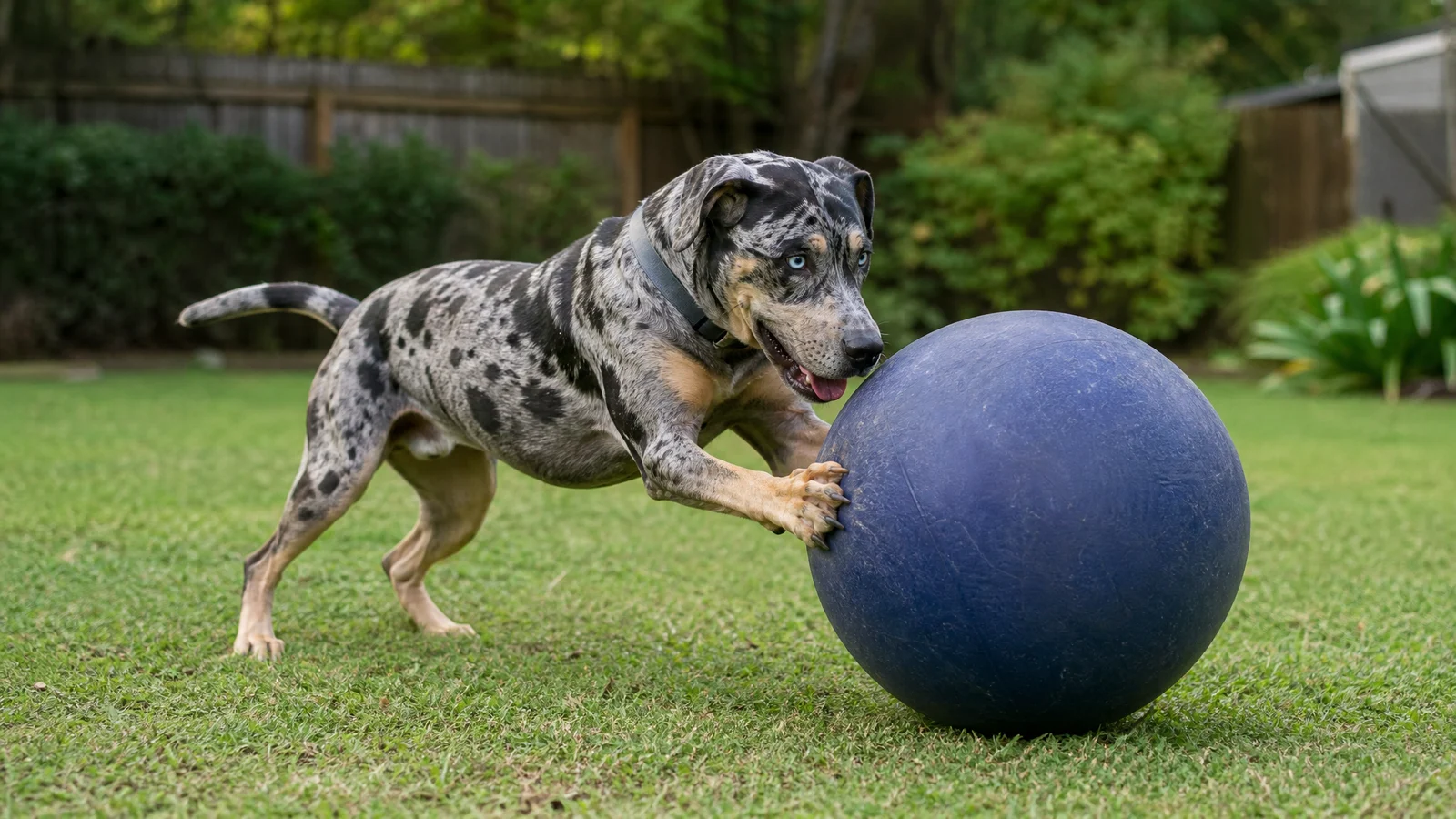
Yes, nipping and herding people is normal for a Catahoula, because stock-dog instinct drives it. The AKC has given the breed the Herding Group designation, and a dog bred to push wild cattle and hogs will happily try the same job on your ankles, your kids and your guests.
Handled badly, the habit turns into bruised shins, a frazzled household and a dog who hears "no" all day. With good guidance, that same drive becomes a focused partner who checks in with you before chasing anything that moves.
This guide covers training for the herding Catahoula, from the Louisiana stock roots behind the nip to the cues, outlets and routines that turn it into useful work. We specialize in Catahoula behavior and training, so every step here is built around what these dogs are wired to do.
Catahoula Leopard Dog Herding Signals
Nipping is the mouth part of herding. Stock dogs move animals with eye, body and mouth, and a Catahoula with no livestock turns to the next best thing, which is people and household pets. The nip tends to land where it would on a steer: the heel, the lower leg, a trailing sleeve or a swinging hand.
Certain things switch the drive on. Fast movement is a common trigger, since moving stock is what these dogs were built to work, so running kids, a jogger beside the yard or a bike rolling past can all start a chase. Leash reactivity is common in dogs generally, and dogs may pull or lunge at bikes and cars, but in a herding breed the lunge may have a herding element.
Excitement and boredom feed the habit too. A dog with no real job who suddenly sees a crowd of people on the move at dinnertime has plenty of drive and nowhere to put it. Sudden stops, tight turns and a family drifting in different directions can all pull them in to organize the scramble.
Many people assume a tired dog is a gentle dog. Exercise helps, but herding is a drive more than an energy surplus, so a worn-out Catahoula can still nip the moment the kids sprint down the hall. Pair exercise with a clear replacement behavior, and keep up regular vet visits so any sudden change in mouthiness gets checked for pain or illness.
How Herding Appears Indoors
Indoors, herding looks different from the pasture, and knowing the signs saves you from guessing. A Catahoula herding the family may circle, shadow one person from room to room, block a doorway, or freeze with a hard stare before a burst of motion. Nips are usually quick, low and aimed at whoever is moving fastest.
Kids are the usual target because their games are all sprints, shrieks and sudden swerves. Visitors who stride in with big energy or wave their arms can set off the same chase. Teach children to stop and stand still with their hands tucked in, let an adult step in, and put a baby gate between dog and kids during the wildest games.
Herding, play and fear can all involve mouths, so compare the details in this table. The trigger and body language matter more than the mouth alone.
| What you see | Likely meaning | Best response |
|---|---|---|
| Stalking, staring and low nips at the heels of the fastest mover | Herding | Calm the movement, cue a replacement behavior and reward it |
| Loose, bouncy body, play bows and pauses between bursts | Play | Join in with a toy and pause the game if teeth touch skin |
| Stiff or cowering body, lip licking, backing away, a snap when approached | Fear or discomfort | Give space, end the interaction and ask your vet or a qualified reward-based trainer for help |
Watch the pattern, not just the mouth. Herding is task-focused and repeats around movement, play swaps roles and relaxes, and fear shows up when the dog feels cornered. If you cannot tell which one you are seeing, treat it as the more serious option and have a professional watch your dog in action.
Daily Herding Training
A drive without an outlet finds its own, so give herding energy legitimate work. The goal is to train skills that use the same wiring: speed, focus on movement and the urge to control space. Variety matters, because a working breed gets bored with the same walk every day.
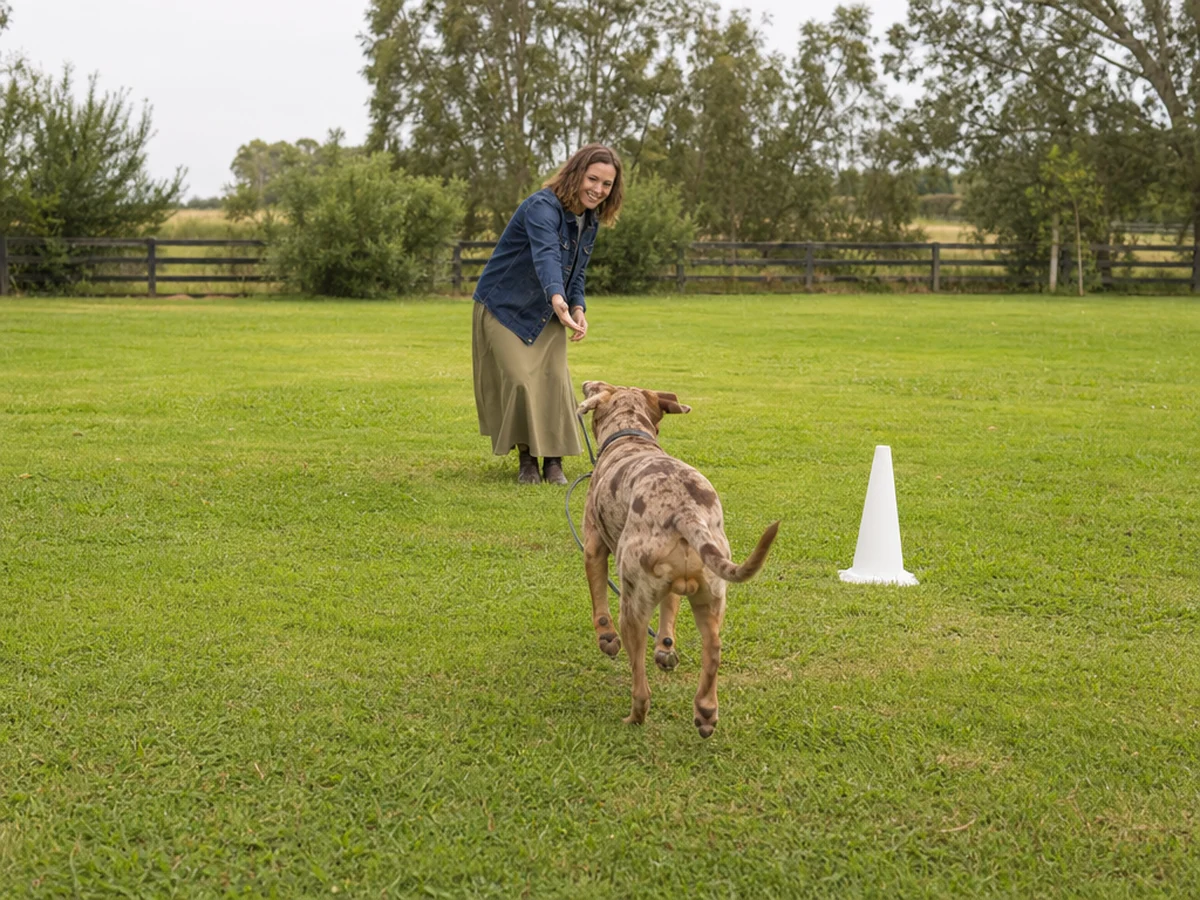
Physical Outlets
Plan daily movement in layers. Play in a fenced yard and walks several times a day are the baseline, and the breed is an excellent swimmer, so water play and hiking are natural fits. Fetch with a twist, such as a ball rolled down a hallway or a flying disc sent across open ground, burns energy and teaches a clear start and stop.
Dog sports add structure. Agility, obedience and rally all give a Catahoula a task and a reason to watch you. If a qualified instructor with livestock is within reach, a stock lesson lets your dog do what they were built for under skilled guidance.
Mental Outlets
Mental work tires a stock dog in a way a run cannot. Try these ideas and rotate them through the week: Variety keeps the work useful.
- Scatter treats in the grass and let your Catahoula use their nose, then build up to short tracking trails that end at a reward.
- Teach a go-around cue, sending the dog in a loop around a cone or chair, which echoes the way they would work stock.
- Hide toys or treats around the house and cue a search, rewarding the find with praise and play.
- Serve meals in puzzle feeders and snuffle mats so food becomes a job.
Short games scattered through the day beat one long session. Sharp, rewarded bursts keep your dog thinking about you instead of the next sprinting child.
Catahoula Leopard Dog Training Roots
To understand the nip, start with the dog's job description. The breed took shape in Louisiana, where native dogs were crossed with the bloodhounds and mastiffs brought by Spanish explorers, then crossed again once the French arrived with their own hounds. The result was a well-muscled, powerful dog with agility and endurance.
Early settlers around Catahoula Lake used these crossbred dogs to pen and catch wild hogs and cows, and the practice grew into a planned way of managing the wild herds. That is close, physical, in-your-face work. A dog who thrived at it had to be bold, quick on their feet and comfortable working shoulder to shoulder with big, unwilling animals.
The reputation traveled. The breed is described as a multi-purpose working dog, well-muscled and powerful, with agility and endurance, used as a stock dog, bay dog, tree dog and loyal companion. Catahoulas have gathered wild Brahman cattle on huge ranches in Venezuela and have even competed in sled-dog racing in Canada.
The Herding Group label puts that heritage on paper, but the practical point is simpler. Your Catahoula arrives with an urge to gather, push and steer moving things, and a living room full of hurrying people is the closest thing to a herd they have.
Three-Part Nipping Training
Everything here rests on one idea that suits a thinking stock dog well: when you pay for a behavior you want, you will see that behavior again. This principle drives Reward-based training. In a 2020 study, companion dogs trained with rewards also displayed fewer stress behaviors afterward. A relaxed Catahoula is simply easier to teach.
Interrupting the Nip
Interrupt without drama. The moment teeth meet skin, stop moving, say a calm, even word such as oops, and step out of reach or put a gate between you for a brief time-out. Return when the dog has settled and ask for something easy you can reward.
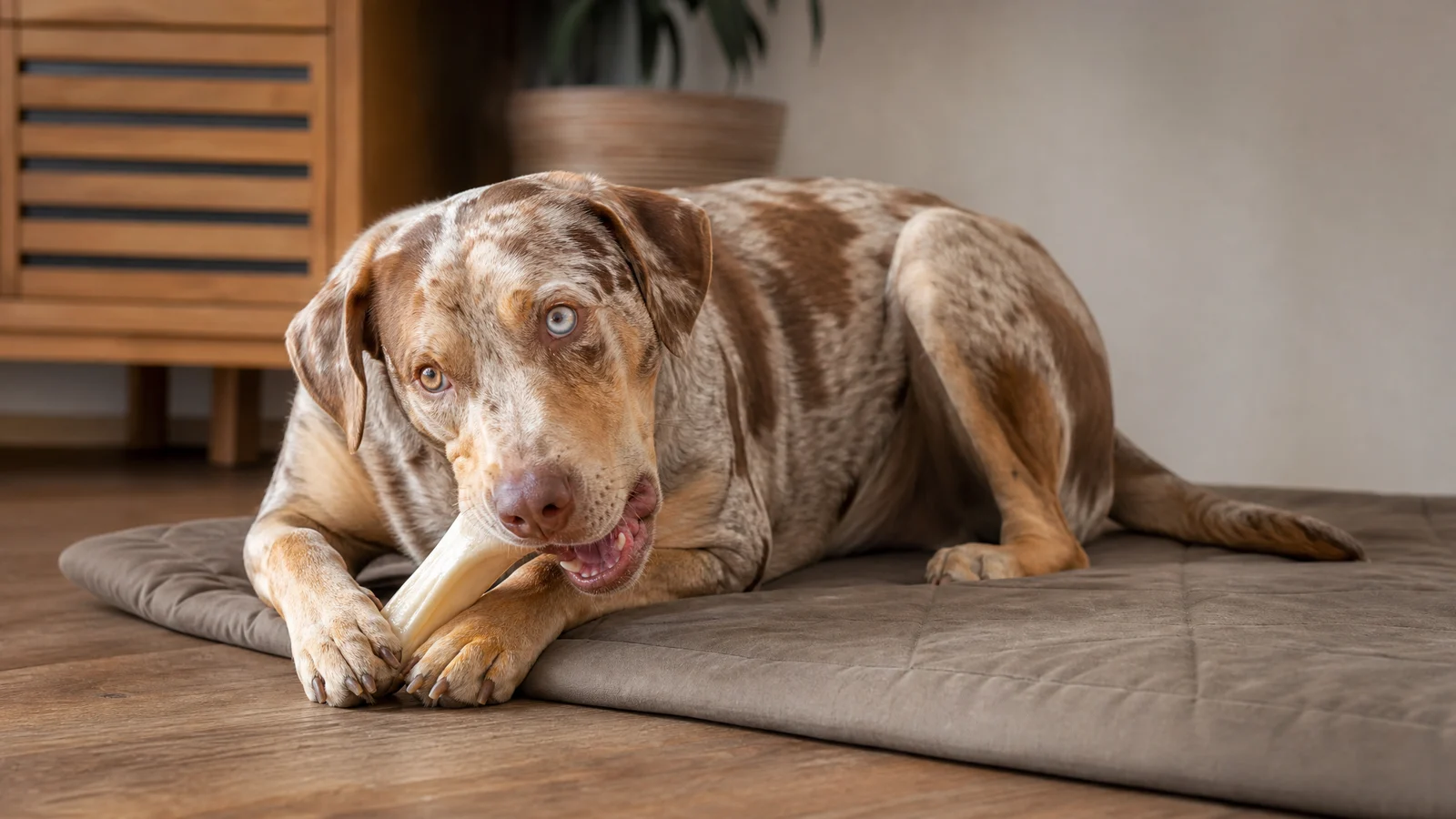
Then manage the trigger so your dog is not set up to fail. Keep soft tug toys in every room so you can offer something for the mouth, shut the gate during rowdy kid time, and give a chew on a mat before the busiest hour of the day.
The Cue to Teach Instead
Choose one cue that gives the herding brain a job, such as settling on a mat. These nip-prevention steps build it from the ground up: Keep the order consistent.
- Toss a treat onto the mat and reward each time your Catahoula steps onto it on their own.
- Use your marker word at the exact moment all four paws land on the mat, then hand over a treat right away.
- Reward lying down and staying, handing treats low and calmly so the dog stays put.
- Add a cue word once the behavior is reliable, saying it just before they head to the mat.
- Practice while family members walk past slowly, then faster, rewarding every success.
A hand target is a handy second option. Ask for a nose touch to your palm as movement begins, and a chase becomes a follow-me game you control.
Rewarding Calm
Catch the quiet moments, because that is where lasting change lives. Drop a treat when your Catahoula lies down while kids play, or when they watch movement without joining it. Reward early, small and often, then stretch the gaps between treats as calm gets easier.
End training early, while your Catahoula still wants more. A dog who leaves wanting more is likelier to offer the settle on their own, and soft praise or a slow stroke can join the treats as rewards over time.
Training a Catahoula Leopard Dog When Nipping Persists
Herding is channeled, not erased. Your Catahoula will always notice movement, and that sharp eye is part of what makes them such a quick, athletic partner. Training gives the instinct a better target, and these questions come up next in most households.
- Will they outgrow herding people? The instinct stays, but nipping fades when a replacement behavior is rewarded repeatedly. For the wider picture, see common Catahoula behavior problems.
- Why do they ignore a cue when excited? A busy herding brain can tune out a cue it has not practiced near movement. Our guide to independent Catahoula cues shows how to make yours worth following.
- What about chasing passersby along the fence? Strong chase drive may send a dog over a boundary. Read about fence manners for athletic dogs before it becomes a habit.
Start small this week. Pick one cue, one quiet spot and one reward your dog loves, and use them just before the household gets busy. Give the herding drive a job and pay for calm, so your Catahoula works with purpose alongside you instead of around your ankles.
 BehaviorSmart, Independent Catahoula Leopard Dogs and Cues Worth Following
 Training basicsTeaching Hand Signals to a Deaf Merle Catahoula Leopard Dog
 BehaviorTrading Up With a Catahoula Leopard Dog Who Guards Toys and Bones