 Catahoula
11 Catahoula training topics
Every common Catahoula challenge, with first steps and guides to read.
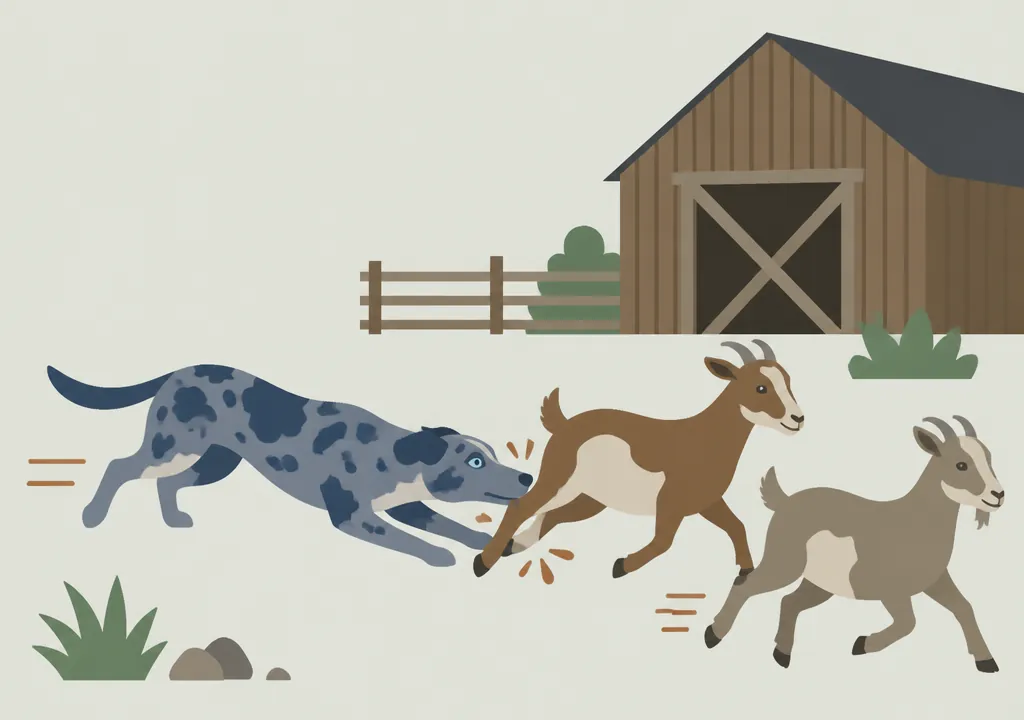
Gripping and herding nips
Turn the urge to grip into calm games.
Nipping and herding people is normal for a Catahoula, because stock-dog instinct drives it. The AKC placed the breed in the Herding Group, and a dog bred to push cattle and hogs will try ankles and guests.
The full guide traces the nipping to its trigger and replaces it with calm games.
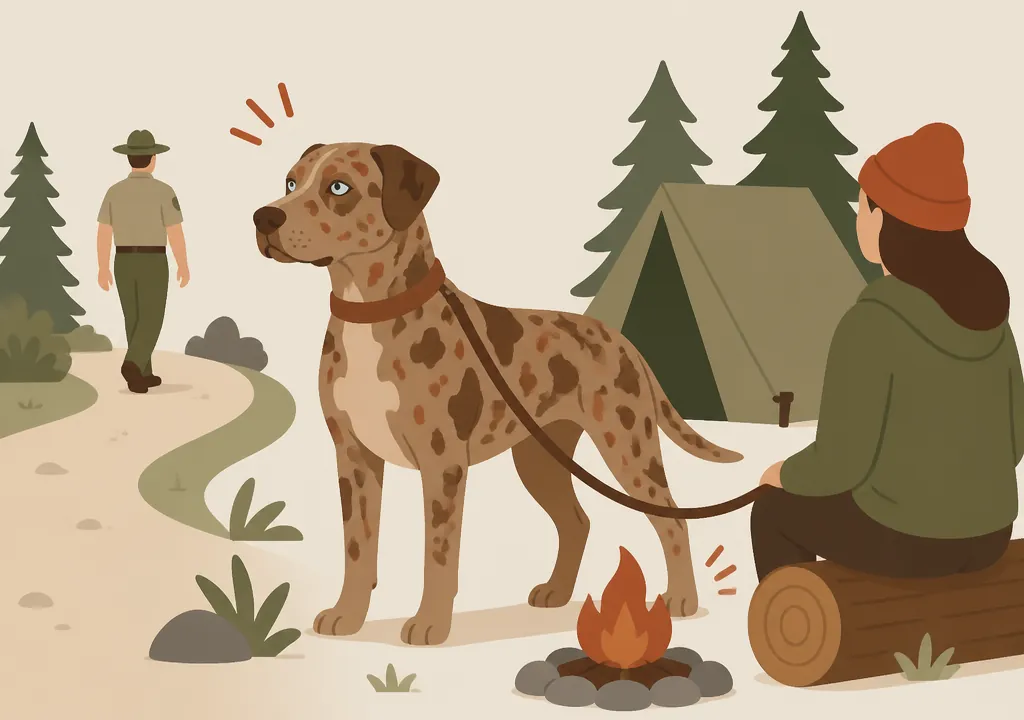
Protective of its people
Calm, well spaced hellos at the door.
Barking and stiffening at visitors is normal for a breed rated 4 of 5 as a watchdog, and more strangers often make it louder. The goal is an alert dog who relaxes once the situation is handled.
The full guide splits guarding into window, door, yard and car versions with greeting routines.
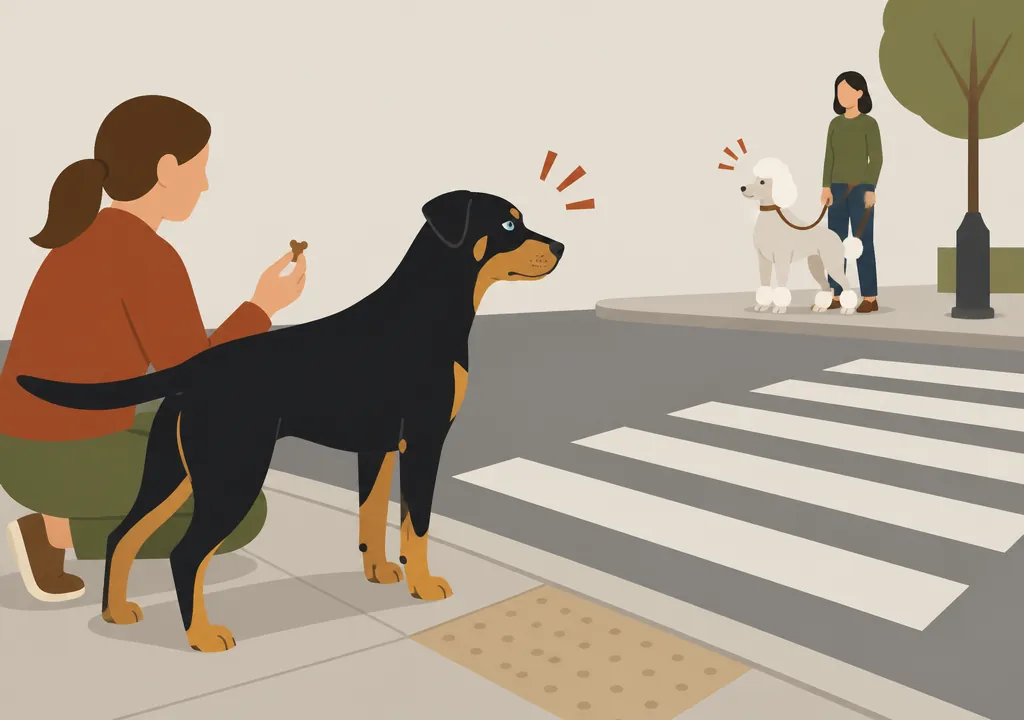
Reactivity toward dogs
Calm distance when another dog appears.
Published ratings put the Catahoula at 3 of 5 with young children, other dogs and strangers, so supervision around kids and dogs matters. Handled well, watchfulness becomes calm greetings and a few good dog friends.
The full guide follows one puppy from the first week to age two and reads guarding early.
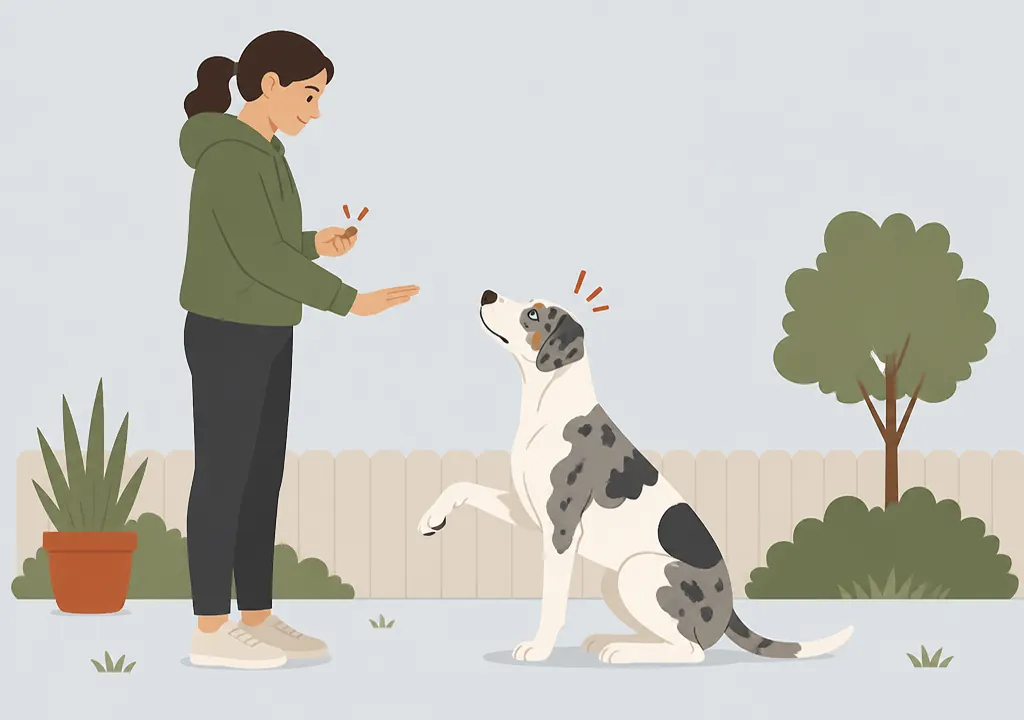
Thinking for itself
Make your cues worth listening to.
Being more firm mostly adds noise for a Catahoula who weighs whether a cue is worth the effort, and every extra ask teaches them the first one was optional. The kitchen sit vanishes when a squirrel appears.
The full guide shows how to make each cue worth answering once, anywhere.
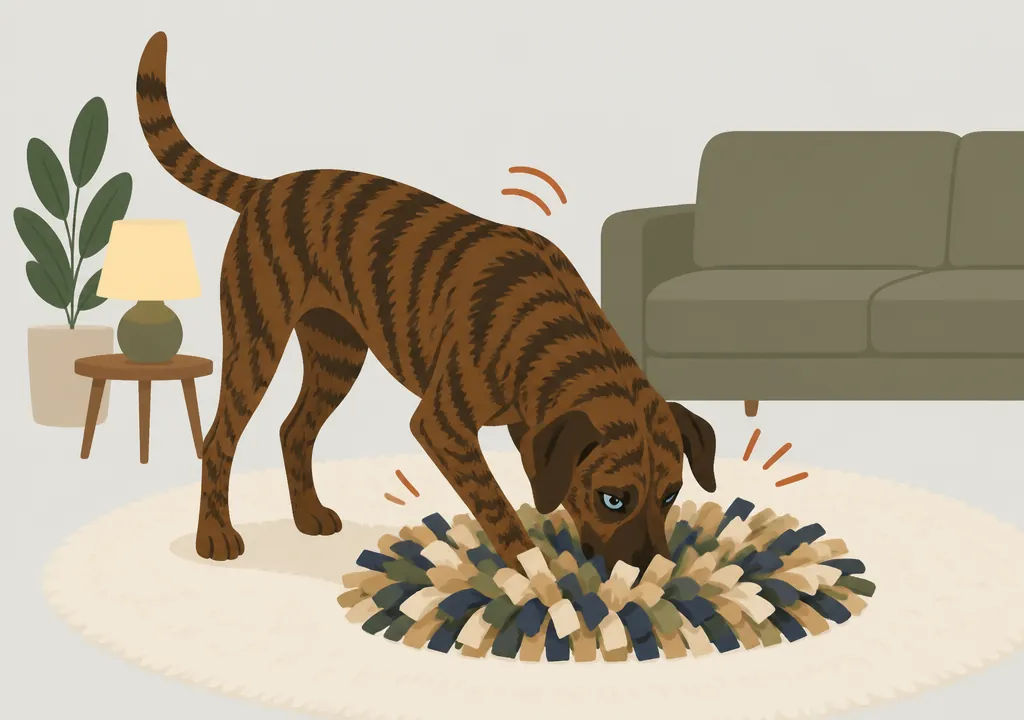
Restless energy indoors
Real work first, then rest as a skill.
Trying to empty a Catahoula's tank through speed alone produces a fitter dog who still cannot settle. No universal daily quota fits every Catahoula, and mental work complements movement rather than replacing it.
The full guide builds a mixed toolkit from walks, play, brain games and rest.
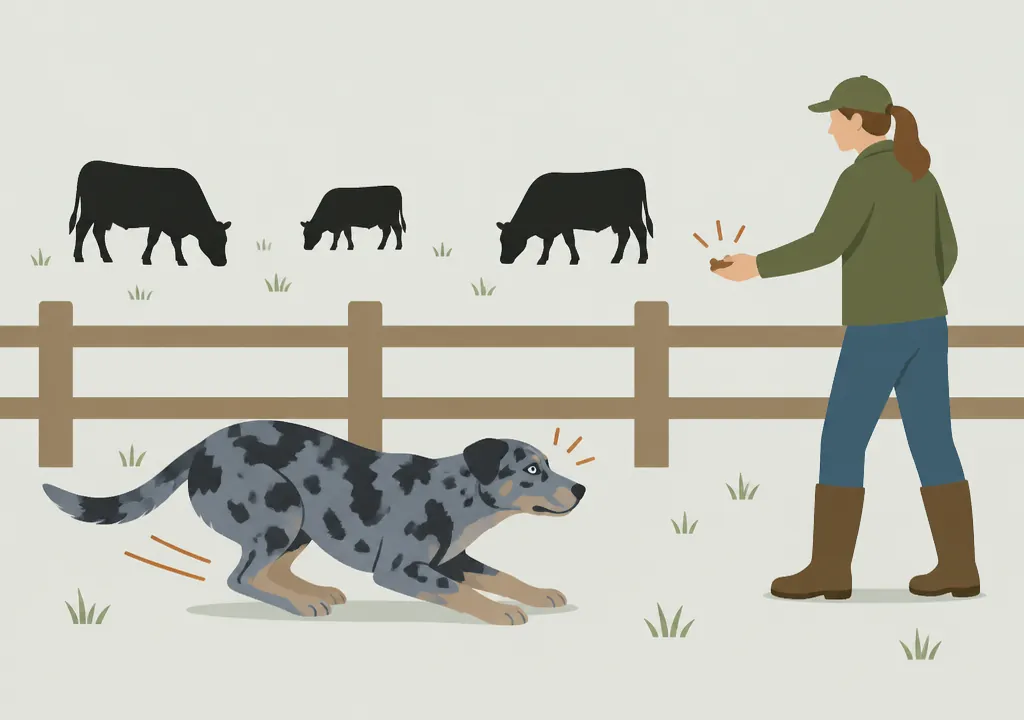
Chasing cats and cattle
Calm manners around animals that run.
Calm manners around animals that run start on the leash, where an alert Catahoula locks on long before the pull. Loose-leash walking begins when a tight leash stops producing forward travel.
The full guide is about leash work rather than cats and cattle, covering route choice, fixation and lunging.
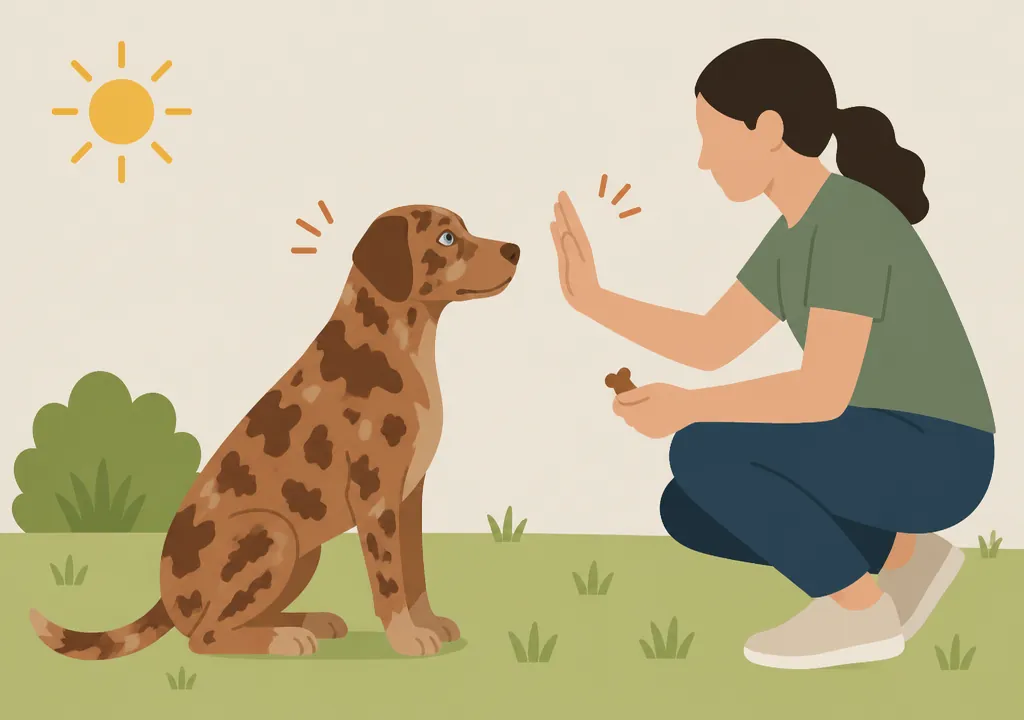
Hand signals for a deaf merle
Train with hand signals and a gentle touch.
Ordinary training leans on your voice, with a marker, a name for attention and a recall call. For a deaf merle Catahoula, all three become visual or touch-based while rewards and patience stay the same.
The full guide builds that visual language for a dog who cannot hear a knock.
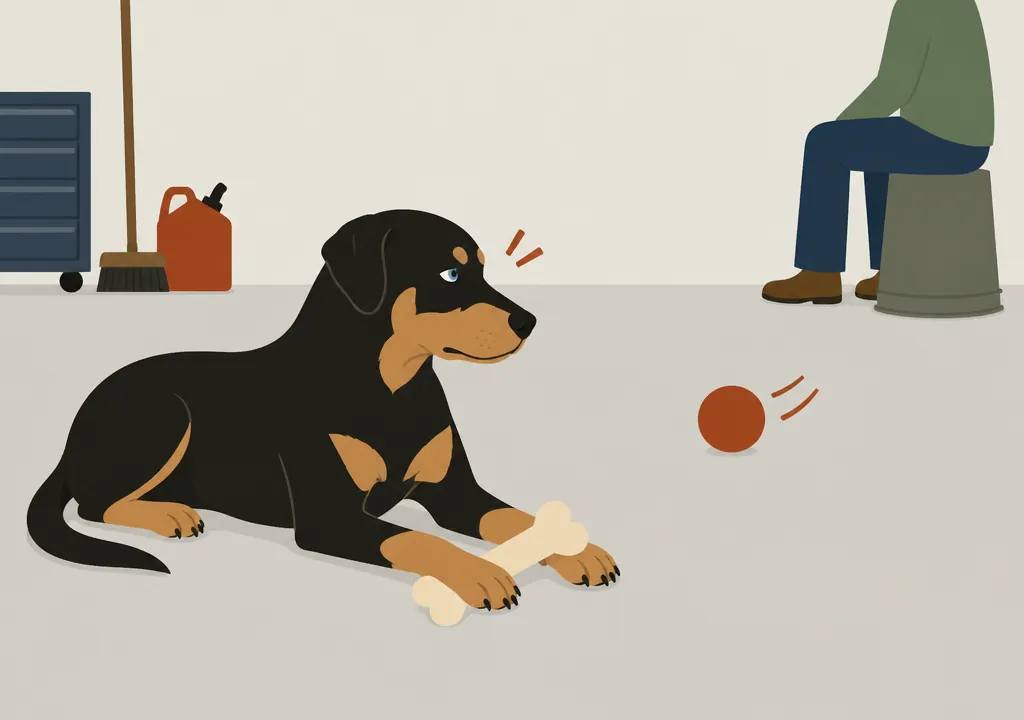
Guarding toys and bones
Happy trades instead of a stare.
Calm trades teach a Catahoula to give up toys and bones, and taking the item away does not. Catahoulas rate 5 of 5 on energy and 4 of 5 on mental stimulation, so a chew is earned work.
The full guide turns your approach into a cue that good things follow.
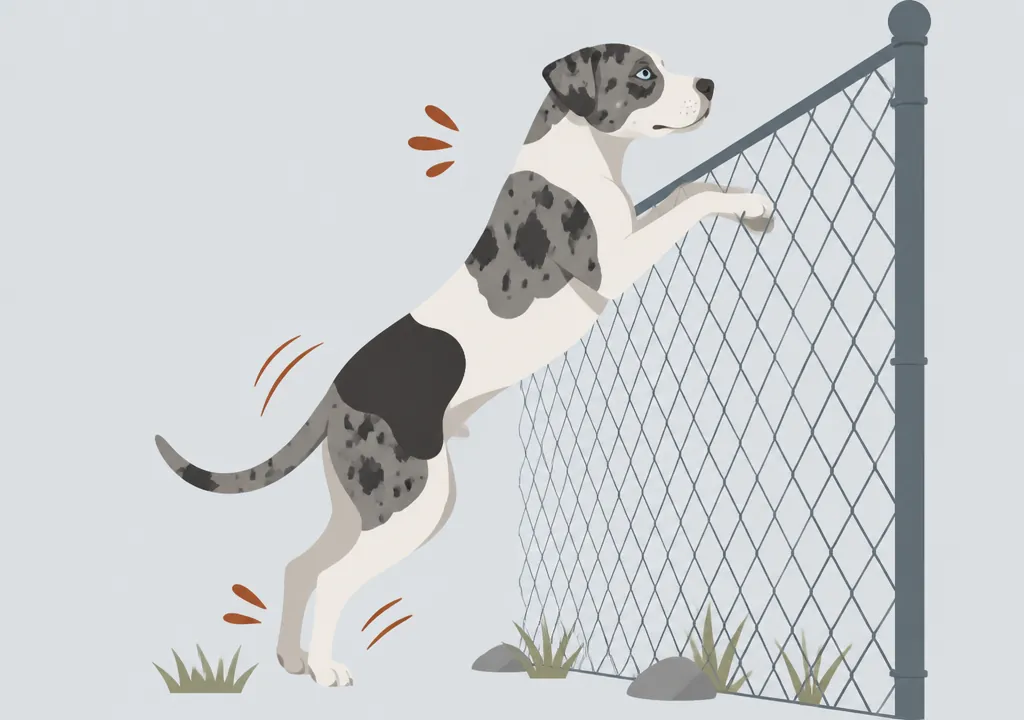
Climbing fences
Secure yards and better outlets.
Standing on the patio chair or hooked over the fence is ordinary for this breed. The standard describes a well-muscled, medium to medium-large dog with an impression of agility and endurance, and every successful climb makes the next likelier.
The full guide covers securing the yard and better outlets before an escape.
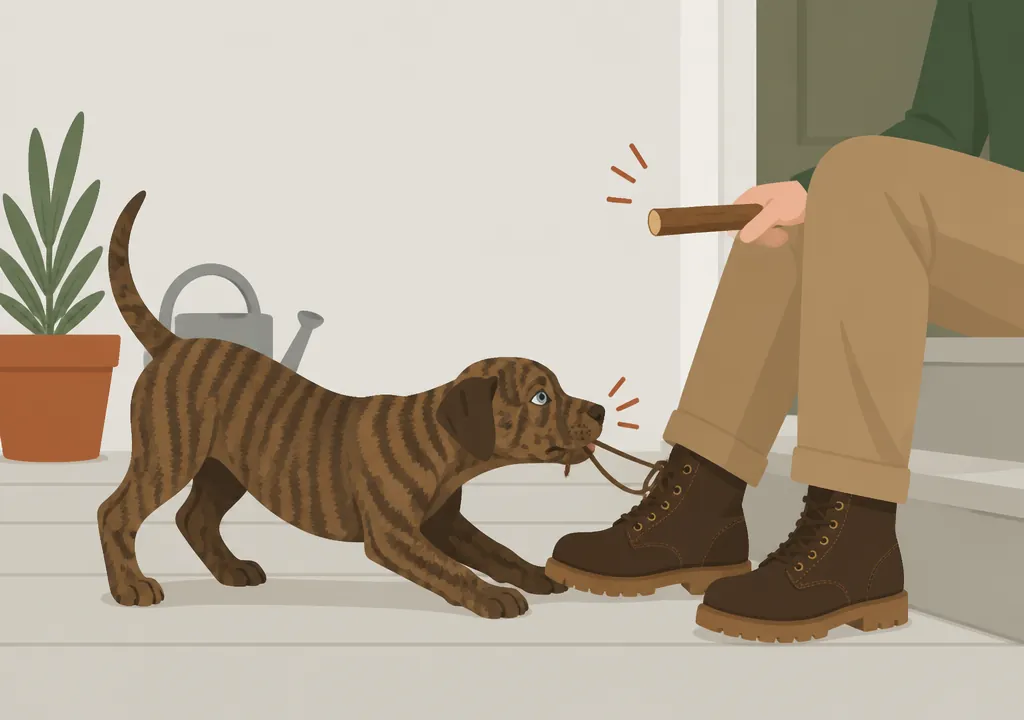
Puppy biting
Soft mouths for a strong-minded puppy.
Puppy biting and potty accidents share a root in a quick, independent learner working out which routines pay. Potty training a Catahoula needs no breed-specific clock, only one exit, one cue and a reward outdoors, repeated consistently.
The full guide is the potty plan rather than a biting plan.
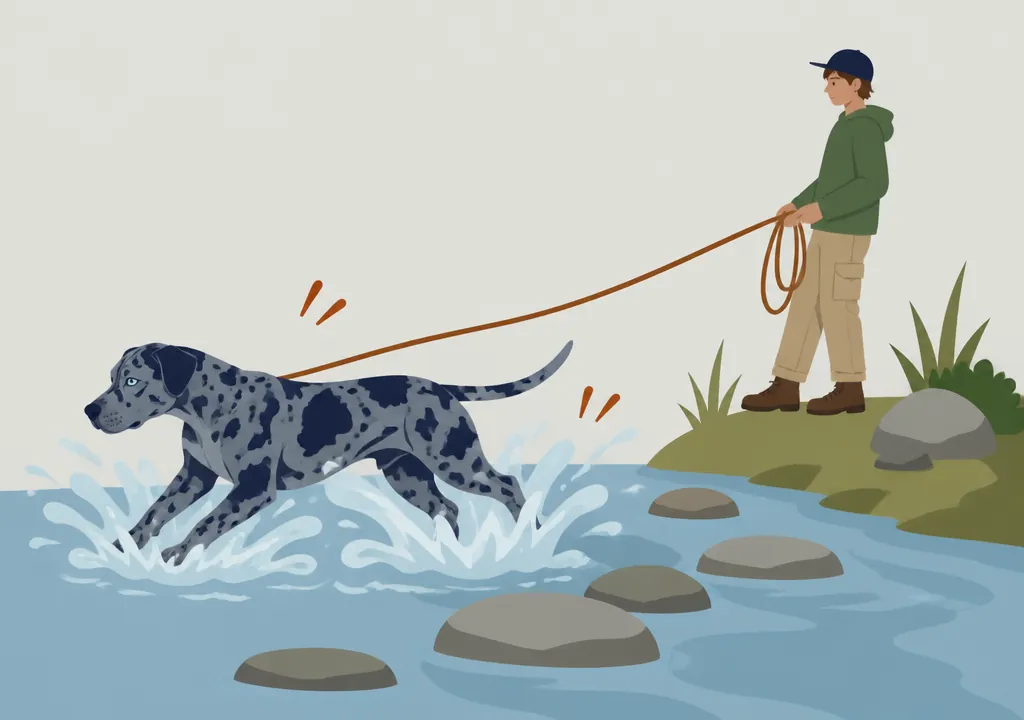
The teenage months
Steady rules while independence grows.
Catahoulas can work like adults at 10 months but are not fully mature until 2 years, and the AKC advises keeping all jobs fun to avoid early burnout. A puppy drilled too hard goes sour.
The full guide lays out the timeline from 8 weeks to 2 years and keeps training fresh.