 Catahoula
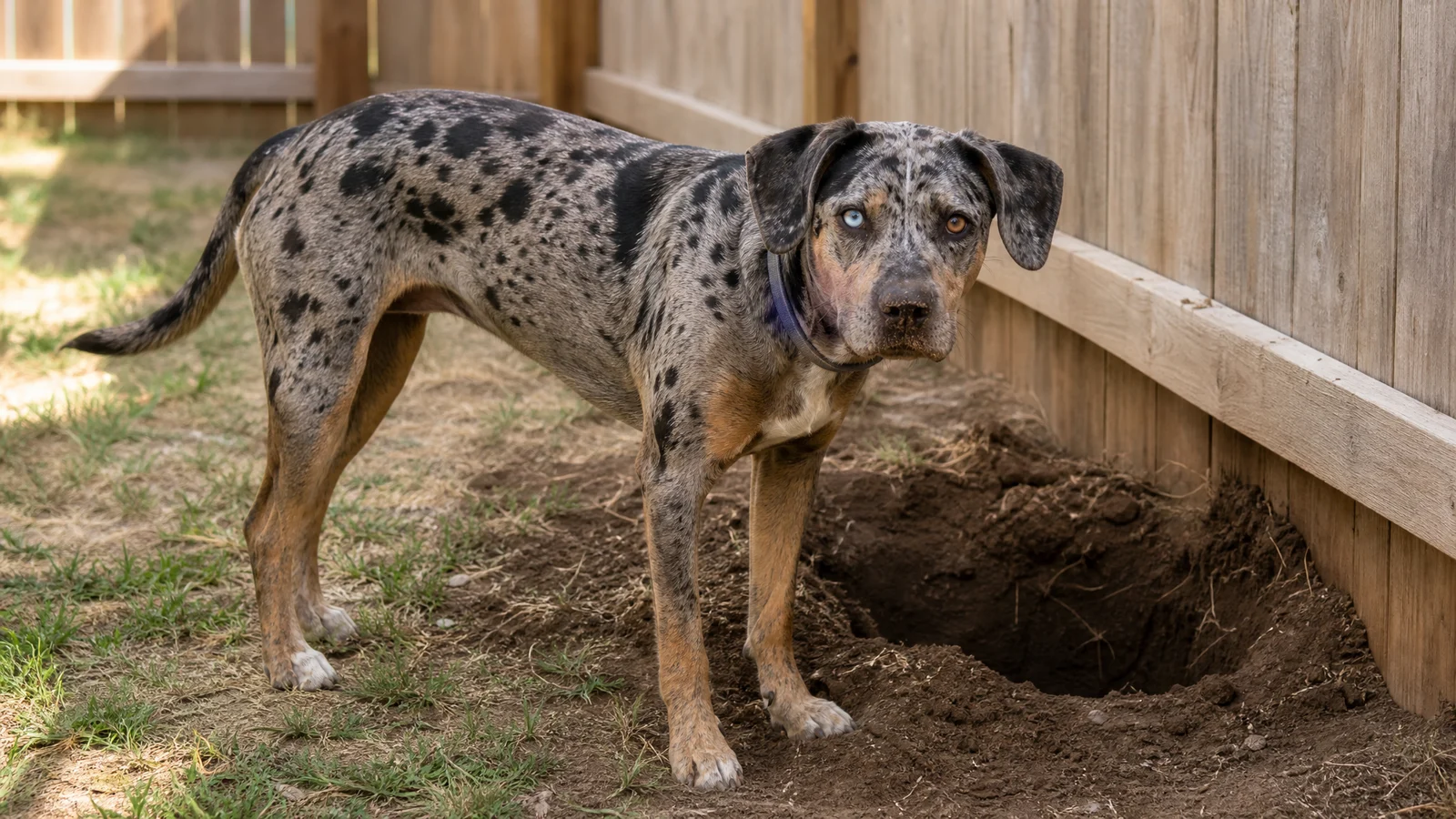
A Catahoula digs beside the fence, chews a chair when the room goes quiet and erupts at the doorbell. Those actions can look like one large attitude problem. They are three behaviors with different triggers and payoffs, so one generic response will not teach the dog what to do instead.
The useful question is not whether a Catahoula is being difficult. Ask what happened just before the action, what the dog gained and which safe behavior could meet the same need. This article traces common Catahoula behavior problems from instinct and environment to management, rewarded replacements and the point where professional help matters. It also shows how to separate a training gap from a sudden change.
How Catahoula Leopard Dog Behavior Problems Take Root
Catahoulas bring independence, energy and watchfulness into ordinary household life. The breed profile connects too little exercise and attention with digging and chewing. That does not make every unwanted action an exercise problem, but it makes unmet activity needs an important place to look.
A working background supplies context rather than a training script. A dog developed for sustained, purposeful activity may find passive hours difficult, yet the answer is not to recreate historical work. The household answer is a clear daily role such as finding hidden food, carrying out familiar cues or settling on a mat while life moves nearby.
Watchfulness adds another layer. The breed standard describes aloofness with strangers as unsurprising, so immediate social enthusiasm is a poor goal. Calm observation, recovery and the ability to move away are more useful than requiring a Catahoula to greet everyone.
- Trigger: Record the event directly before the behavior, including a sound, movement, transition or loss of access.
- Function: Notice whether the behavior creates distance, gains movement, starts interaction or supplies something to chew, smell or investigate.
- Replacement: Choose an action the dog can perform in that setting, then make it more rewarding and easier to reach.
- Prevention: Change access while the new response is young so the old pattern is not rehearsed between training sessions.
We recommend writing those four parts in plain language after an incident. Labels such as stubborn or dominant do not show what to change. A note that says doorbell, rush to door, visitor retreats and mat cue was unavailable gives you a workable training picture.
Destructive Catahoula Leopard Dog Behavior Needs a Better Outlet
Destruction is an outcome, not a single explanation. Chewing can satisfy a natural oral need, produce interaction or fill an empty period. Digging can be interesting in its own right, offer cool ground or turn a scent into a long project. The location and timing tell you more than the damage itself.
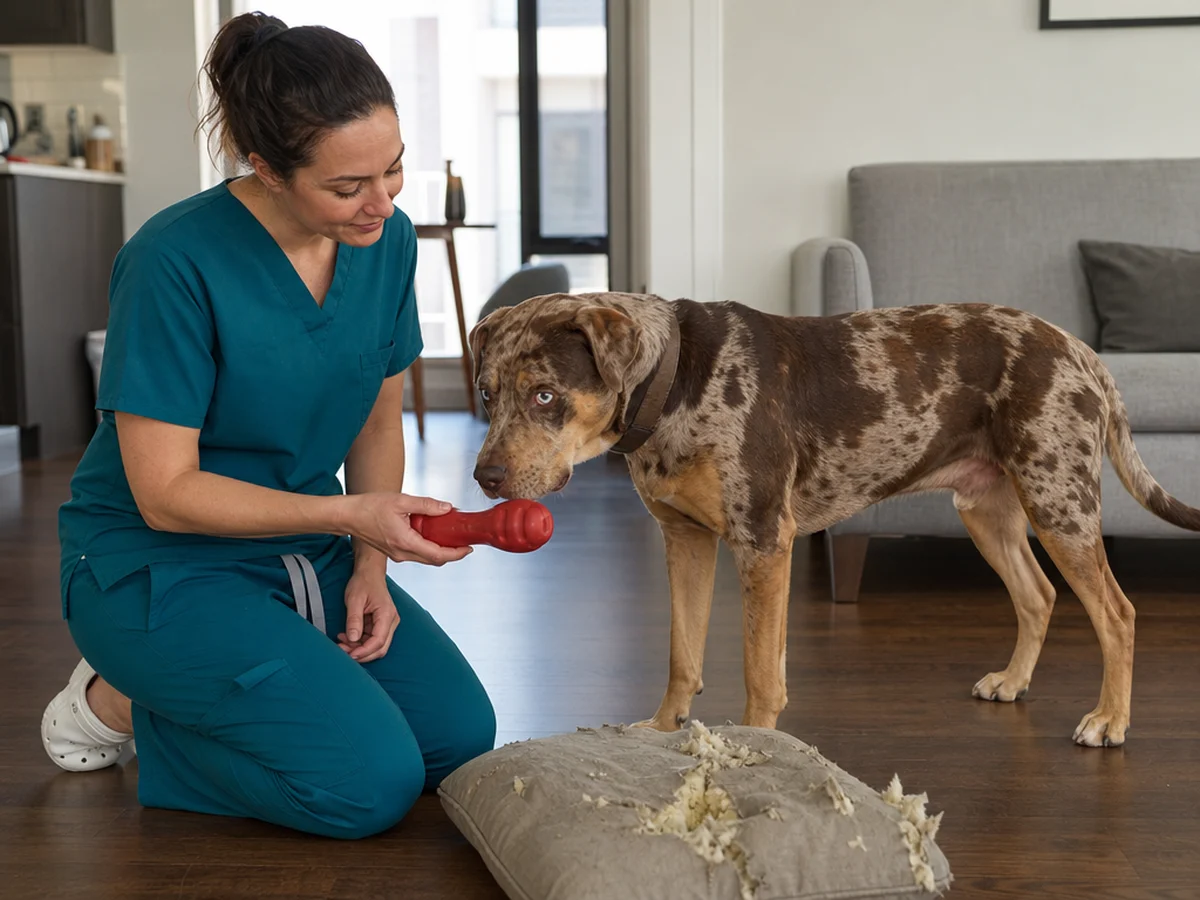
Chewing Around the House
Begin with access. Put tempting objects away, block rooms you cannot supervise and place suitable chew options where the dog already rests. Management is not surrender. It prevents the furniture from paying better than the item you want the dog to choose.
When the Catahoula approaches an approved chew, mark the choice and add a small reward beside it. Avoid taking the item away as soon as the dog engages. If choosing the correct object always ends access, the reward loses value and hidden chewing can become more attractive.
Rotate texture and location without constantly creating novelty. The goal is a dependable habit of choosing available dog items. Pair that habit with an activity plan that includes movement, sniffing and brief skill work, because a chew cannot carry the entire burden of an underfilled day.
Digging in the Yard
First protect fences, plantings and unsafe ground. Supervised yard time keeps digging from becoming a private routine while you work on alternatives. If the dog lowers their head and begins searching the soil, call them toward a prepared sniffing game before paws hit the ground.
A designated digging space can work when the household can maintain it safely. Bury a familiar toy shallowly while the dog watches, invite exploration and reward use of that location. Elsewhere, interrupt early by moving away together and offering a search, chew or short cue sequence.
Do not expect a busy yard to provide meaningful exercise by itself. Space creates choices, including choices you may dislike. Shared play and guided exploration give the area a purpose, while calm indoor rest helps the dog learn that every quiet moment does not need a self-assigned project.
Territorial Behavior Problems Need a Clear Boundary
A watchful Catahoula may notice footsteps, vehicles or a person approaching the home before anyone else does. Noticing is not the problem. The training task is to prevent repeated charging and teach a predictable action that creates distance from the boundary.
Start where the dog can still eat, turn and respond to a familiar cue. Close a curtain, move furniture away from a window or use a gate to keep the doorway from becoming the center of the room. Then teach a station several steps from the trigger and deliver rewards there.
| What You See | Likely Training Need | Useful First Move |
|---|---|---|
| Brief alert, then a look back | A reinforced check-in | Mark the turn and reward away from the boundary |
| Repeated window patrol | Less visual access and another activity | Block the view and begin a simple search |
| Door rushing | A station with distance | Practice the mat before anyone arrives |
| Unable to disengage | A quieter setup and skilled help | End exposure without forcing contact |
Practice the station when the house is calm. Walk toward the door, return to the mat and reward. Add ordinary household sounds only after the route is easy. A visitor should not be the first full test, because arrival combines sound, movement, social pressure and a change in access.
The humane training guidance explains that reward-based work still includes structure, routine and boundaries. For this problem, structure means controlling the doorway and paying the calm alternative. It does not mean pushing the dog closer to a stranger.
When unfamiliar people trigger the behavior, continue through Catahoula Leopard Dog socializing. Preserve choice and distance. A reserved dog does not need to become an eager greeter.
Chasing Behavior Needs a Catahoula Leopard Dog Exit Skill
Movement can pull a Catahoula's attention away from the handler in an instant. The important early sign is often stillness rather than motion. A closed mouth, forward weight and an unbroken stare tell you that the dog is becoming less available, even before the leash tightens.
Teach an exit skill in a quiet room. Say a cue once, move away and reward when the dog turns with you. Then practice near mild everyday movement at enough distance for success. The reward should arrive after orientation to you, not while the dog remains locked onto the moving subject.
Scanning Is Still Flexible
A dog who scans can look around and look back. Reward those voluntary check-ins before asking for a formal cue. We favor this approach because it strengthens a choice the Catahoula is already making and gives the handler an early opening instead of waiting for a struggle.
Let sniffing support recovery. After a check-in, scatter a few pieces of food in safe ground or move to a quieter patch and allow exploration. Sniffing changes the dog's posture and gives attention somewhere productive to land. It also keeps every sighting from turning into a long obedience drill.
Fixation Requires More Distance
When the dog cannot turn, take food or soften their body, training is too difficult at that distance. Move away in a smooth arc and use a visual barrier if one is available. Do not remain at the edge of an outburst hoping repetition will produce calm.
At a workable distance, rehearse a short chain: notice, turn, move and search. Keep the chain consistent until the first turn becomes quick. Then vary the setting gradually. A skill learned beside one quiet sidewalk does not automatically appear at a busy fence or narrow entrance.
- Choose routes with room to change direction without crowding another person or dog.
- Reward the earliest head turn rather than waiting for perfect walking beside you.
- End the repetition while the Catahoula can still recover and explore calmly.
- Use secure management anywhere sudden movement could create a safety risk.
When Catahoula Behavior Problems Change Suddenly
A gradual pattern tied to access, reinforcement and daily routine is suitable for a training review. An abrupt change deserves a different response. If a normally relaxed Catahoula becomes reluctant to move, newly sensitive to handling or unusually unable to settle, arrange a veterinary check before increasing training demands.
Regular vet visits establish a useful health baseline and give you somewhere to bring changes that training cannot explain. Keep notes about when the change appears and which ordinary activities now look different. The purpose is accurate information, not an unsupported guess.
Qualified behavior help is also appropriate when the dog cannot recover around common triggers, when household safety depends on constant improvisation or when behavior is escalating despite careful distance and management. Look for a professional who uses reward-based methods and is willing to coordinate with your veterinarian.
Until help is in place, make the environment easier. Reduce surprise encounters, use barriers, pause crowded outings and give the dog predictable activities they can complete successfully. Management protects learning. It also prevents people from testing advice in situations where the cost of error is high.
The breed standard notes that aloofness with strangers can be normal. Preserve that distinction when seeking help. A calm dog who declines interaction is different from a dog who cannot disengage, recover or remain safe.
The Next Catahoula Behavior Question
Ask first whether the problem appears around people, dogs or changes in social distance. If it does, continue with controlled exposure and choice rather than compulsory greeting. The socialization guide above offers that path, and the Catahoula training home connects it with the site's other reward-based skills.
Ask next whether the behavior fills an empty part of the day. If digging, chewing or patrol increases when purposeful activity disappears, rebuild the activity mix and reward a specific household job. The dog needs an available answer before you can expect them to abandon the answer they invented.
The central habit is assessment before response. Identify the trigger, decide what the action achieves and teach a safer behavior that can work in the same moment. That process respects the Catahoula's independence without leaving the household to live around every instinct.
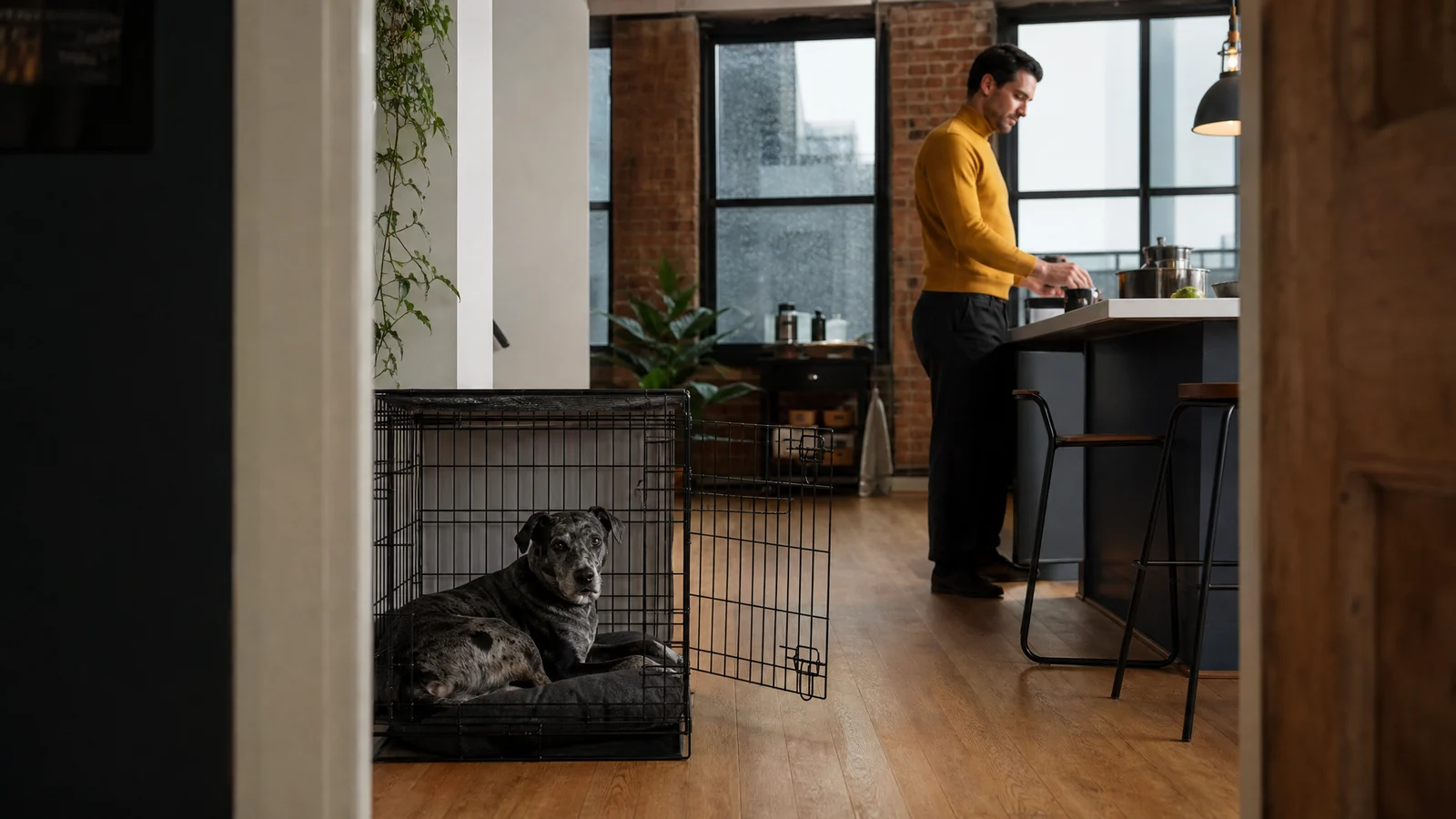 Training basicsCrate Training a Catahoula and Preventing Separation Anxiety
 Exercise and jobsHow Much Exercise Does a Catahoula Need? Plus Brain Games
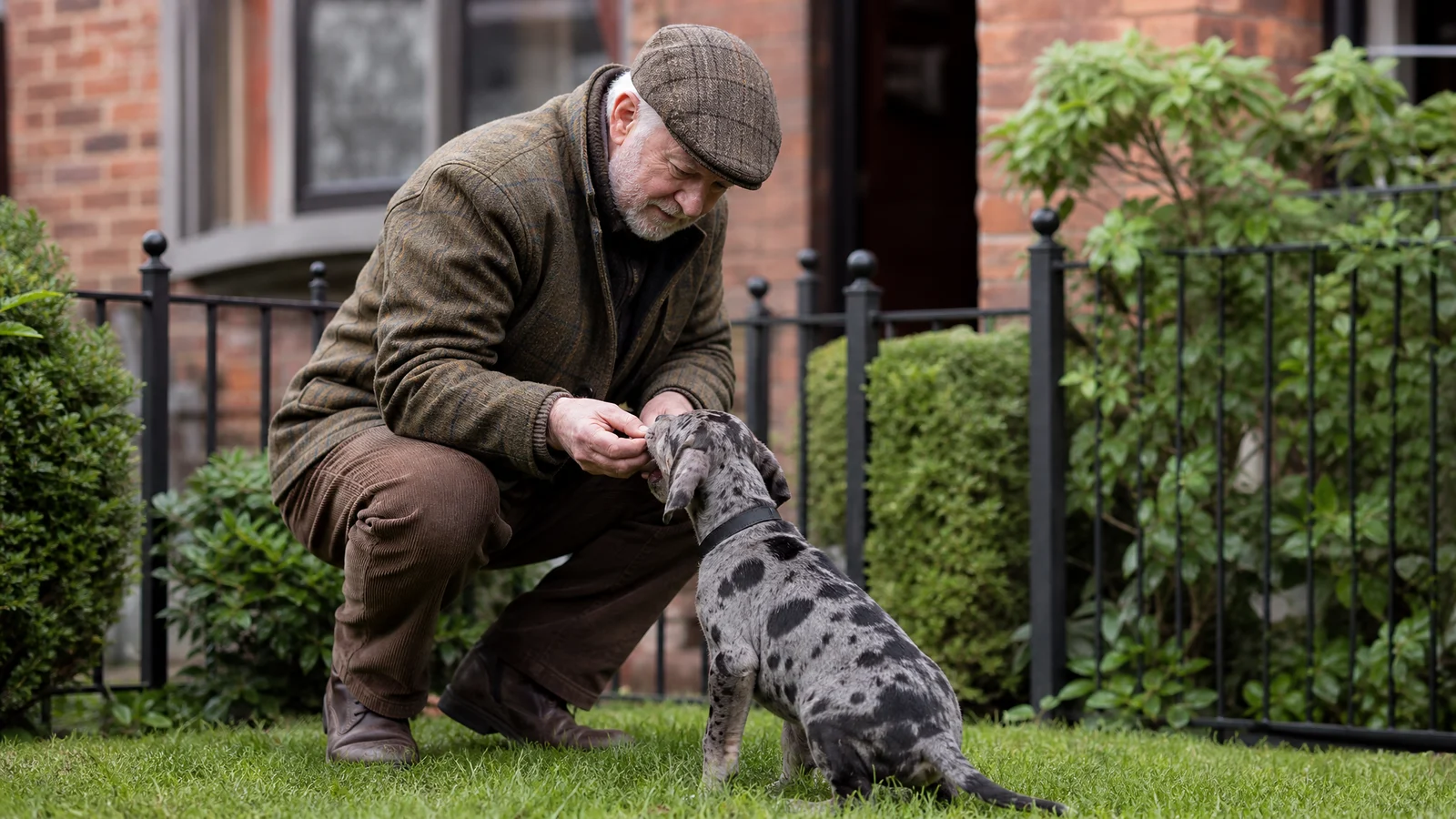 Training basicsHow to Potty Train a Catahoula Puppy