 Catahoula
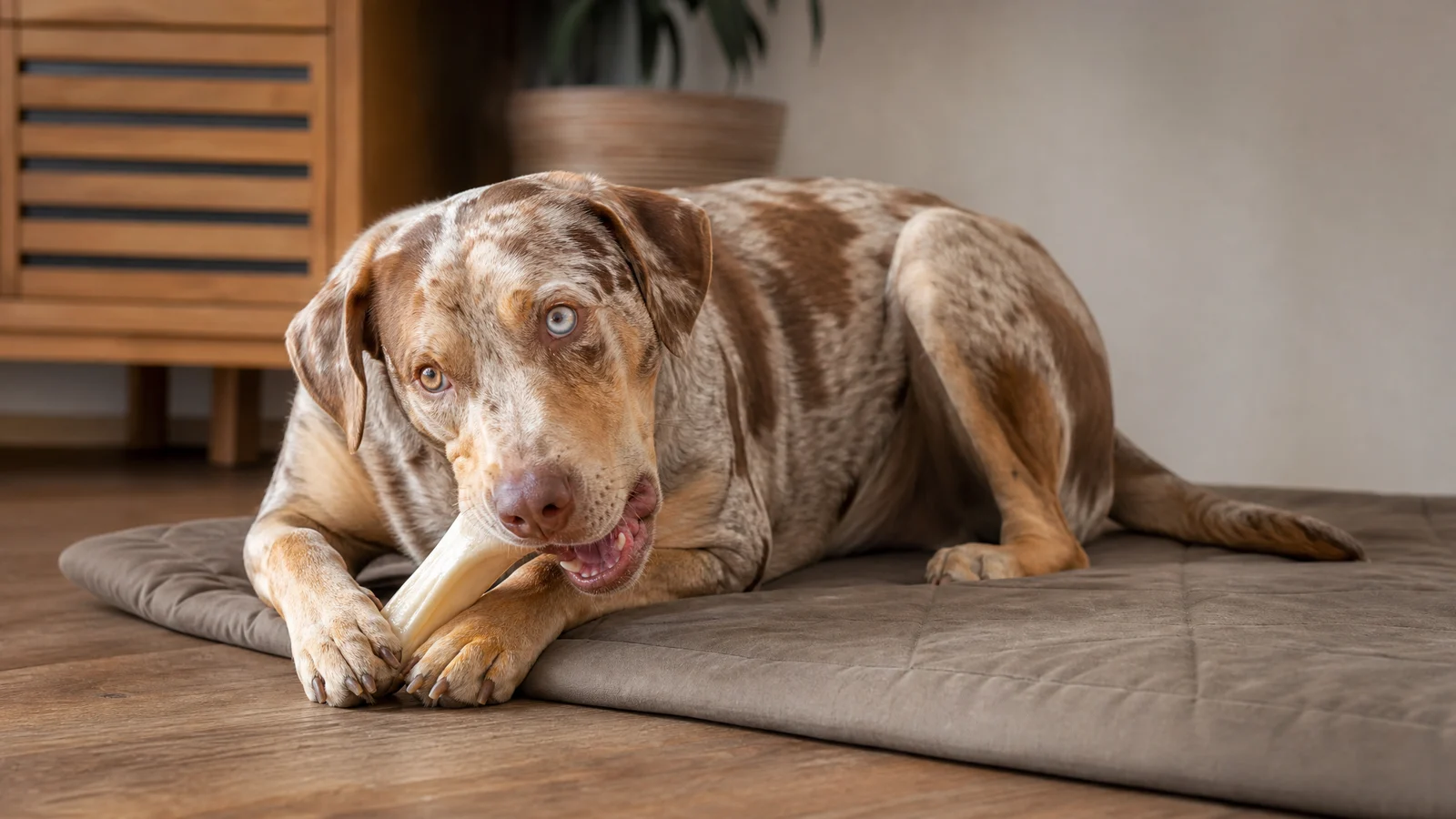
Calm trades can teach a Catahoula Leopard Dog to give up toys and bones. A quiet, separate chew space supports the lesson. Taking the item away does not.
The breed is strong-minded and intense. Catahoulas rate 5 of 5 on energy and 4 of 5 on their need for mental stimulation, and they value what they earn. A long-lasting chew is earned work. Handled badly, guarding toys and bones grows from a stare into growls and snaps. Handled well, your approach becomes the cue that something good is arriving.
In this article, we'll go through the freeze, the stiff body, the growl, a quiet chew space and a step-by-step trade. The order matters.
Guarding Toys and Bones Signal Map for a Catahoula Leopard Dog
You walk past a Catahoula with a bone and the chewing stops mid-bite. The jaw stays closed over the item. The eyes slide to you and stay there. Nothing loud has happened, which is why owners miss it. This is the earliest signal, and it is the cheapest one to act on.
Catahoulas watch with great focus, so the freeze and the hard stare mean the dog has noticed you and is deciding what happens next. Look for these signs: Early notice gives you room to respond safely.
- The chewing stops and the jaw stays clamped on the item as you come near.
- The eyes lock onto you or your hands, often with the head lowered.
- The dog tracks every step you take, even when you are only crossing the room.
- The whites of the eyes show, or the mouth tightens as you get closer.
When you see this, stop moving toward the dog. Do not stare back or reach down. Turn slightly sideways, relax your shoulders and toss a tasty treat well away from the chew. Most dogs leave the item to collect it, which gives you room to walk on or pick up what you need.
Treat the freeze as information. Note which item it was, where it happened and who was nearby. Then change how the next chew is given.
Stiff and Hunched Posture
The next rung up looks different. The dog hunches over the item, curls their shoulders around the item or leans forward with locked legs. The loose, bouncy movement is gone. Many Catahoulas lose their clownish side at home when a valued item appears, and working-dog seriousness takes over.
This posture says the dog thinks the item is at risk and is getting ready to defend it. It shows up most with visitors and with anyone the dog does not yet see as part of the household. The breed standard notes that Catahoulas are often aloof with strangers, and a chew raises that aloofness.
Back off before the posture turns into anything more. Stop, turn sideways and step away at an easy pace without leaning over the dog. Speak softly or say nothing. Once you have space, scatter a few treats away from the chew so the dog chooses to leave without being pushed.
Then keep everyone safe. Call children and other pets away and let the dog finish in peace. If the item has to be picked up, wait until the dog walks off on their own. Never reach over a stiff dog.
Growls and Lip Lifts
A dog who froze last week lifts a lip this week and growls the week after. Each step means the quieter signal did not work. A growl is the clearest thing a dog can say before anything worse, so honor it. A dog whose warnings change nothing may stop giving them and go straight to a snap.
The table shows the usual ladder and the response that fits each rung. Read it from the earliest warning upward.
| Signal | What it usually means | What to do |
|---|---|---|
| Stillness and hard stare | The item is valuable and you are being watched | Stop and toss a treat away from the item |
| Stiff, braced body | A louder request for distance | Back away calmly and leave the item alone |
| Lip lift or growl | A clear warning | Give space, then change how the item is served |
| Snap or air snap | The warnings were not heard | Leave safely and call a professional |
Then trace the cause. Three come up often in this breed. Items were taken from the dog in the past, so approaching predicts a loss. The chew was served where people and pets keep passing. Or the dog is short on exercise and mental work, so everything in the house carries extra weight.
Pushy play from other dogs can also bring growls, and an occasional snap at a dog park. Many Catahoulas like dogs they know but find a dog park too unpredictable. That is stress about too many variables, not spite.
Keep regular vet visits on the calendar, and book an exam if guarding appears suddenly. Call a professional after any snap or contact, when guarding spreads from chews to spaces and people, or when children or other pets are involved. Some owners saw slow progress on territorial behavior even with skilled reward-based work, so ask early. We specialize in this breed's behavior, and we say the same to every owner.
Pace Rules for Guarding Toys and Bones
Soft eyes, a loose body and a quick turn toward the treat mean carry on. A freeze, a hard stare or a stiff shoulder means you moved up too fast. Go back to the last level that stayed relaxed. Keep sessions short and fun, since the breed can work like an adult at 10 months but is not fully matured until 2 years. Our Catahoula puppy training timeline shows where trading fits at each age.
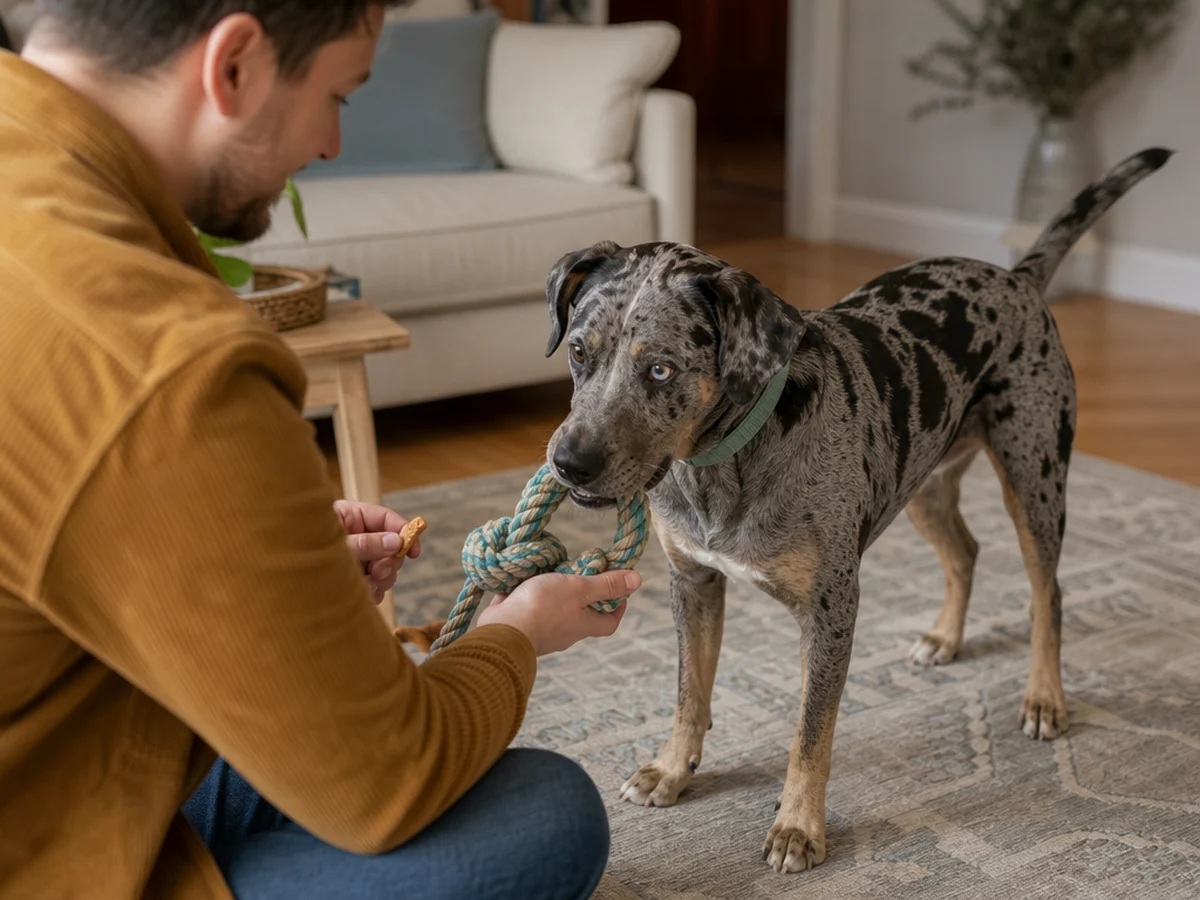
Guarding Toys and Bones at a Quiet Chew Station
The easiest guarding to fix is the guarding that never gets a chance. A chew served in a low-traffic room behind a shut door is a chew nobody walks toward. A dog who is never approached has nothing to defend. This is management, and it works while the training catches up.
- Pick a spot away from hallways, the kitchen and the front door, such as a bedroom or a gated nook.
- Put the dog there first, hand over the chew and close the door or gate.
- Leave the dog alone to finish. Call them out for a treat or a game, then collect leftovers once they have walked away.
- Use the same spot every time so the room itself predicts a calm chew.
- Keep valued items put away before visitors arrive.
Children and other pets need clear rules. Nobody approaches a dog who has a chew, and that includes the dog's own friends. Breed ratings for other dogs and for young children both sit at 3 of 5, which means with supervision. Serve chews to each dog in a separate room.
Visitors need a plan too. Many Catahoulas treat a guest as family once the owners have clearly welcomed that person, even if the greeting at the door was rough. Your introduction counts for more than the guest's friendliness. For the greeting itself, see our socializing a Catahoula with kids, dogs and strangers guide.
Practice Items Change Guarding Toys and Bones
A Catahoula carries a bone to the hallway, lies down with it and stops being the clown of the house. The face turns serious. That shift is the first clue. The breed standard describes a temperament that runs from serious and business-like when working to clownish at home, and a prized chew can flip the switch.
Intensity and Resource Value
A dog who works hard at everything also works hard at keeping a bone. Without enough exercise and attention, Catahoulas make their own jobs, and chewing is one of them.
A long-lasting chew feeds a mind that needs work. To this dog it is worth far more than a biscuit, and value is what drives guarding.
Ownership and Handling
The breed is described as independent, territorial and protective. Many owners see dogs who are fiercely attached to their space, their ball and their family. A chew carried to a favorite spot becomes part of that territory, so a person walking toward it feels like a trespasser.
Our habits can raise the stakes. Pulling items from their jaws can build guarding, and it can also teach a dog to dash away the moment you want something returned.
Early work is a foundation, not a guarantee. Some owners did plenty of early training and exposure and still live with dogs who stay reactive. Others saw a dog turn against most other dogs around a year and a half. Keep managing valued items as the dog matures.
Measuring Toy-Guarding Signals Before Training
Trading beats taking for a reason specific to this breed. A Catahoula puts serious focus into anything they value, and prying an item loose confirms that hands mean loss. A trade says the opposite. A quiet room removes the audience, the traffic and the pressure, and what is left is a dog learning that your approach pays.
Do one thing today. Pick a low-value toy your dog barely cares about and sit a few steps away while they hold it. Toss a better treat a short distance off, and when they step away to eat, pick up the toy, count to three and give it right back. Stop there. Repeat tomorrow, and the toy becomes something you both enjoy.
Catahoula Leopard Dog Trade Tool
The trade teaches one lesson. When you approach, something better arrives. The dog stops watching your hands and starts watching your pocket. A breed rated 4 of 5 for trainability but known for independence responds to a deal that clearly pays. Our piece on Catahoula independence and trainability explains why.
The Trade, Step by Step
- Start with a low-value toy the dog barely cares about and a treat that is far better, small, soft and smelly.
- Stand outside the distance where the dog tenses. Drop a treat near them and keep walking. Repeat until they look up happily when you appear.
- Close the distance in small steps. Each approach ends with a treat tossed away from the toy, so leaving the toy pays.
- Add a marker word as the dog steps off, followed at once by the treat. For a deaf dog, use a hand signal, as in our guide to hand signals for deaf Catahoulas.
- Raise the value of the held item only after the dog stays loose and wiggly at the current level.
Catahoula Leopard Dog Drop Tool
Once the trade is smooth, add a drop cue. Hold a treat at the dog's nose, say the cue as the toy falls, mark and feed. Then hand the toy straight back. A drop that ends in loss teaches the dog to clamp down, and a drop that returns the toy teaches them to let go.
Dropped household items follow the same plan. A sock or a stolen remote gets calm body language, treats tossed away from the item, and a pickup while the dog eats. If you need an item back, put food down far away. The dog moves off, and you have time to collect it safely.
 Training basicsAre Catahoulas Easy to Train? What an Independent Temperament Means
 Puppy trainingCatahoula Leopard Dog Puppy Training Timeline, 8 Weeks to 2 Years
 Exercise and jobsWhat Jobs Can a Catahoula Leopard Dog Do? Sports and Working Roles