 Catahoula
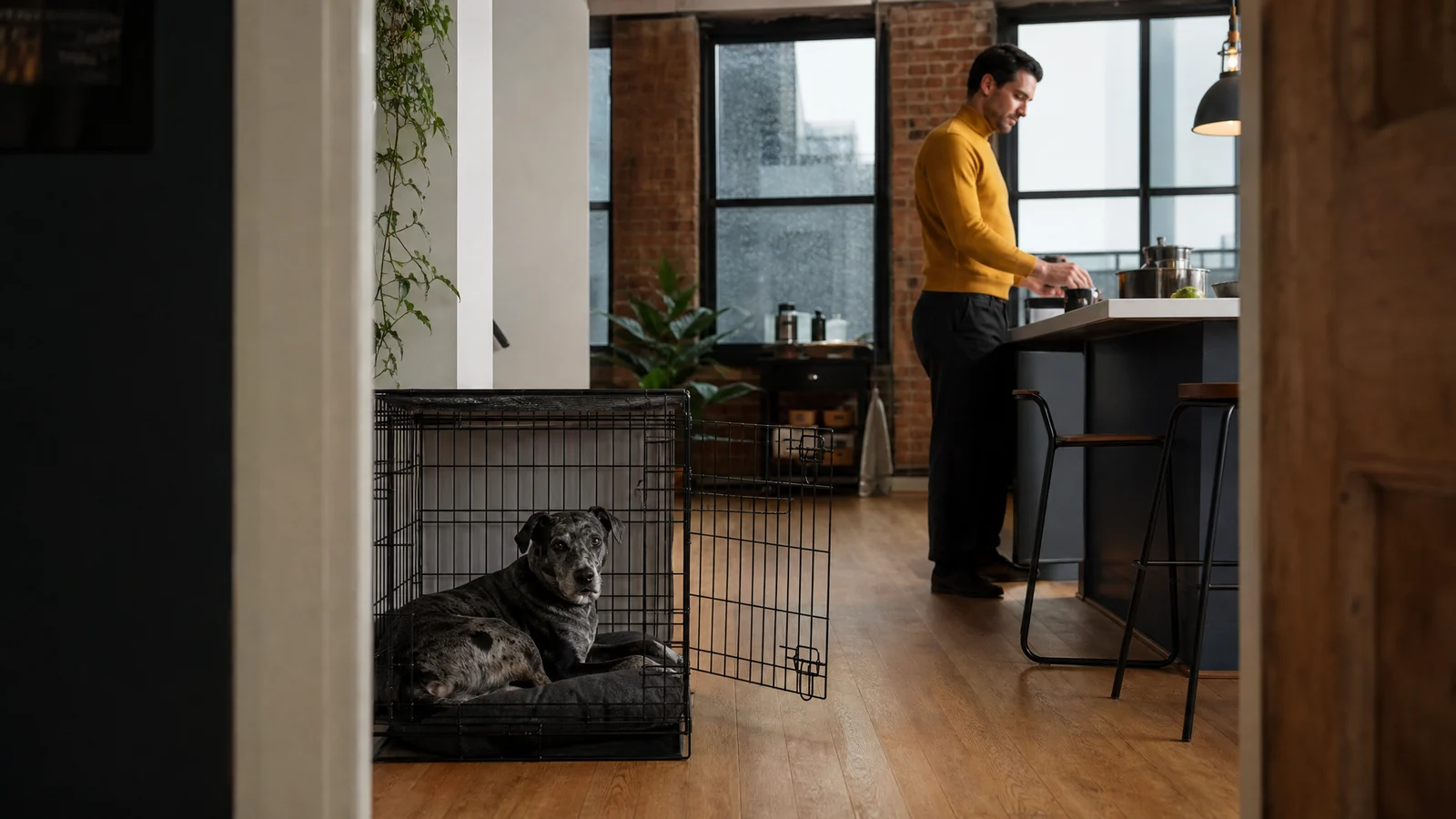
Can a crate prevent separation anxiety in a Catahoula? No crate can create comfort with absence by itself. It can become a secure resting place, but a dog who feels distressed when alone may feel the same distress behind a crate door. Confinement and separation are related only when the dog is comfortable with both.
Teach them as separate skills and use the dog's behavior as the criterion for progress. A loyal, energetic Catahoula may enjoy the crate while family is nearby and struggle when departure cues appear. This guide covers a suitable goal, signs of real crate comfort, layered practice, the point where practice must stop and the signs that call for professional help.
The Right Goal for Catahoula Leopard Dog Crate Training
The goal is voluntary, relaxed rest. The dog should be able to enter, settle, notice ordinary household activity and leave calmly when released. Quiet alone is not enough, because a motionless dog can still be worried. Look for loose muscles, ordinary breathing, comfortable position changes and an ability to engage with a safe activity.
A crate is not a cure for chewing, high energy or difficulty settling. Those concerns need a complete daily plan with movement, mental activity, social time and rest. The crate can protect a routine while skills develop, but it should never carry more responsibility than the dog's comfort allows.
Exercise can make rest easier, yet exhaustion is not the same as emotional security. Give the Catahoula an appropriate outlet before practice, then allow a short transition into calm. Beginning immediately after frantic play can place an aroused dog into a small space and make the contrast unnecessarily difficult.
The crate training guidance says professional support is needed before confinement becomes part of a separation-anxiety plan. That boundary matters. Basic crate teaching can continue only while the dog is comfortable, and distress changes the plan from household training to a welfare concern.
We treat the resting place as a choice before it becomes management. Leave the door secured open, place the crate in a calm part of a lived-in room and let the dog investigate. A Catahoula who chooses to rest there is giving useful information that no command can replace.
Is the Catahoula Leopard Dog Crate Comfortable?
Comfort begins outside the crate. The dog should approach without being lured past hesitation, take food normally and remain free to leave during early practice. If they stretch forward while keeping their back feet planted, dart in and out or stop eating near the entrance, lower the difficulty.
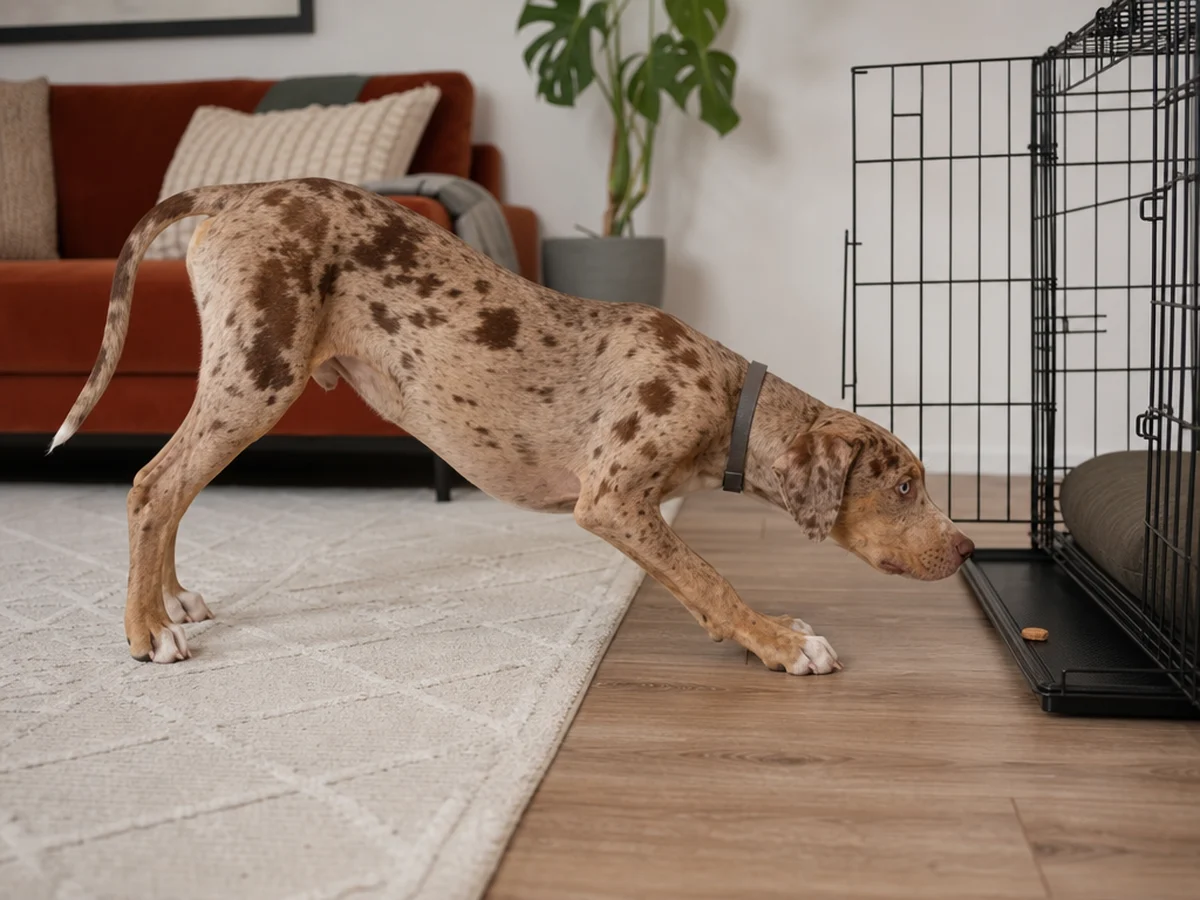
Make the setup practical. Give the dog enough space for natural standing, turning, stretching and resting positions, with stable footing and no item that creates an entanglement risk. Choose a location away from the busiest doorway and window while keeping the crate connected to household life.
Feed occasional rewards at the entrance, then just inside, without closing the door. Mark any voluntary step toward the crate and place the reward where the choice happened. After the dog enters readily, wait for a pause, sit or down before paying. That progression lets the dog discover the next criterion instead of following food blindly.
Observe how the dog exits. A relaxed Catahoula may stretch, look around or wait for the release cue. A dog who explodes through the opening, refuses to return or remains vigilant after leaving is telling you the repetition was too hard. Make the next one easier rather than insisting on a repeat.
Entry and Exit Supply the Evidence
Comfort should appear at more than one point in the day. Practice after an ordinary walk, during a quiet household period and before evening rest. Do not test every possible situation at once. A dog who settles under one familiar condition has learned a useful beginning, not a universal crate skill.
Connect the crate to the rest of a consistent routine. Our guide on how to train a Catahoula explains how clear cues and rewards carry across household skills. The same clarity applies here, with entry, release and rest treated as different behaviors.
Catahoula Crate Training in Separate Layers
Difficulty comes from several layers: entering, door movement, a closed latch, handler movement, loss of sight and actual departure. Combining them hides which layer caused concern. Build one while keeping the others easy, and return to an open-door repetition between harder attempts.
Use this sequence as a set of checkpoints. Move forward only when the current picture produces relaxed behavior across ordinary repetitions.
- Reward voluntary entry while the door remains fixed open, and give the release cue while the dog remains settled.
- Swing the door slightly, mark an easy response and reopen it before the movement becomes important.
- Close and latch the door while you remain beside the crate, then open it while the dog is still settled.
- Shift position, stand and take a few ordinary steps while returning often enough that movement stays unimportant.
- Disappear briefly inside the home, return before posture changes and reward continued ease rather than excitement.
- Practice departure cues separately before combining them with a real absence that remains below the dog's worry point.
Door, Movement, and Departure Stay Separate
Vary easy repetitions around the new layer. If you have just stood and crossed the room, sit beside the crate for the next attempt. Progress does not require every repetition to be harder. Easy work maintains confidence and shows whether the new skill is becoming ordinary.
The door deserves careful timing. Close it after the dog settles rather than racing to catch them inside. Open it on a calm moment and give a consistent release cue. If the dog crowds the door, shorten the next closed period and reward waiting before moving the latch.
Handler movement should look normal before absence begins. Pick up a book, sit elsewhere or walk through the room while the Catahoula rests. Avoid hovering and watching every breath, because unusual attention can make the exercise feel important. A camera can provide information later without changing the scene.
Departure cues can become a separate practice. Handle keys, put on shoes or open the exterior door, then continue an ordinary household activity. Do not run the entire departure pattern every time. The aim is to make each cue less predictive before linking several cues to a brief absence.
The reward-based position supports teaching desired behavior through reinforcement and arranging the environment for success. Here, success means returning before distress and reinforcing the ability to remain settled. It never means waiting for the dog to give up asking for help.
When Alone Time Stops Being Crate Training
Alone-time practice stops being useful when the dog is no longer able to learn. Persistent vocalizing, frantic escape attempts, heavy drooling, repeated soiling or refusal of normally valued food can signal distress. Do not lengthen the absence to see whether the behavior ends. End the test and change the plan.
Mild Uncertainty Calls for an Easier Step
A dog may lift their head, pause chewing or watch the door when you move. If they can take food, settle again and respond normally after your return, repeat an easier version. Reduce only the part that changed, such as distance, door position or loss of sight.
Keep a simple record of the setup and the earliest body change. Avoid turning seconds into a competitive target. The useful measure is whether the same easy departure becomes less important and whether the dog returns to rest without a dramatic reunion.
Escalating Distress Changes the Plan
Separation anxiety is not disobedience or a failed stay. The separation anxiety guidance says each repetition should end before the dog becomes upset. A dog who is distressed needs an individualized plan, not a stricter crate rule.
Arrange company or another safe care option so unavoidable absences do not repeatedly exceed the dog's current ability. This is management while a support plan is prepared, not proof that the dog can never learn. Repeated panic can make departure cues more powerful and erase the value of easier practice.
Contact a veterinarian and ask about qualified behavior support. Regular vet visits provide a baseline, while a new evaluation can check whether a sudden change in rest or tolerance has another contributor. Share the record and video rather than relying on a description of noise alone.
A Safe Room May Fit Better
Some dogs tolerate a dog-safe room or gated area better than a crate. Humane World's separation resource explains that a dog with separation anxiety can remain upset in a crate and may injure themself trying to escape. More space is not a cure, but it can reduce the added pressure of confinement.
Test an alternative only during an observed, easy setup. Remove hazards, provide water as appropriate and watch whether the dog can move, rest and engage normally. A safe room should not become a place for a longer untested absence simply because the crate was removed.
Potty needs can also complicate the picture for a puppy. The Catahoula potty training routine helps separate a missed outdoor opportunity from discomfort with confinement. Meet the need before crate practice so the dog's signals remain interpretable.
Catahoula Leopard Dog Crate Progress and Professional Help
Continue when the Catahoula enters by choice, changes resting positions, eats normally, notices your movement without tracking every step and waits comfortably for release. Those signs show that the current layer is becoming ordinary. Add only one new difficulty and keep the next repetition easier.
Pause when approach slows, food loses value, exits become urgent or the dog remains vigilant after release. Return to open-door rest and review which layer changed. A pause protects the crate as a safe place and prevents uncertainty from becoming a practiced response.
Seek help when distress begins before departure, confinement produces escape attempts or an absence cannot remain below the worry point in real life. A reward-based behavior professional can help coordinate practice, management and veterinary input. The plan should protect the dog from overwhelming exposures while building comfort in attainable pieces.
Crate training and separation anxiety should never be measured by how long a Catahoula stays contained. Measure voluntary entry, settled behavior and recovery. When those signs remain present, continue carefully. When they disappear, stop increasing difficulty and let welfare, not the calendar, decide the next step.
 Exercise and jobsHow Much Exercise Does a Catahoula Need? Plus Brain Games
 Training basicsHow to Potty Train a Catahoula Puppy
 Training basicsHow to Train a Catahoula Leopard Dog the Reward-Based Way