 Catahoula
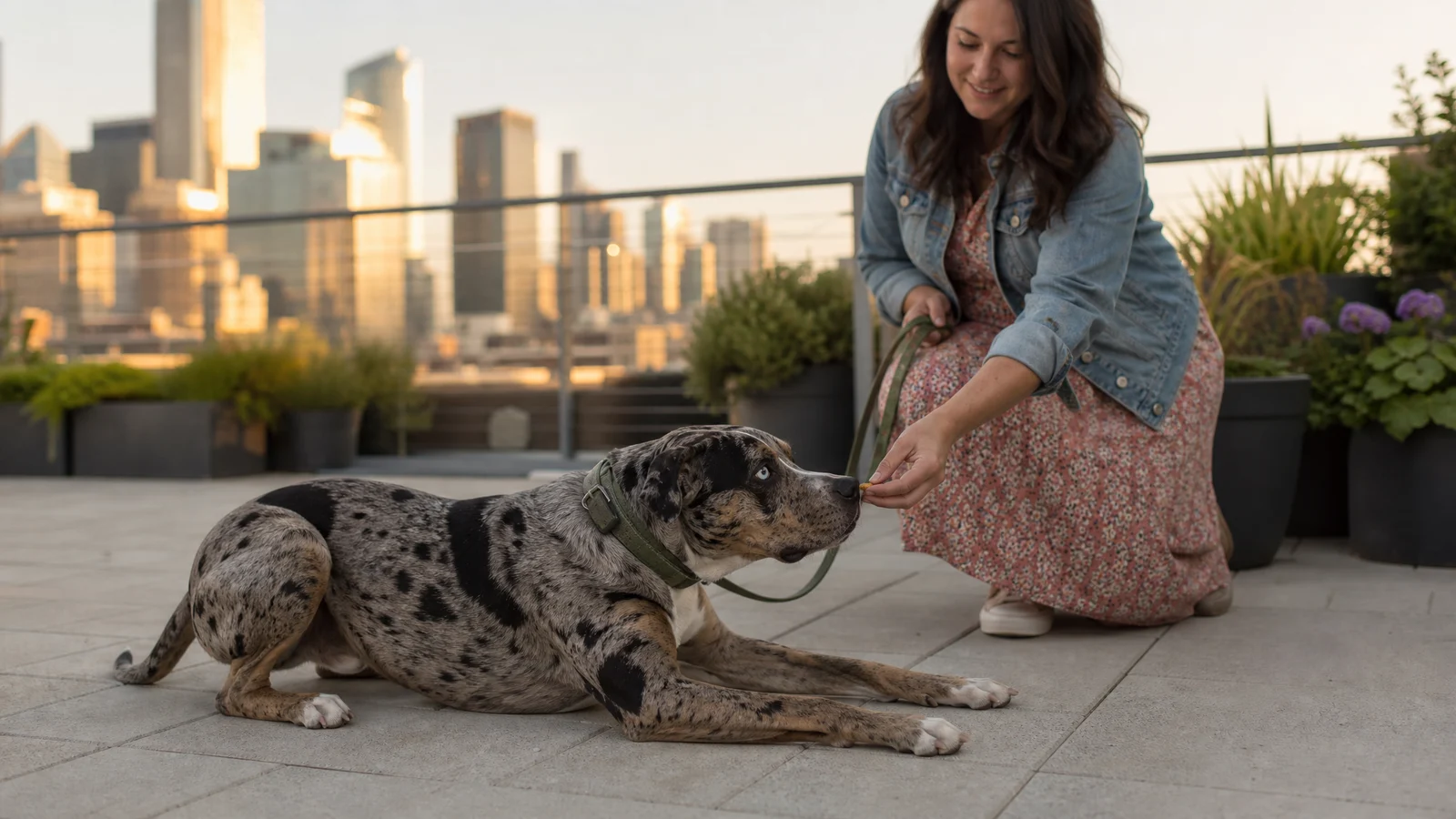
A Catahoula Leopard Dog trains best with kind, consistent, reward-based methods plus plenty of daily exercise. Their independent, working-bred mind weighs every request on its merits, which is why most problems with this breed work as signals you can read rather than acts of defiance.
Exercise alone rarely settles them, though. Many owners find their dog stays wound up after a long run, or acts out when much of the day is spent in the crate, so mental work and time out of the crate count as much as miles. Left unmet, that drive shows up as ignored cues, hauling on the leash and chewed furniture.
This article looks at training through what you see and hear your dog do, so you can trace each symptom to its likely cause and choose a fix that pays the right choice. Reading this breed's behavior is what we do best, and the plan at the end puts the fixes in order.
Reading the Ignored Cue in Catahoula Leopard Dog Training
A Catahoula who glances away, drifts off or carries on with something else halfway through a cue is usually running a quick calculation, not being spiteful. Breed profiles describe the temperament as independent, loyal and watchful and rate trainability 4 of 5, where 5 means eager to please. That points to a fast learner who still weighs what each request pays, a likelier explanation than a dog who never learned the cue.
This is why reward-based training suits the breed. When food, toys or praise follow a behavior, that behavior becomes more likely, and a thinking dog needs that clear information to keep choosing you. Three causes explain most ignored cues, and each has its own fix.
Independence Turns Each Cue Into an Offer
Owners describe a strong work drive tied to generations of dogs bred to work all day, and a dog built to judge a situation alone tends to treat your cue as something to evaluate. Make cooperation the easiest route to what they already want. Ask for a sit, then release them toward the thing they were heading for, so complying opens doors.
Say each cue once, because repeating it teaches that the first ask is optional. Pair it with a marker word such as yes, a short sound that tells the dog the exact moment a choice earned pay.
Reward Value Set Too Low
If a cue holds in the kitchen and fades elsewhere, the pay is probably too low for the price. Small soft treats suit easy repetition, but harder work deserves a favorite toy, a short game or permission to sniff. Many owners ask for a few cues or tricks before every meal, which turns daily food into pay and gives a work-driven mind a small job.
Training belongs in the daily routine, and brief sessions several times a day suit a Catahoula better than one long drill. Keep every exercise fun, too. These dogs may work like adults from about 10 months but are not fully mature until 2 years, and a young dog drilled hard can burn out.
Reliable Indoors, Absent Outdoors
Many owners find a dog who is dependable in the living room acts as if the owner does not exist outside. The likely reason is competition. Scents and movement outdoors pay better than your voice, and a cue does not travel between places on its own. Treat each new place as a new lesson and climb through more exciting settings, with high-value rewards at every rung.
- Start somewhere only slightly different from the usual spot, such as a hallway or porch, then move to a fenced yard.
- Progress to a quiet sidewalk and finally a busier park, always beginning at a generous distance from the distraction.
- If attention drifts, treat the setting as too hard, step back and ask for an easier cue.
- Use the smell as pay by asking for a sit, marking it, then releasing the dog toward the scent.
Recall follows the same ladder, with extra caution. Owners report dogs who bolt after a scent or water and return muddy from far away, and dogs who must stay leashed at evening events because prey-drive bursts make them hard to find. Use a long line in open areas until the habit holds. A well-practiced leave it also helps, since owners find it can calm an overexcited dog enough to hear you again.
Leash Training for Pulling and Lunging
Pulling and lunging usually start with arousal, meaning the body's level of excitement, rather than with defiance. A dog at the top of the energy scale spots movement ahead, excitement climbs, and their body follows their attention down the leash. Owners describe sudden prey-drive bursts, so a squirrel or a passing dog can pull a Catahoula into a fixed stare where treats and voices barely register.
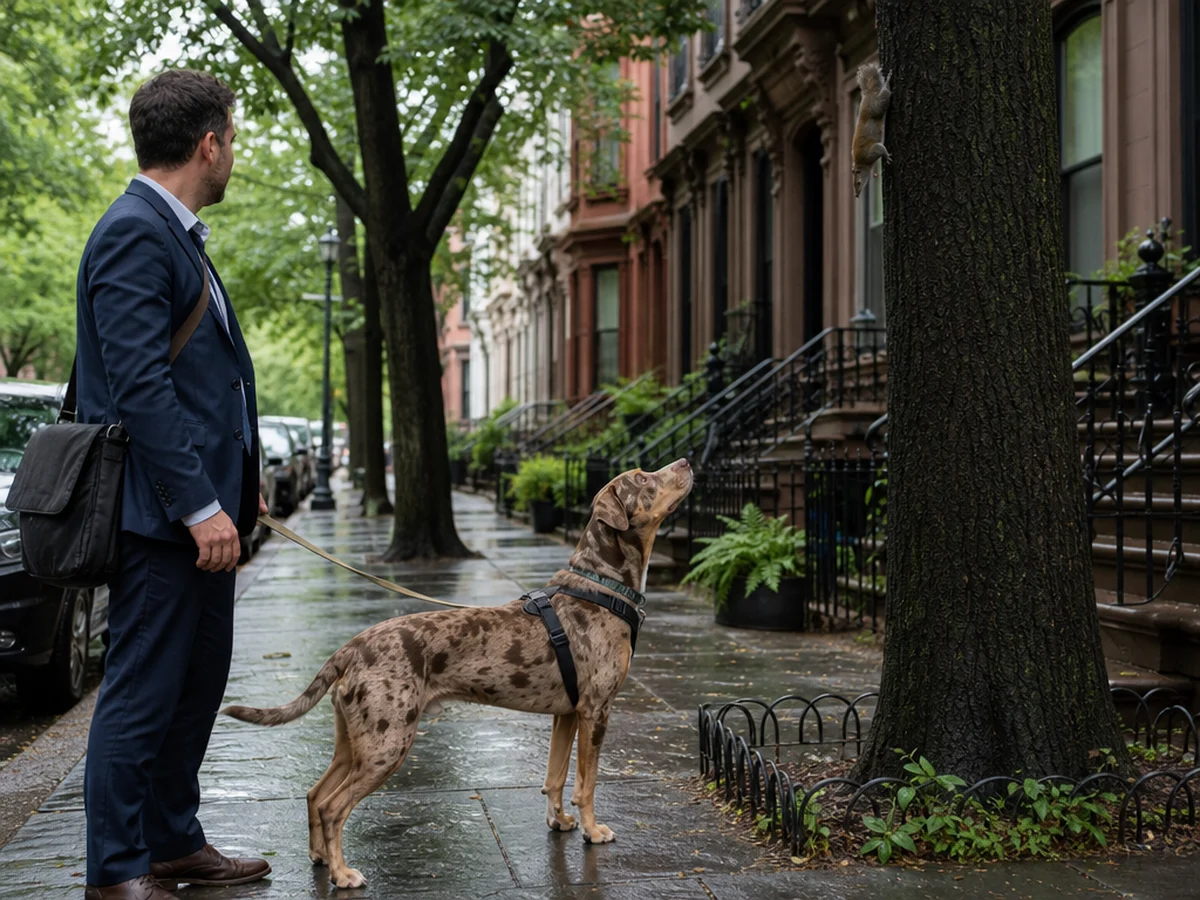
The common advice is to run the dog hard before every walk. It helps a little, but it does not replace mental work, and some Catahoulas stay wound up, even reactive, after substantial exercise. A better warm-up is a few minutes of something that asks them to think, such as sniffing out treats hidden around a room, then starting the walk somewhere quiet with better treats than usual.
- Deliver treats at your side, low and often, so staying close becomes the best-paid option.
- Stop when the leash tightens, wait for slack, and walk on when it returns, paying that slack.
- Turn away early when you spot a trigger, before the dog fixates, and pay for following you.
- Reward calm looks at a trigger from far away, then close the gap across many outings.
- Use a sniff break as a release reward so the dog has a good way to get what they want.
Reactivity toward other dogs needs extra care. Some owners report dogs who turn against most other dogs in adolescence, or who like dogs they know but feel they must control the many variables at a dog park. Give distance, pay calm choices and let the leash be a place of safety.
Fixation is easier to prevent than to interrupt, so watch for a still body and a fixed look, and cue a turn before it peaks.
Training Through Catahoula Leopard Dog Barking and Nipping
Barking in this breed is less about volume than about work. Breed profiles put barking at 1 of 5, mostly to alert, yet some owners describe a hyper dog who barks for attention when visitors arrive or when people, especially people with dogs, pass the yard. That fits a watchful dog scanning their territory and reporting events, with spare mental energy making the reports louder. The first fix is a job, not a rule.
Nipping at ankles and heels is harder to trace, and the cause varies by dog. The likeliest explanation is the same working drive, since a dog bred to work all day reacts to fast-moving feet, especially when excited, under-exercised or in the teenage phase. Treat it as arousal outrunning impulse control, and give the mouth something better to do.
Settling on a Mat Before Triggers
Owners report that their dogs stay silent while lying down, so they cue a down before a predictable trigger. That gives the dog a job and heads off barking before it starts, which is far easier than quieting a dog already in full voice. Build it in small steps.
- Put a mat on the floor and pay for stepping onto it, then for folding into a down.
- Mark and pay while they stay down, stretching the wait a little each time before you release.
- Add the word once the down is smooth, saying it a single time before they move.
- Cue it ahead of a trigger you can predict, such as a visitor's arrival or the hour neighbors walk by with dogs.
Redirecting the Mouth
For nipping, keep a tug or soft toy within reach. When the mouth heads for ankles, stop moving, offer the toy and pay for taking it. If the dog stays frantic, a brief time-out in a calm space lets the excitement drain, and play resumes when they settle. Pay the quiet moments between barks too, so silence earns something and the dog learns that calm is also a way to work.
Destruction and Digging Mean Training Is Not Enough
Chewing, digging and barking are what unspent energy looks like, and no cue fixes them while the tank is full. This breed needs space and a job, and with too little exercise and attention they start digging holes and chewing things. Dogs without stimulation find their own, which usually lands on your furniture and yard. Once those needs are met, training gets much easier.
Exercise is only half the answer. Physical exercise alone does not settle many young Catahoulas, and long crate hours or too few outings can still lead to acting out, even when a daily run or hike is part of the routine. Some owners also find their dog stays wound up or reactive after a long run, which tells you the mind needs work as much as the legs do. Treat miles as a floor, not the goal.
- Protect out-of-crate time every day and balance it against crate hours, as covered in crate training a Catahoula.
- Turn meals into work with food puzzles, treats hidden around a room, or a few tricks before the bowl goes down.
- Offer a digging spot, such as a sandbox where you bury toys and pay for digging there.
- Give exceptional jumpers and climbers low obstacles and a sturdy platform to scale, so their athleticism has an approved outlet.
- Consider daycare, since some owners find a couple of days a week leaves a dog tired enough to sleep through the others.
If a young puppy paces at night, rule out a simple toilet need first with the potty training routine for Catahoulas. Keep regular vet visits on the calendar as well, because sudden restlessness can have a physical cause.
Visitor Training for a Watchful Catahoula Leopard Dog
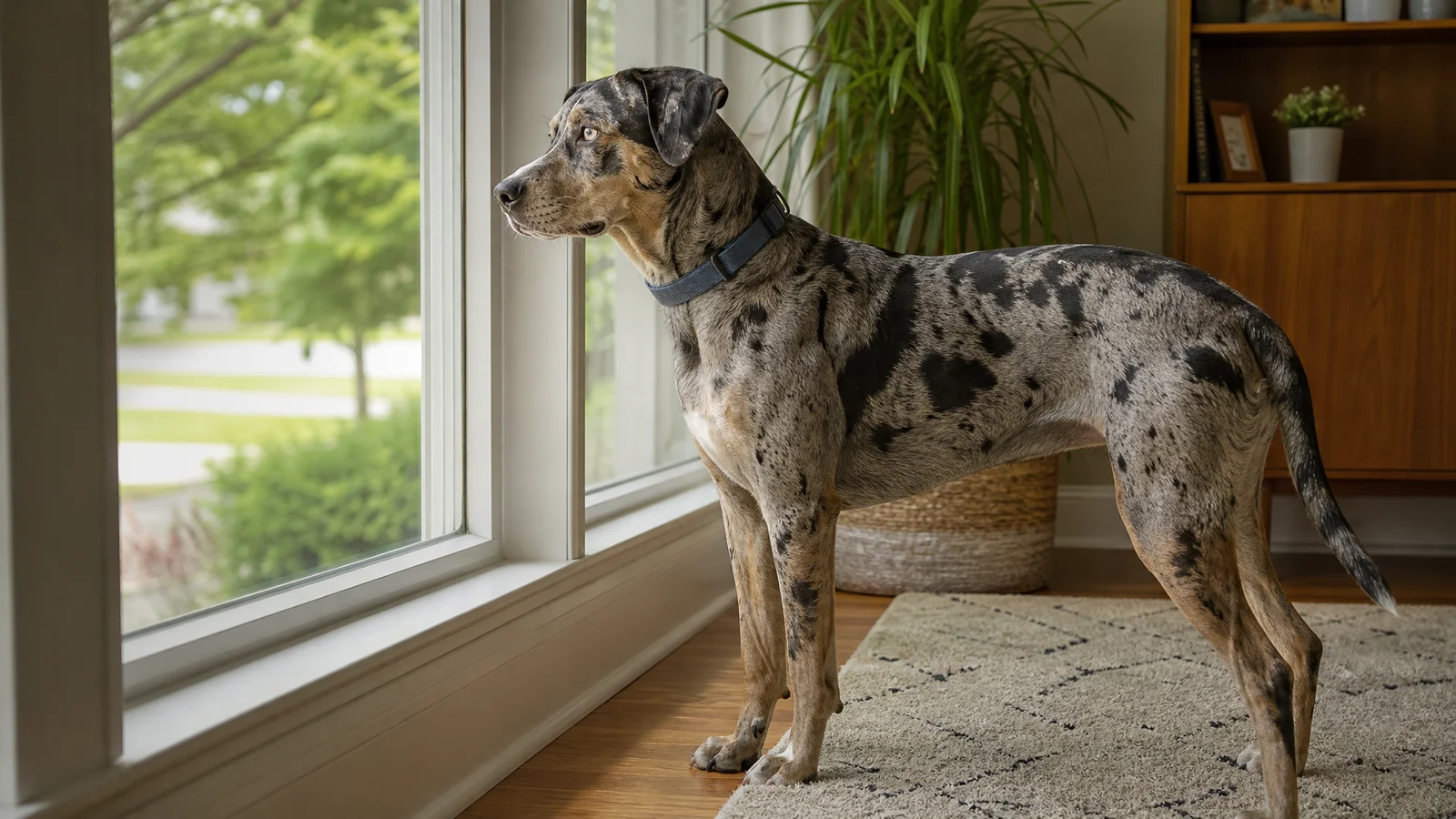
Rigid posture, a fixed look or a bark at the door is the watchfulness this breed is known for. They can be independent, territorial and protective, and breed profiles rate protective nature high and openness to strangers in the middle. The dog is reporting on what they treat as theirs, often their space, their ball and their family. Early socialization matters because those instincts can sharpen with age if a dog never learns what visitors mean.
The goal is not a sharper watchdog. It is a dog who knows what to do when someone new walks in. Owners report that when guests ask for cues the dog already knows and reward only calm behavior, the stranger-danger reaction fades. Many also find that once the family has properly welcomed a visitor, the dog treats them like family, even if the first moments are rough.
- Before the guest arrives, cue the mat settle or park the dog behind a gate with a chew.
- Let the guest come in and ignore the dog while everyone stays calm.
- When the dog is ready, have the guest ask for a known cue such as sit and drop a treat for calm.
- Pay only calm behavior, and if the dog barks, lunges or jumps, have the guest turn away for a moment.
- Welcome the visitor warmly yourself, since dogs tend to follow the family's lead.
Let a reserved dog choose distance rather than pushing a greeting. Some owners of adopted dogs see territorial behavior appear a few months after the dog settles in, with snarling or lunging at people near the home, and some find progress slow even with careful reward-based work. A quieter setting can ease anxiety without erasing wariness of strangers near the property.
If your dog snarls or lunges, bring in a qualified reward-based behavior professional and measure progress in calmer recoveries, not perfect greetings.
Reward-Based Training for a Dog That Shuts Down
Some Catahoulas respond to strain by freezing, sulking, turning away or slinking off, and it is tempting to read that as stubbornness. A better reading is that the dog is overwhelmed or has learned that training predicts something unpleasant. This breed does not accept mistreatment and may assert themselves in self-defense, so a dog who has had a rough time can shut down. Firm but kind, in practice, means consistent and predictable.
The research backs this up. In a 2020 study of 92 dogs, those trained with rewards looked relaxed after their sessions, with loose bodies, little panting and only a small stress-hormone rise. A relaxed dog takes in more, while a wary dog learns how to avoid the session.
Rebuilding trust is slow and cheap, and it runs on small payments.
- Pause formal sessions for a few days and simply pay for ordinary calm, such as tossing a treat when the dog glances at you.
- Return to the easiest cue in a quiet room, ask only for what the dog already does well and pay generously.
- Let the dog offer behaviors by waiting with a treat in hand and paying any attempt toward the position you want.
- Stop at the first tense posture, panting or turned-away head, then end on an easy win.
- Keep every person in the home on the same cues and rules, since mixed messages are a common source of confusion.
A Catahoula who expects training to pay will come back to it. If the shutdown appears suddenly or does not improve, ask your veterinarian to rule out pain first, then consider a qualified reward-based trainer.
A Two-Week Cooperative Training Plan for Your Catahoula
Trying to fix everything at once usually fixes nothing, so pick one symptom per week. Week one targets the ignored cue, because every other fix leans on a dog who answers a marker. Week two targets excitement at the door and on the leash. Keep sessions to a few minutes, repeat them through the day, pay generously and end each one on a success. The sessions themselves double as the job this breed needs.
Week One Builds Cues That Hold
Each day builds on the one before, so repeat a day if the dog struggled.
- Monday: Pick a marker word, a release word and soft treats, then mark every glance your dog gives you in a quiet room.
- Tuesday: Lure a first sit, saying the cue once just before the lure appears.
- Wednesday: Fade the lure to an empty hand and pay from your pocket.
- Thursday: Practice in a second room with a better treat and pay for stepping onto the mat.
- Friday: Teach recall indoors by calling once, marking the turn and paying on arrival.
- Saturday: Take sit and recall to the fenced yard on a long line with your best treats.
- Sunday: Rest from drills, hide treats around a room for a sniffing game and review the easy cues for fun.
Week Two Builds Calm Around Triggers
The same habits now meet the situations that cause trouble, so keep distance generous and rewards high.
- Monday: Pay for a down on the mat and stretch the stay a little before releasing.
- Tuesday: Rehearse a greeting with a family member playing the guest who asks for a sit and pays calm.
- Wednesday: Cue the mat before a real visitor arrives and pay only calm behavior.
- Thursday: Walk a quiet street, paying slack in the leash and turning early at triggers.
- Friday: Reward calm looks at a trigger from far away, then step a little closer.
- Saturday: Give a long, sniffy outing and a food puzzle so the day's energy has an outlet.
- Sunday: Review what improved, pick the next symptom and repeat the days that felt hardest.
If a day goes badly, repeat the previous one, since dogs vary and a slow day is information rather than failure. For how these skills grow with age, the Catahoula puppy training timeline maps the path to full maturity, and regular vet visits keep pain from passing as stubbornness.
Independence is what makes a Catahoula hard to order around and a thoughtful partner once the game makes sense. Cooperation comes from rewarded, consistent habits, repeated kindly until training is the best part of the dog's day.
 Training basicsLeash Training a Catahoula: Pulling, Lunging and Loose-Leash Walking
 BehaviorSocializing a Catahoula Leopard Dog With Kids, Dogs and Strangers
 BehaviorTerritorial and Protective: Guiding a Watchful Catahoula