 Catahoula
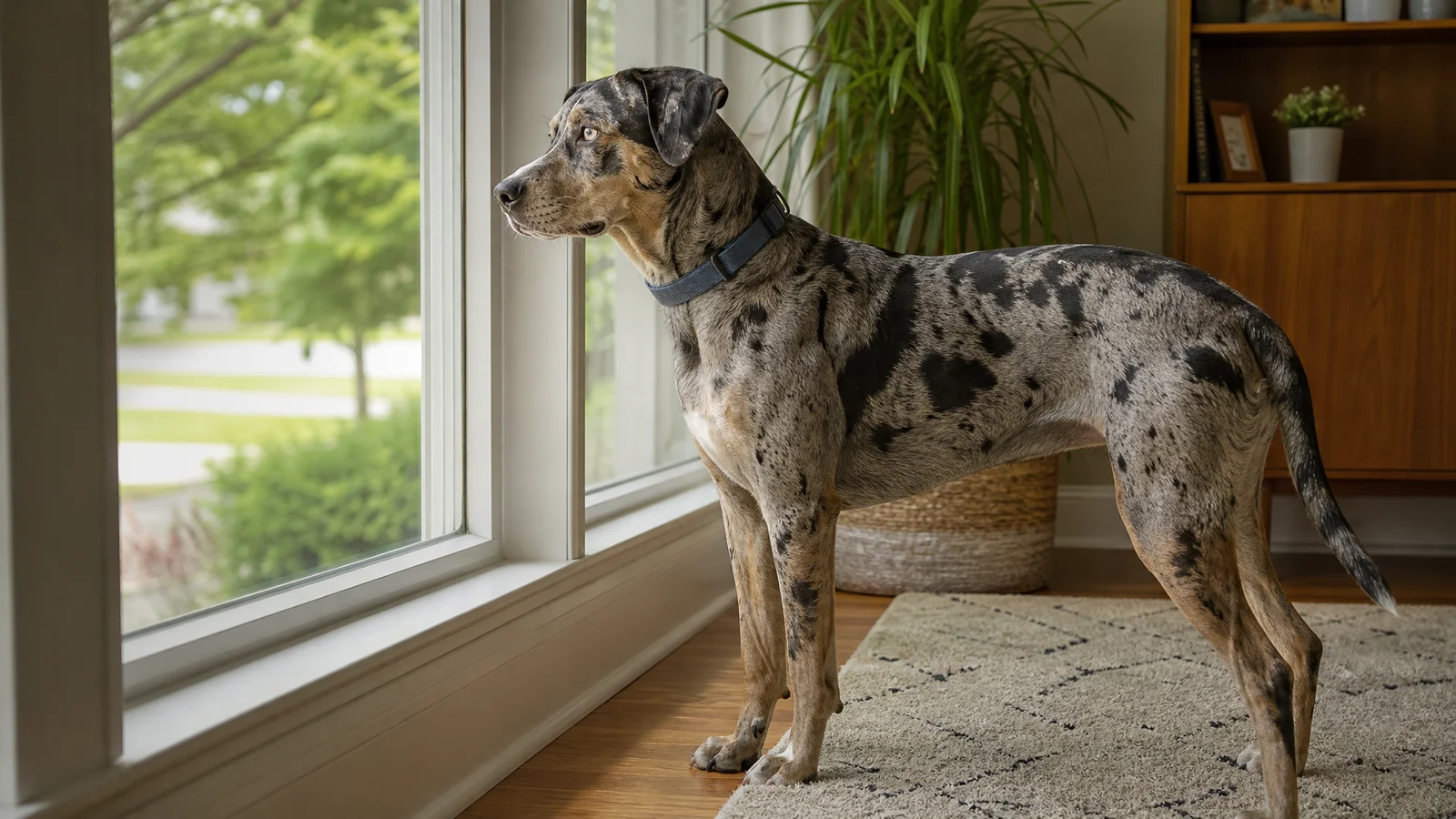
Is it normal for a Catahoula to bark and stiffen at visitors, and how do you stop it? It is normal for the breed, and the usual advice to just socialize more falls short for a dog rated 4 of 5 as a watchdog. More introductions to more strangers assume the dog should end up loving everyone, while a watchful, independent working breed often never will. Pushed too fast, the watchfulness gets louder instead of softer.
Below, you'll find how guarding splits into separate kinds, including window and fence barking, stiff greetings at the door, and yard and car territory, followed by reward-based socialization, a step-by-step greeting routine, and a realistic look at adulthood. Done well, you get an alert dog who relaxes once they see that the situation is handled.
The Natural Catahoula Leopard Dog Watchdog and Guarding
Most of what gets called guarding is really several behaviors wearing one name, and sorting them matters because each responds to a different kind of reward. Breed profiles rate the Catahoula 4 of 5 for watchdog and protective nature, yet openness to strangers sits at only 3 of 5, which describes a dog who notices everything and is neither eager to befriend newcomers nor determined to drive them off.
Their temperament is listed as independent, loyal and watchful, and their territorial instincts are the reason early socialization matters so much for a gentle home companion.
We specialize in Catahoula behavior and training, so we start by separating three patterns. The differences determine what you do next:
- Alert watchfulness is a lifted head, forward ears, and a woof or two that fades as soon as you acknowledge what they saw.
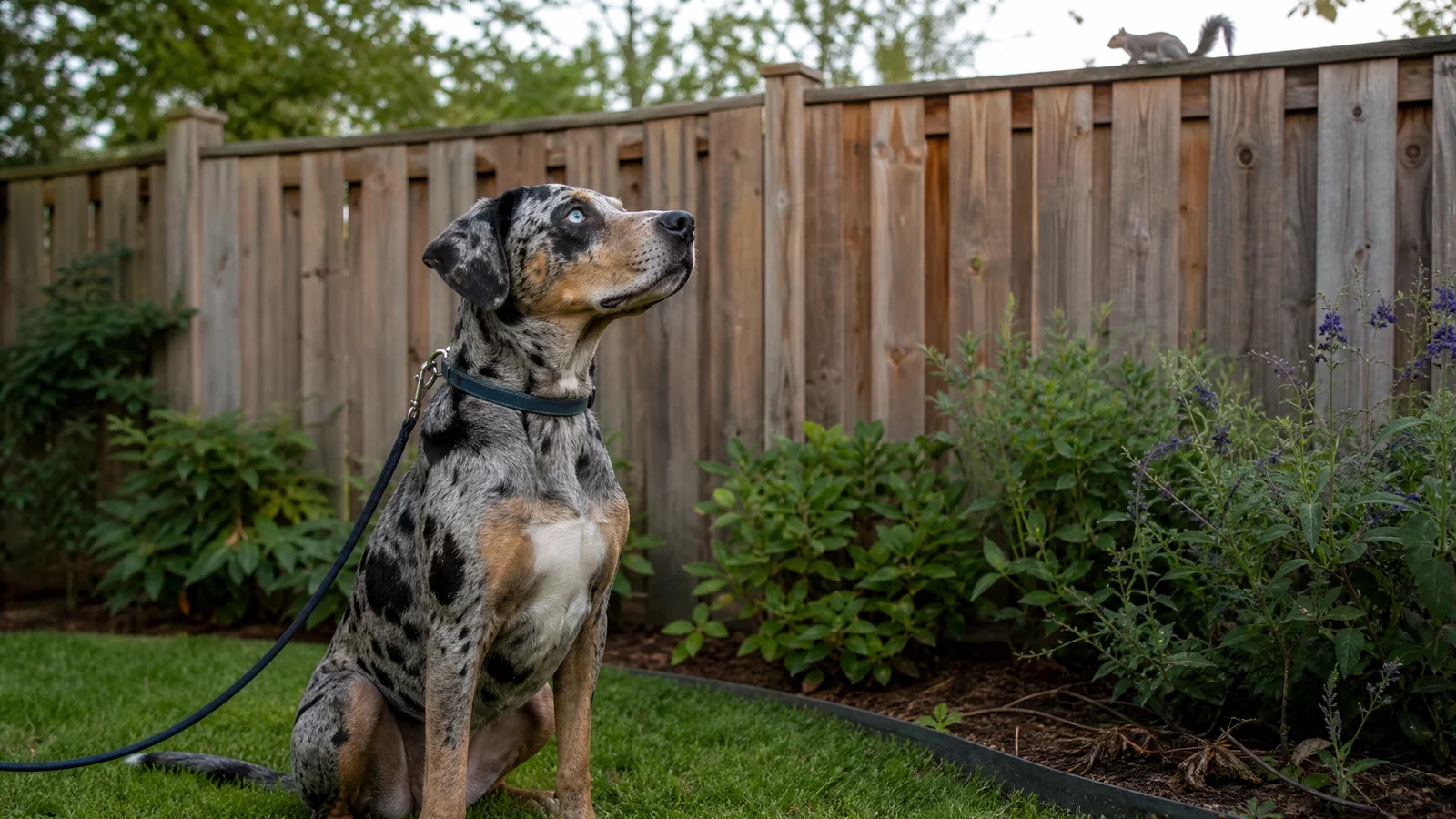
- Territorial display is barking, lunging or posturing at windows, fences, doors, driveways and vehicles, where the dog treats a place as theirs and grows bolder each time the stranger moves on.
- Protectiveness of people is stepping between you and a newcomer, staring hard, or stiffening when someone reaches toward you or a family member.
The first needs little more than a thank-you, which suits a breed whose barking is rated 1 of 5, meaning they tend to bark only to alert. The second needs management and a new routine. The third needs distance and patience, because Catahoulas do not tolerate mistreatment and will assert themselves in self-defense. Expect a blend of all three in one dog, and remember that dogs vary and behavior can shift as they mature.
Alarm Barking as Guarding at Fences and Windows
A Catahoula who spends the afternoon at a front window tends to rehearse one loop all day: a walker passes, the dog erupts, the walker keeps going, and the dog concludes that the eruption worked. Fence lines teach the same lesson with higher stakes, because the dog can run the boundary, build speed, and finish with a lunge. Repetition is the engine, so the first job is to stop the rehearsals.
Cut Down the Rehearsals
Management costs little and works fast. Cover the lower half of the window with frosted film, or move the couch so the window stops being a perch, and during the busiest passing hours give the dog a back room with a stuffed chew. Every skipped repetition weakens the habit, and nobody has to say a word to the dog.
Give the Lookout a Better Job
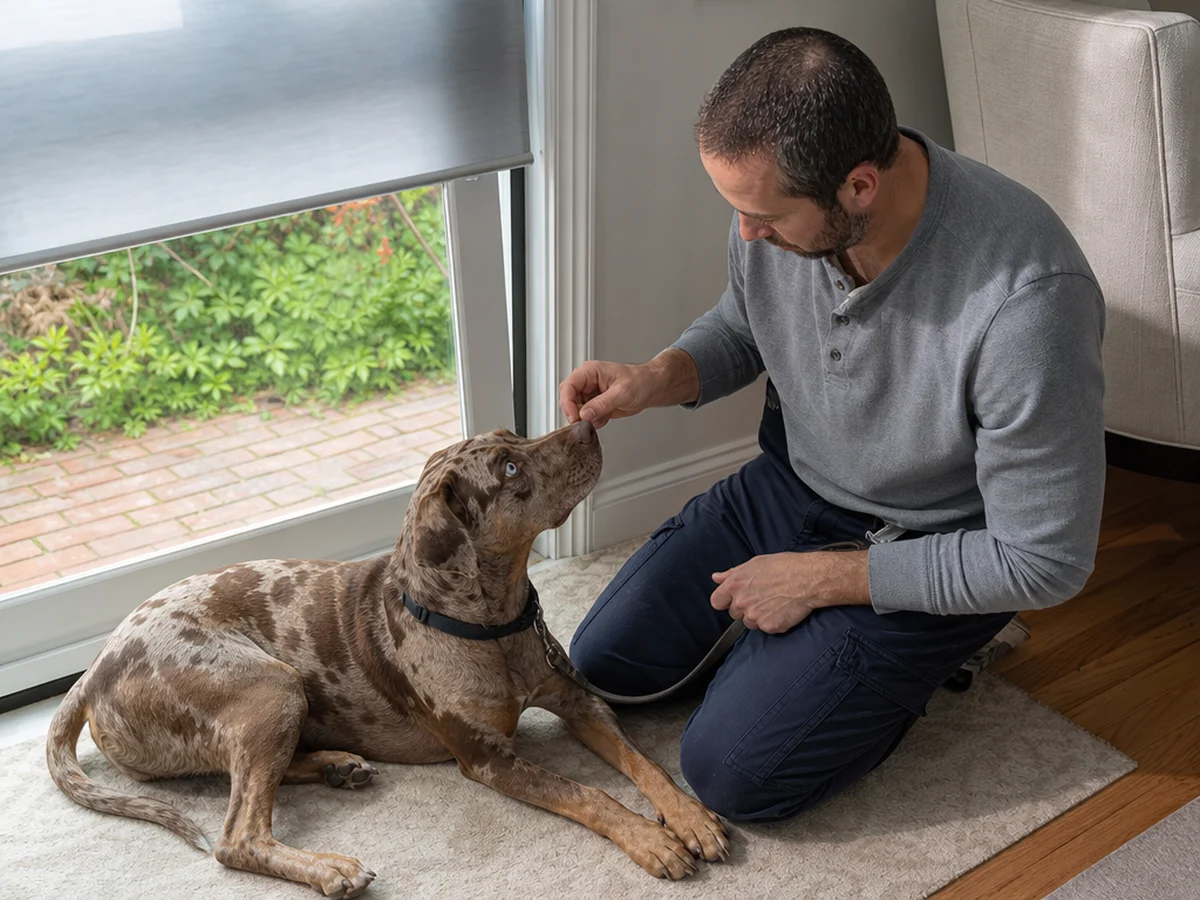
Then reshape the watchfulness itself. Put a mat well back from the window and reward the dog for lying on it, and for glancing at a passerby and then turning toward you, so noticing becomes a cue to look at your face. Mark the quiet moment with yes and deliver the treat on the mat. This is the reward-based training that current evidence supports, including for behavior problems.
If the barking has already started, a calm interrupt beats a shout. Say the dog's name once, step into their line of sight, pay for the first pause, and walk away from the window together. Done consistently, the dog learns that the fastest way to earn your attention is to turn to you, not to the street. Fence manners get their own treatment in our guide to fences for an athletic Catahoula.
Stiff Greetings and Guarding at the Front Door
The doorbell is where many Catahoulas turn a quiet afternoon into a performance. The sound predicts a stranger, the dog rushes the door, and then the door opens onto the very person they were warning about, which feels like proof that rushing was right. Staring at a guest, or circling them while they take off a coat, is the same chain continuing. Breaking it means changing what the bell predicts.
Begin with management so the dog never rehearses the worst version. Before anyone arrives:
- Put the dog in another room or behind a gate with a stuffed chew, so the first minutes of a visit happen without pressure.
- Let the guest settle on the couch before the dog joins, either on leash or from across the room.
- Ask visitors to ignore the dog entirely, which means no staring, no reaching toward them, and no cooing.
- Keep a jar of treats by the door so you can reward the first calm moment instead of hunting for something to give.
Next, make the bell a cue for the mat. Ring it yourself on a quiet day, send the dog to the mat, scatter treats there, and build gradually toward real guests. Circling and heel-focused movement around visitors can also be herding rather than guarding, and our piece on Catahoula nipping and herding people fits alongside this work.
If the dog stiffens or stares hard, quietly add distance and try again later. A dog pushed past their comfort is practicing the wrong lesson, and patience here is also a safety measure for your guests.
Socializing a Catahoula Leopard Dog Around Strangers
A Catahoula who stands a little apart from a new person, takes a long look, and declines to be petted is behaving the way the breed has long been described. The breed standard says it is not uncommon for them to be aloof with strangers. That describes an ordinary Catahoula, not a flaw waiting for repair. Dogs vary, and some stay aloof with strangers for life.
Wariness tips into reactivity mostly through distance. A stranger who approaches quickly, bends over the dog, or reaches for the head removes the dog's choice, and an independent, territorial dog may answer with a bark, a stiff stance or a lunge. Read those as requests for more space. The same caution often extends to unfamiliar dogs, which our piece on Catahoula reactivity toward dogs covers.
Reward Neutrality, Not Friendliness
Stand where the dog can see a stranger across the street, and each time they glance over and look away without tension, mark and treat. The goal is a dog for whom strangers are background scenery, which fits the idea that walking past calmly matters as much as greeting. A Catahoula is allowed to pass most people by. Over many outings, shrink the distance by small steps, and if the dog stiffens, return to the last distance that felt easy.
Start Early, Stay Patient
Puppies have an early learning window, between 3 and 14 weeks of age, when exposure counts most, but its purpose is calm contact with people and places from a comfortable distance. Adults can learn the same neutrality at their own pace. Our wider guide to meeting kids, other dogs and strangers goes further. Regular vet visits matter too, since a sudden change in wariness, especially with stiffness, can have a physical cause.
Calm Greeting Practice for Guests Who Set Off Guarding
Greeting practice works because it hands the decision back to the dog. You are not asking a wary Catahoula to accept contact. You are paying them for staying relaxed while a person exists nearby, and letting closeness grow only when they choose it. The sessions are tiny and the progress is slow, and that slowness is what makes the gentleness last.
Setting Up the Session
Pick a helper your dog has never worried about, and find a quiet spot with room to retreat. Keep each session brief and stop on a good note, while the dog is still relaxed and curious, because a dog who leaves wanting more returns with a better attitude. Bring treats far tastier than ordinary kibble, and teach a mat or place first so the dog has somewhere to settle.
The Greeting Sequence
- Send the dog to the mat at a distance where they see the helper and still take treats readily.
- Have the helper stand side-on with hands down and eyes soft, saying nothing and making no move toward the dog.
- Mark and treat every calm look, and let the dog look away whenever they want, since looking away is a good answer.
- Over several sessions, close the distance only when the dog is loose and eating readily. If they stiffen, return to the last easy distance.
- When the dog is comfortable nearby, have the helper toss a treat near their own feet so the dog earns food by approaching and can leave just as freely.
- Only after many calm repetitions, let the dog sniff a low, still hand if they choose to, then give a release word such as free so the dog knows the exercise is over and can move off.
Keep It Voluntary
Let every greeting be the dog's own choice. Contact the dog did not pick teaches a watchful dog that their warnings are ignored, while patient practice teaches that calm behavior makes the person go quiet and the treats arrive. That suits a breed the standard calls affectionate, gentle and loyal, because gentleness grows from feeling safe.
Protective Guarding of People and Property
Yards and vehicles are where a Catahoula's territory quietly grows, because every delivery truck, passing walker and neighbor coming home at dusk adds to the list of things to be driven off. The dog patrols, the intruder leaves, and the patrol route gets longer. A driveway or a car window becomes one more border to defend, and the same logic applies to the family member the dog decides needs watching over.
Shrink the Territory
Go outside with the dog instead of letting them patrol alone, block access to the stretches of fence beside the sidewalk, and give the space a different purpose with scatter feeding and find-it games. Recall does the heaviest lifting. Practice calling the dog away from the fence when nothing is happening and pay generously, then begin calling when a distant trigger appears. A recall that always ends in a treat grows stronger than the urge to run the line.
For the car, cover the windows or use a covered crate so the vehicle becomes a place to rest rather than a post with a view. Reward calm before any door opens.
Boundaries Around People
If the dog plants themselves between you and a visitor, calmly step away and let the dog follow, then reward when they relax. Keep guests from reaching over the dog, and give a dog who hovers near you a spot of their own on the far side of the room. Space is the kindest boundary you can set.
When to Get Help
Bring in a trainer or veterinary behaviorist who works with rewards only if you see growling at people, snapping, a hard freeze, or lunging that does not settle with distance. Early help is far easier than a long-rehearsed habit.
This is general information, not veterinary advice. If your Catahoula's behavior changes suddenly, or you suspect pain or illness, check with your veterinarian before adjusting the training plan.
Living With a Guarding Catahoula Leopard Dog for Years
Expect the picture to change in stages. Catahoulas may work like adults as early as 10 months, yet they are not fully matured until they are 2 years old, and adolescence can bring a fresh wave of barking at things that never mattered before. That is normal and does not mean training failed. Keep sessions short and fun so the dog stays willing instead of worn out.
With steady practice the watchfulness softens. Window barking gets shorter, the dog glances at a stranger and turns toward you, and greetings become predictable. Plan for the instincts to flare again after a move, a new baby, a stretch of skipped practice, or a change in who visits.
Ongoing care is simple. Run easy repetitions with a helper now and then, keep rewarding neutrality on walks, manage window views, and give daily exercise and jobs, since a tired, mentally busy Catahoula patrols less.
A watchful Catahoula stays watchful for life, because noticing is what they were built to do, and no amount of socialization turns that off. What steady rewards and calm-greeting upkeep change is how the alertness gets spent: a short look, a quiet settle on the mat, and a dog who greets your guests from a comfortable distance, the same dog who noticed them coming long before you did.
Plan for maintenance rather than a one-time cure, and the years ahead settle into a quiet partnership with a dog who keeps a good eye on things. That steadiness is the goal.
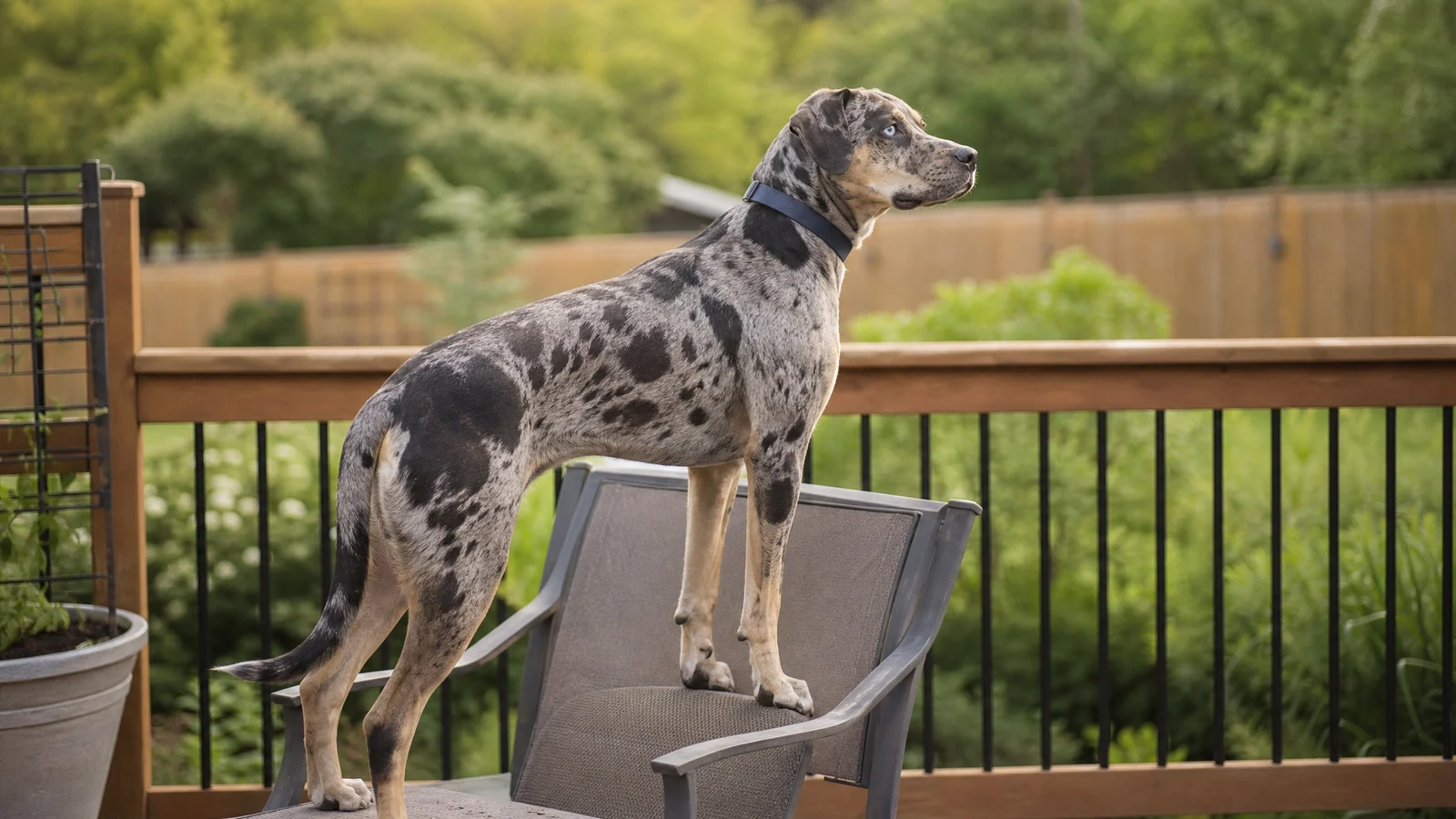 BehaviorClimbing, Jumping and Fence Manners for an Athletic Catahoula
 BehaviorWhy Does My Catahoula Nip and Herd People?
 BehaviorSmart, Independent Catahoula Leopard Dogs and Cues Worth Following