 Catahoula

You ask for a sit once. Your Catahoula looks at you, seems to weigh the offer, then strolls off to inspect something more interesting. New owners often assume the dog did not hear.
They heard. This is judgment, not deafness. Catahoulas were bred to work all day on their own call, so a sharp mind and a strong opinion arrive in the same package. We have trained this breed for many years, and the puzzle most owners face is how a dog this smart can also be this independent. Handled badly, the answer is digging, chewing and guarding. Handled well, it is a loyal partner who thinks the job through.
In this article, we'll go through how the breed differs from an eager-to-please retriever, what independence really means, how a trainability score of 4 plays out at home, and how puppies and adults differ.
A Catahoula Leopard Dog Versus an Eager-to-Please Retriever
Smart and eager are different traits. A retriever, the classic eager-to-please dog, treats your cue as the best offer on the table. A Catahoula treats it as one offer among several, and a scent, a fence line or a distant noise can outbid you. On the breed's trainability scale, 3 means agreeable and 5 means eager to please. Catahoulas score 4. They learn fast, then ask what the work pays.
The gap is widest outdoors. Many owners describe a dog who is reliable in the kitchen and acts as if the owner does not exist in the yard, on a trail or at a cookout. The cue did not vanish. The place got more exciting than the reward.
Open country adds risk. Some owners report dogs who bolted in the mountains and came back muddy from water a mile away. Others keep their dog leashed at night cookouts because bursts of prey drive make a dog hard to find. A leash or long line is the sensible answer wherever the stakes are high.
Before you repeat a cue, run through these checks:
- Did the dog learn the cue in this exact place? Skills built indoors do not travel outdoors on their own.
- Was the reward worth more than the distraction? Real chicken beats kibble beside a fence line.
- Did you ask once, in a clear voice? Repeating teaches a Catahoula that the second ask is the real one.
- Is the dog too excited to think? Add distance from the trigger, then ask again.
Then rebuild in steps: home, driveway, quiet street, busier places, with a high-value reward at every stage. A well-practiced leave it helps too. It gives an overexcited dog one clear job and often calms the whole dog.
Independent Temperament Is Not the Same as Defiance
The breed's recognized temperament is independent, loyal and watchful. Defiance means the dog refuses. Independence means the dog weighs the situation and chooses. A hesitating Catahoula is usually scanning, checking you and checking the surroundings before they commit. Loyalty runs alongside it, and the breed profile rates affection with family at 4 of 5.
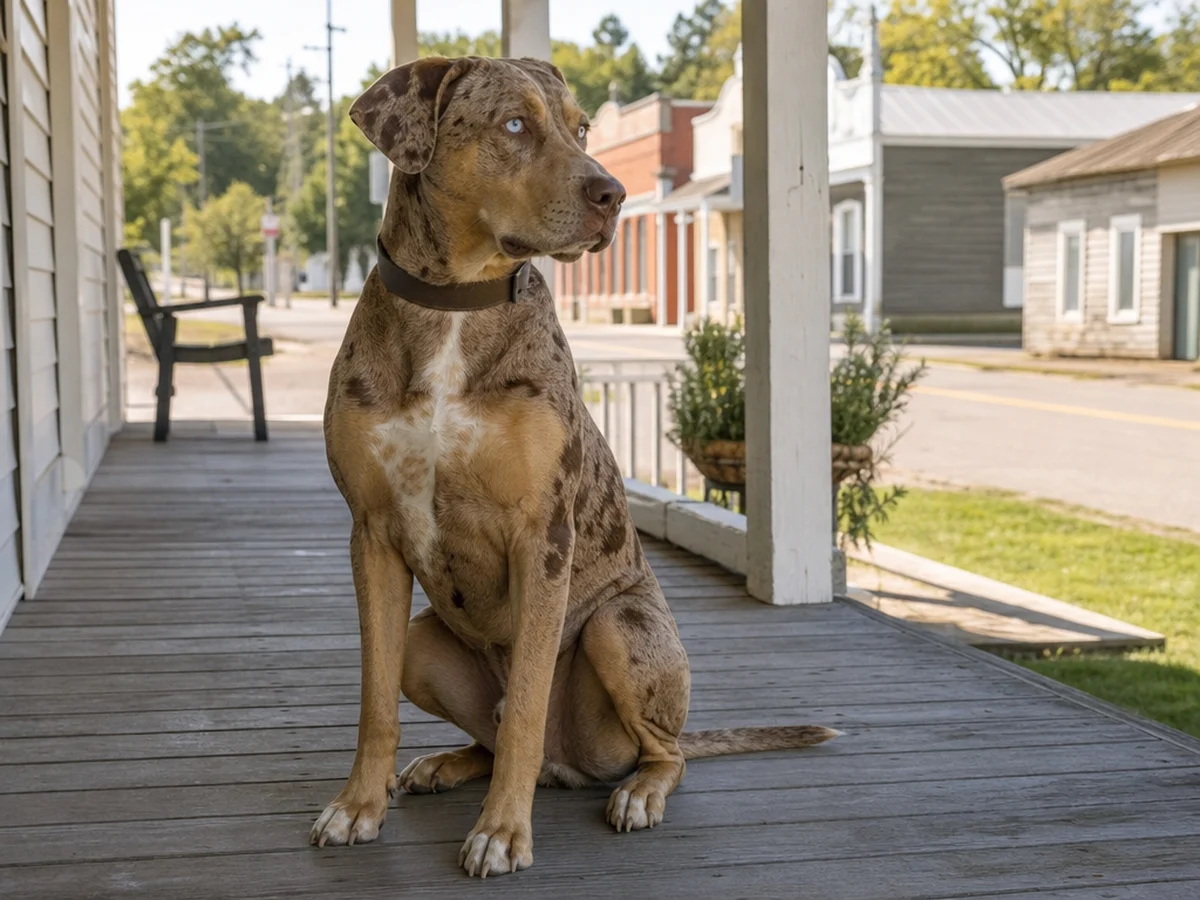
The scores below show where the watchfulness comes from and what to expect from each trait.
| Trait | Score | What to expect |
|---|---|---|
| Watchdog and protective nature | 4 of 5 | Alerting at the door and the fence |
| Barking level | 1 of 5 | Barks mainly to alert, though some dogs also bark for attention |
| Openness to strangers | 3 of 5 | Ambivalent and often aloof at first |
| Good with other dogs | 3 of 5 | Supervise and do not assume |
| Affectionate with family | 4 of 5 | Close and loyal to their people |
Many Catahoulas treat a visitor as family once the owners have clearly welcomed that person, even when the first greeting at the door is rough. Your introduction counts for more than the guest's own friendliness. Greet the visitor warmly yourself and let the dog watch.
Then have the guest ask for a cue the dog knows and reward only calm behavior. Some owners say this ended a stranger-danger reaction. Early socialization matters more in this breed because independence and territorial instincts sit side by side. Our guide to socializing a Catahoula has the steps.
Some dogs bark for attention when visitors arrive or when people, especially people with dogs, pass the yard. Reward the quiet moment, not the noise.
Trainability Score of 4 Versus Temperament in Daily Life
A 4 sounds like an easy dog. In daily life it means the dog can learn nearly anything and still negotiate each step. The score measures capacity, not compliance, so read it next to the other ratings.
This table sets each rating against what owners live with.
| Rating | Score | Daily life |
|---|---|---|
| Trainability | 4 of 5 | Quick to learn, quick to ask what is in it for them |
| Energy level | 5 of 5 | High on paper, but some mixes run low |
| Mental stimulation needs | 4 of 5 | Needs a job or activity, or turns to digging and chewing |
| Adaptability | 3 of 5 | Moderate, so steady routines beat constant change |
Guidance on this breed calls for training that is firm, consistent and kind. Read firm as steady rules and calm follow-through. Catahoulas also do not allow mistreatment and will assert themselves in self-defense, which is one more reason to teach kindly.
The research leans the same direction. Animal behavior specialists recommend reward-based methods alone for every kind of training, including work on behavior problems. A 2020 study of 92 companion dogs found that pets trained at reward-based schools displayed less stress and lower cortisol increases once sessions ended. A watchful dog already reads every room, so calm sessions matter. Pay well, and the negotiation ends quickly.
The Serious-at-Work, Clownish-at-Home Temperament
The same dog shows two faces. On a task they are serious and business-like. Off duty they are playful, affectionate and often clownish. Each face needs something different from you.
On the Job
A working Catahoula wants the task to make sense. The breed needs space and a job, and without one you will see holes in the yard and chewed furniture. K9 nose work fits well, since the dog searches out scents hidden indoors and outdoors. Agility suits a climber and jumper too, so look for a positive-methods agility instructor. More ideas are in our piece on sports and working roles for Catahoulas.
Energy varies more than the 5 of 5 rating suggests. Some Catahoula mixes are low energy. Some owners report energy that lasts into old age, with a dog near 11 years old still outlasting a much younger one. Recovery after exercise varies widely between dogs too. Plan for the individual dog and their age.
A common tip says to tire a Catahoula out and the behavior will sort itself. Many owners report otherwise. Some dogs stay wound up after a long run, then bark at everything at a restaurant. Others get a daily run or hike of a few miles plus hours of crating and still act out. Crate time is rest, not enrichment, and our guide to crate training a Catahoula covers the balance. Add scent games, puzzle feeders and new tricks to fill the mental gap.
Off Duty at Home
At home the clown also guards. Protectiveness can reach past the house to the dog's own space, a favorite ball and the family. Teach these skills with rewards, starting early:
- Trading: offer something better, take the item, then often hand it back so giving things up never feels like a loss.
- Calm settling: reward a relaxed down on a mat while people come and go.
- Respect for space: keep people from crowding the bed or crate, and reward the dog for staying relaxed.
Notice early signs of guarding, such as freezing over an item or stiffening when someone nears. Add distance and trade instead of waiting to see what happens. For triggers you can predict, use a cue. Asking for a down just before the doorbell rings, and rewarding the dog for staying there, gives them something calm to do.
Training Built on Repetition Versus Training Built on Purpose
Drill and repeat is the usual way to teach: same cue, same spot, many repeats. A Catahoula tends to tune it out. The dog wants the work to mean something.
Purposeful training ties each cue to something the dog wants. The door opens after a sit. The leash clips on after a settle. The bowl goes down after a trick. Many owners ask for a command or trick before meals and treat it as mental work that stands in for the job the dog was bred to do. We specialize in this breed's behavior, and this swap, from repeats to reasons, is the one we think matters most.
These pieces keep an independent dog engaged:
- Soft, smelly food in tiny pieces, because fast delivery matters more than size.
- A rotation of rewards so none goes stale, such as chicken, a tug round, a thrown toy or a release to sniff.
- A marker word at the exact moment of the right behavior, followed at once by the reward.
- Short sessions that stop before the dog loses interest.
- A few fixed rules everyone in the home follows: doors open after a sit, anything the dog has gets traded, and unfenced outdoor spaces mean a leash or long line.
Praise alone rarely wins against a fence line. Keep it as a bonus on top of rewards the dog truly values.
Puppy Temperament Compared With the Adult Catahoula Leopard Dog
Puppies are the more impressionable audience, though still not eager. They absorb people, places and sounds quickly. That makes early socialization the priority, since independence and territorial instincts show up later. Introduce new people calmly and keep every session fun.
Adults ask more questions. A Catahoula can work like an adult at 10 months but is not fully mature until 2 years, so keep jobs and exercise fun to avoid early burnout. Adolescence tests the rules. Some owners trace rough patches to the teenage phase and too few outings. Our Catahoula puppy training timeline shows what to ask at each stage.
Here is what shifts as the dog grows:
- Puppies can learn short, simple cues. Pair each new person, place and sound with food.
- Adolescents need more outings and more mental work, and the same rules as before.
- Adults may turn selective about other dogs, and some owners see this around a year and a half. Some like dogs they know but feel they must control the many variables at a dog park, so supervise.
- Watch for territorial signs as a new dog settles in at home, such as snarling or lunging at people near the property, and reward calm behavior early.
Space matters at every age. The breed is not suited to city or apartment life, and room to roam, along with a quieter setting, helps an energetic, watchful dog settle.
Catahoula Leopard Dog Progress Worth Trusting, Help Worth Booking
Progress with this breed looks small before it looks big. Judge it by behavior in the real world, not by a perfect sit in the kitchen. Regular vet visits are part of the picture as well, and if behavior changes suddenly, book one first.
These signs say the approach is working.
You may notice faster check-ins on walks, with your dog glancing back at you without a cue. They settle more quickly after the doorbell or when guests arrive, and their responses get steadier, with cues that hold in the yard and on the street, not only in the kitchen. Trades go smoothly too, and the dog stays relaxed around toys and space.
If you see the following, reach out to a qualified trainer or behaviorist who teaches with rewards.
Guarding that escalates, such as snarling, lunging or stiffening over space, toys or people, is a clear reason to call. So is wariness of strangers that grows stronger or spreads to new places. The same goes for no improvement after weeks of consistent work, and for sudden behavior changes, once your veterinarian has checked the dog.
If territorial behavior is slow to improve, asking a reward-based professional early is sensible, not a failure. A Catahoula is a capable working mind that cooperates when the work makes sense to them. Purpose earns cooperation. Give them a job, daily exercise, kind teaching and rules that stay put, and the independence that frustrated you becomes loyalty you can rely on.
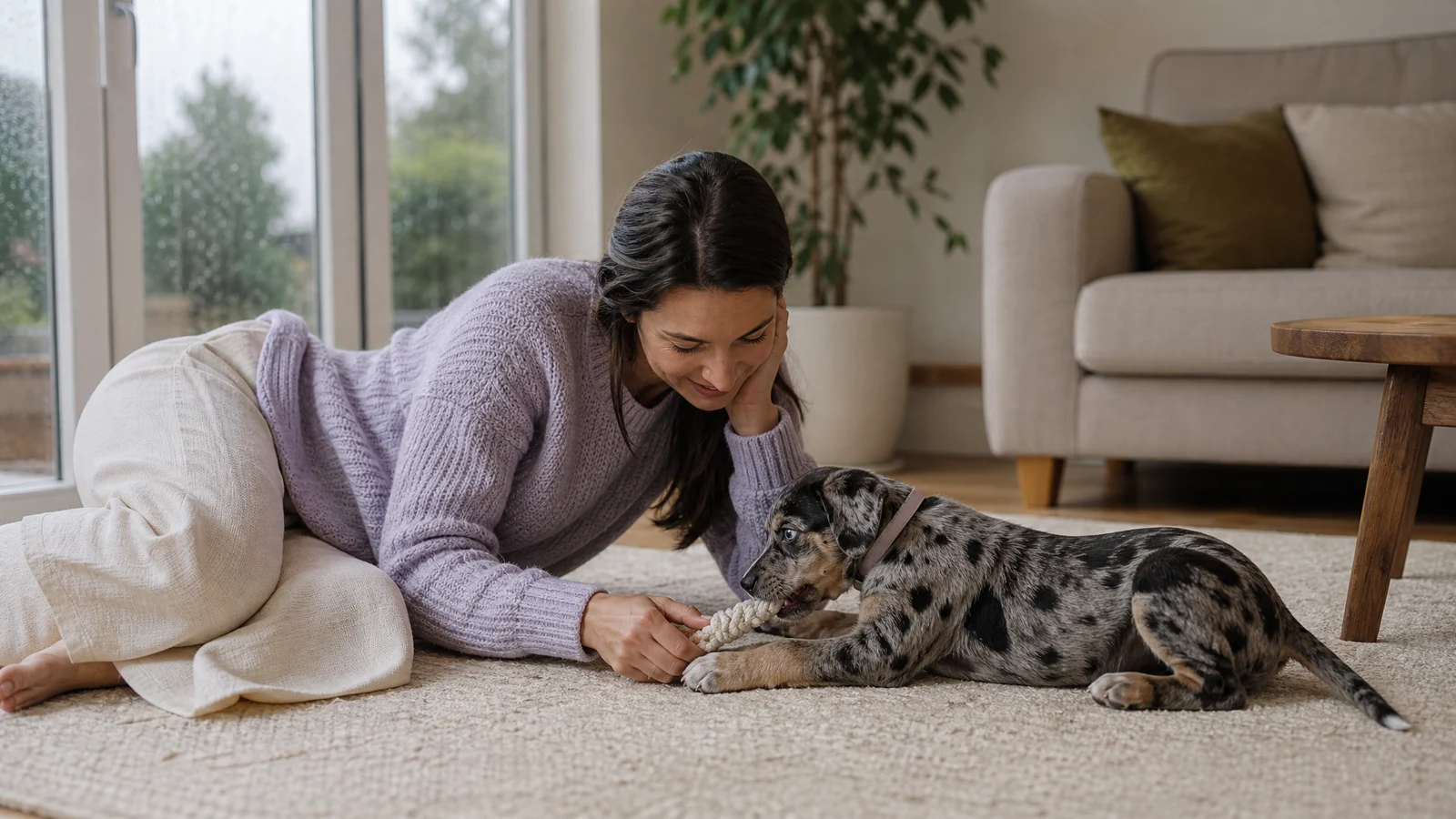 Puppy trainingCatahoula Leopard Dog Puppy Training Timeline, 8 Weeks to 2 Years
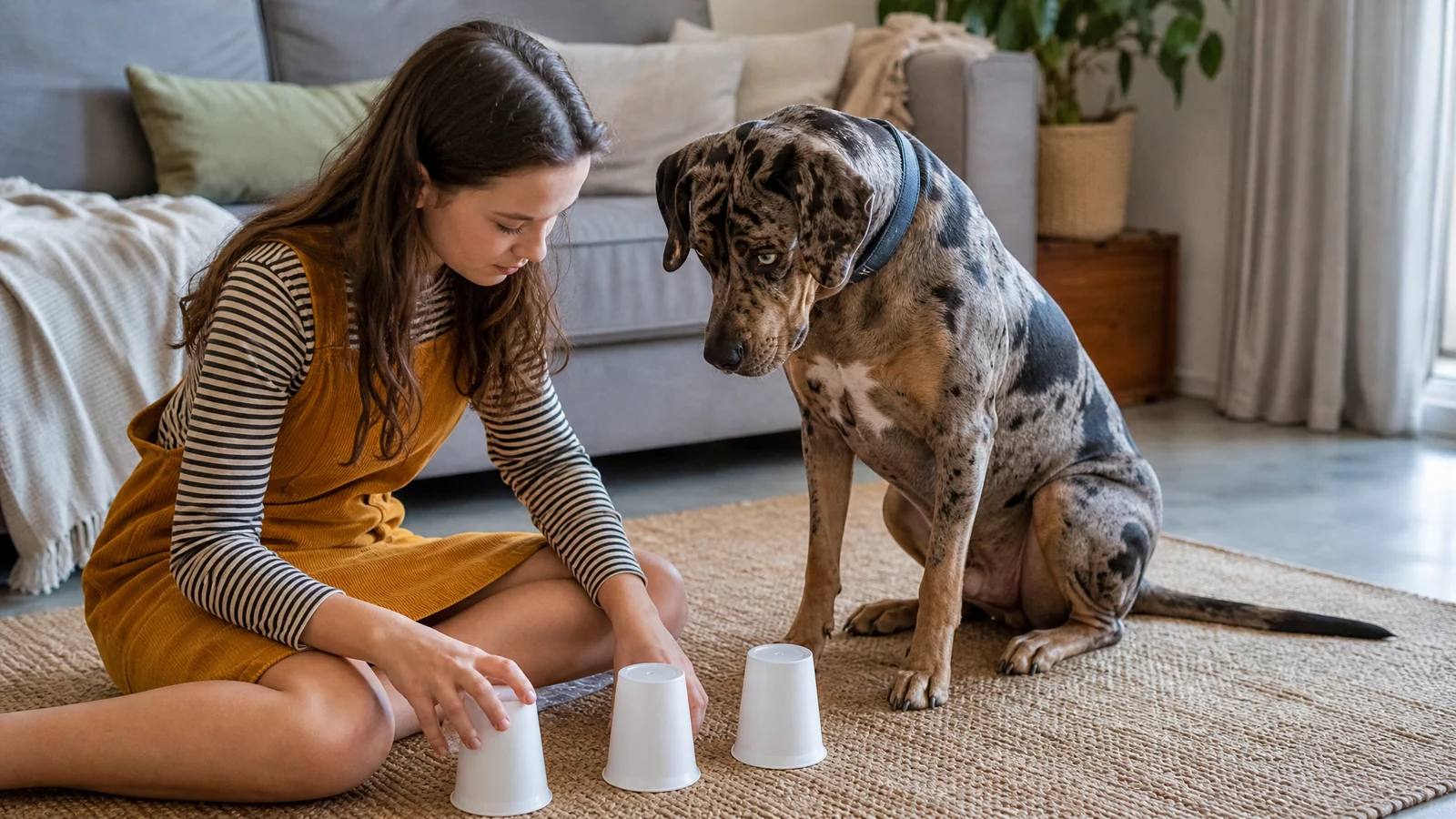 Exercise and jobsWhat Jobs Can a Catahoula Leopard Dog Do? Sports and Working Roles
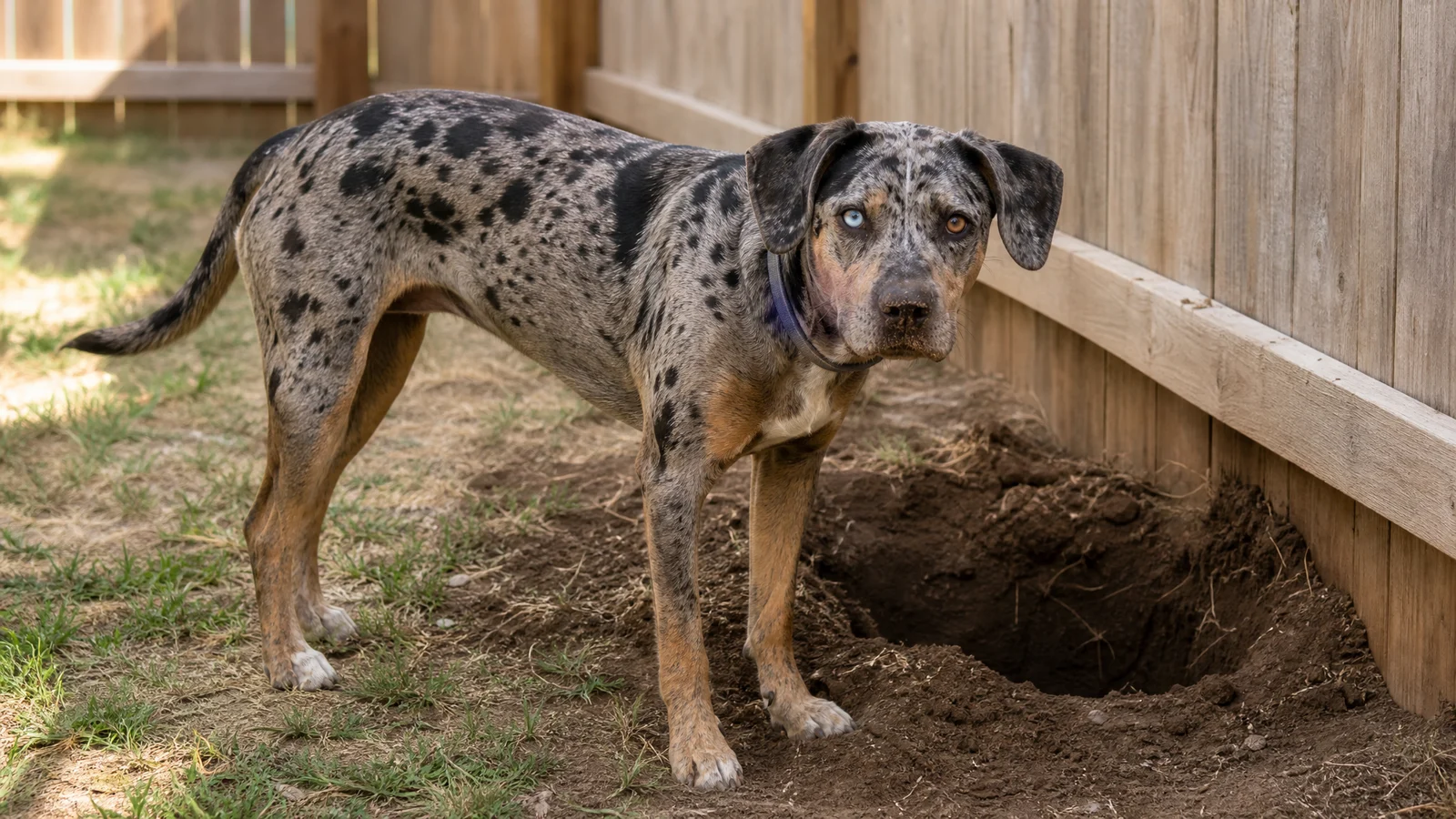 BehaviorCommon Catahoula Behavior Problems and the Instinct Behind Each