 Catahoula
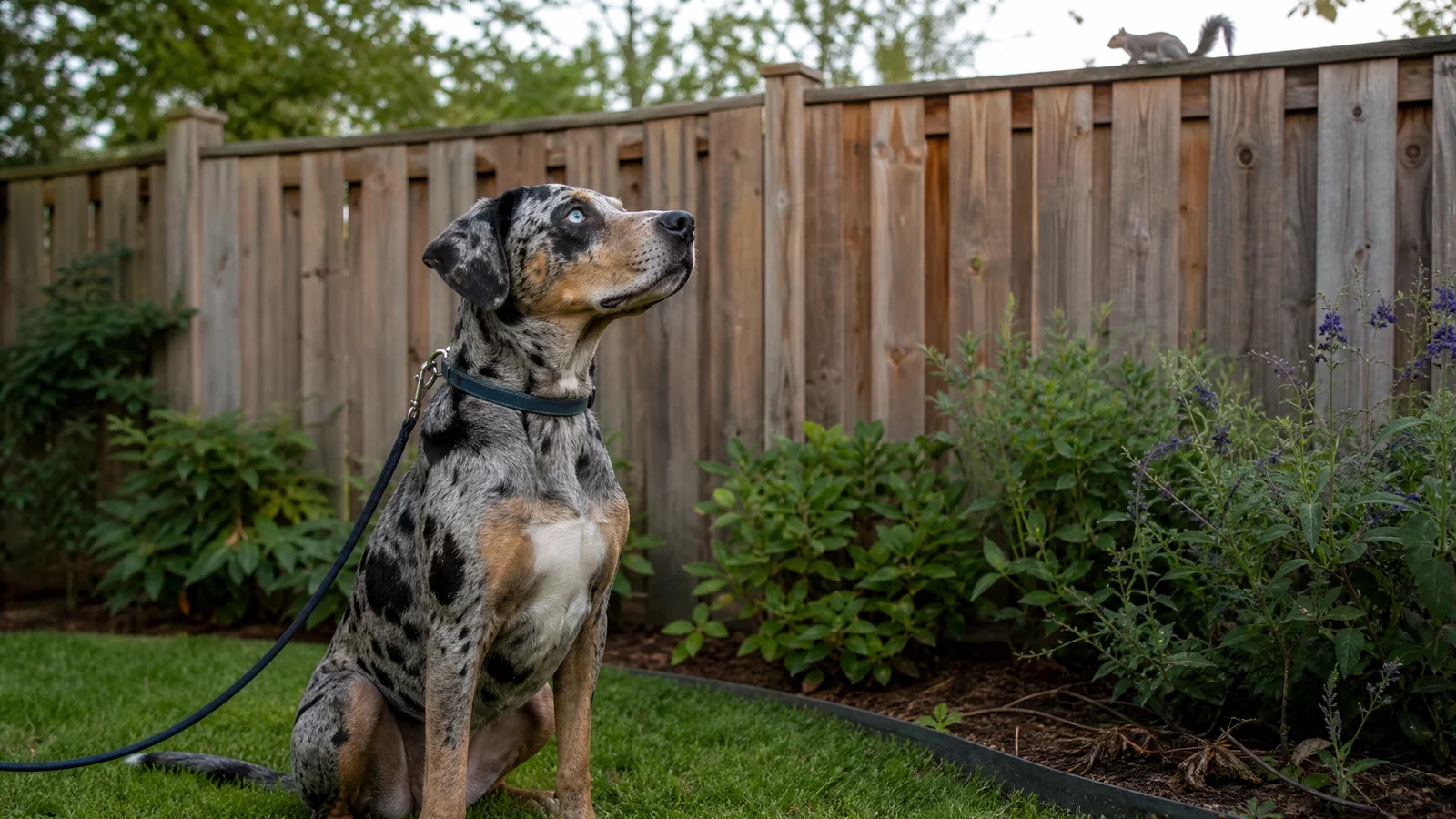
Why does your Catahoula ignore you when you know they understand? The sit is flawless in the kitchen, for cheese. Then the doorbell rings or a squirrel crosses the yard, and you are talking to a spotted statue who has stopped taking your calls.
The usual answer is to be more firm. For a dog who weighs whether a cue is worth the effort, firm mostly adds noise, and every extra ask teaches them the first one was optional. Handled badly, you get a dog who tunes you out at doors, on walks and anywhere interesting. Handled well, you get a partner who answers once.
We'll walk you through the beliefs that keep owners stuck, from stubbornness and repeated cues to treats, practice, power struggles and age, then the signs that your plan is working and the signs that call for a professional.
Catahoula Leopard Dog Independent Thinking
Case file: a Catahoula ignores a familiar cue, and the owner reads the pause as stubbornness. Start with the breed. The temperament is listed as independent, loyal and watchful, and the breed profile scores trainability 4 of 5 on a scale whose bottom end is labeled "Self-Willed." That describes a capable worker with opinions, not a student failing the course. Verdict: mostly wrong.
Choice Versus Refusal
Refusal means the dog doesn't know the cue or can't manage it right now. Choice means they know it cold and are deciding. You can tell the difference in a minute by asking in a quiet room with a good treat in your hand. If the sit appears, you were looking at a choice.
Many owners describe a dog who is obedient indoors and acts as if the owner doesn't exist outdoors. Others live with a dog who barks for attention when visitors arrive or when people walking their own dogs pass the yard. Same dog, same cue, different math. Owners who tried a calm "leave it" outdoors report it can bring an overexcited dog back down enough to think again.
What a Cue Is Worth to the Dog
A cue is a trade of effort for pay, with everything else in the area bidding against you. Your "sit" offers a small treat and a "good dog." The doorbell offers a stranger, new smells and a chance to run the show. The temperament is described as business-like when working and clownish at home, which fits a dog who gets very serious about whatever they have decided matters.
Visitors show this clearly. Owners report that once they have clearly welcomed a guest, the dog treats that person like family, even if the first greeting at the door was rough. Your introduction counts for more than the guest's charm, so make it on purpose.
Better still, have guests ask for cues the dog already knows and pay only calm behavior. Owners who do this report the stranger-danger reaction fading, because the dog now knows what to do when someone new walks in. Our piece on what an independent temperament means goes deeper. Fix the value and the difficulty before you blame the dog.
Repeating Cues Around Independent Thinking
Case file: the cue gets repeated, then repeated louder, while the dog learns to wait. Nearly every owner does this without noticing. Our team has trained Catahoulas for a long time, and the repeated cue is the first habit we take out of a household.
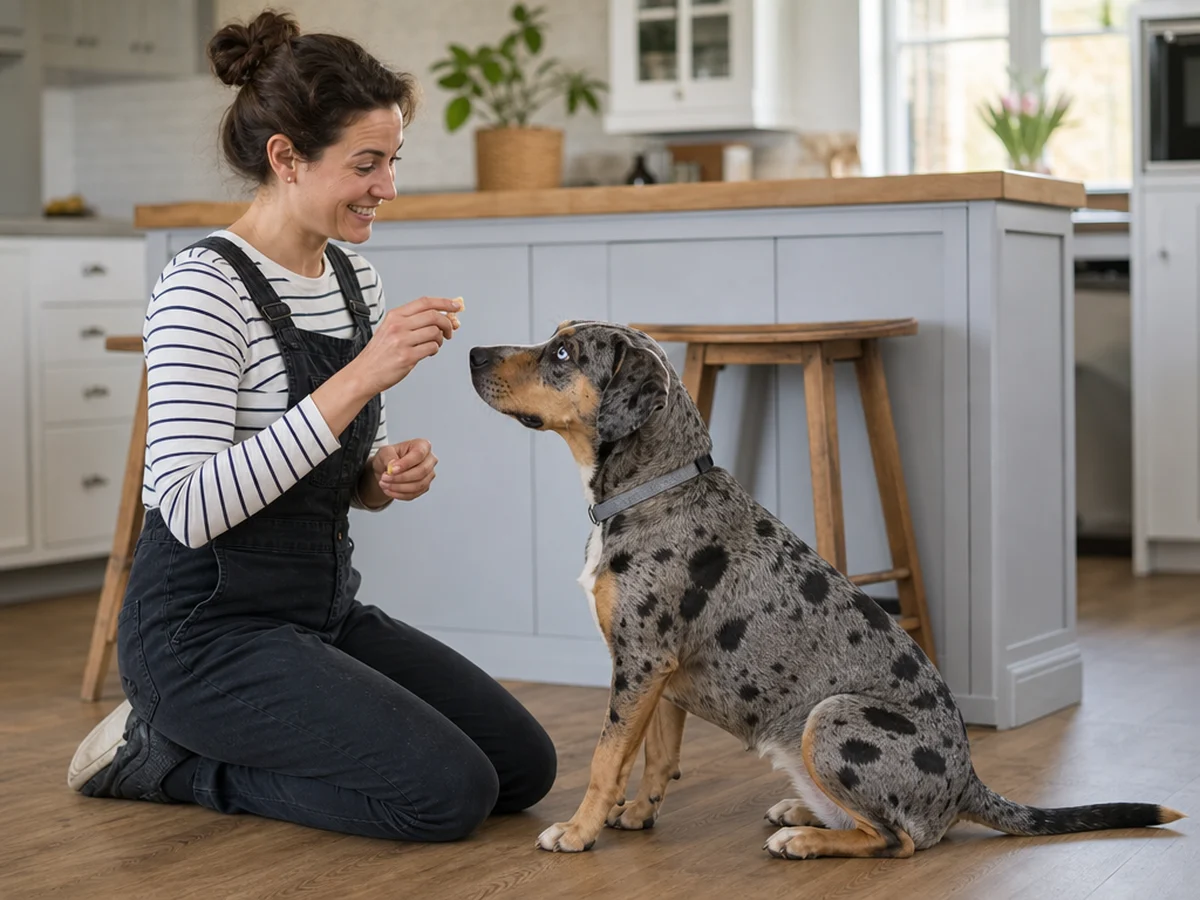
Here is what the dog learns. The first "sit" is a heads-up, the second is a reminder, and the fourth is the one that counts. You have built a countdown and trained the dog to wait for the end of it. Each ignored cue is also a rep of ignoring, and a clever dog gets good at things fast.
Asking once and getting an answer is a skill with steps. The sequence keeps each attempt clear: Follow it in the same order.
- Pick a moment you can win, with the dog nearby, reasonably calm, and a reward already in your hand.
- Say the cue once in a normal voice, then stay still and give them a few seconds to think.
- If they answer, say your marker word and pay right away.
- If they don't, skip the second request. Make the next try easier by stepping closer, moving somewhere quieter or waiting until their attention returns.
- Treat the miss as information. The cue was too hard for that spot, or the pay was too small for that crowd.
The pause feels endless the first week. Stick with it, because a dog who learns that you ask once and pay well starts watching for the ask.
The same rule runs the recall. Only call when you will praise, because a call followed by anything unpleasant makes coming less likely next time. On walks, that means calling your dog out of a good sniff only when you are sure of winning. Otherwise, walk over and hand out the treats yourself.
Verdict: repeating teaches waiting. One clear request, followed by an easier reset when it fails, teaches responding.
Independent Thinking Needs Practice
The belief here is that a bright dog needs only a few lessons and then knows it for life. A Catahoula does learn fast, but quick learning and reliable behavior are different things. The breed profile scores trainability at 4 of 5, mental stimulation needs at 4 of 5 and energy at 5 of 5, so a dog who has mastered a cue in the kitchen is already looking for the next puzzle.
Keep sessions short and keep them fun. The breed may work like an adult as early as 10 months but is not fully matured until about 2 years, and the advice for young dogs is to make every job and exercise enjoyable so they don't burn out early. Stop while your dog is still keen, with a cue they got right, and they will come back to the next session with more interest.
One Change at a Time
Then raise the difficulty one thing at a time. Change only one of these in a given session: That keeps success readable.
Move to a new room or the yard while keeping the cue and reward unchanged. Once that works, ask from farther away or while you face a different direction.
When those changes are easy, place one familiar toy nearby or have someone cross the room. Ask for a slightly longer hold only after the location and distraction changes are reliable.
If your dog misses, return to the previous level and set up an easy success next time. A thinking dog who keeps succeeding learns that your cues are worth their effort. A dog who is asked too much too soon learns that ignoring you costs nothing, and that is how a cue they once knew well quietly fades.
Catahoula Leopard Dog Choice Is Not Defiance
Case file: a Catahoula takes over the doorway because nobody has given them another job. We don't see it that way. This is a watchful, independent working breed with strong territorial instincts, and what looks like a bid for control is usually a dog filling a gap, because nobody has shown them what to do instead.
What the breed does well with is firm, consistent but kind training and a predictable routine. That means the same calm cue every time, the same reward for the same good answer, while everyone in the home follows one shared set of rules. A dog who knows what comes next has far less reason to make up their own plan.
A Job at the Door
Structure matters most at the front door, where watchfulness turns into barking, lunging or hovering over visitors. Give your dog a job instead of leaving them to guard. Ask for a familiar sit or down, and reward only the calm response.
Many owners also report that once they have clearly welcomed a visitor, the dog treats that person like family, even if the first greeting is rough. Some owners cue a down before a likely trigger, such as a knock or a passing dog, because a dog lying down tends to stay quiet.
If your dog's reactions seem to be growing rather than settling, ask your veterinarian to rule out health causes, and do not wait for the behavior to fix itself. Calm, clear cues and a rewarded routine will do far more than any contest of wills.
Rewards for Independent Thinking
Case file: praise alone stops buying a response as soon as the setting becomes difficult. A bribe is waved around to talk a refusing dog into something. A reward is the wage paid after the work. For a dog deciding whether a cue is worth the effort, the wage is the whole argument. The dog who seems to work for praise is usually collecting other pay too, like the door opening or the ball coming out.
Reward Value
Match the pay to the difficulty. A dry biscuit may beat a quiet kitchen and lose badly to a passing dog. Your dog's ranking of rewards is the only one that counts, so watch what they work hardest for. Life rewards count as well, such as a thrown ball or permission to sniff the hydrant they have been eyeing.
This table shows how the pay can climb with the setting. Match the reward to the difficulty: Harder work earns better pay.
| Setting | Difficulty | Reward that fits |
|---|---|---|
| Quiet kitchen | Easy | A small everyday treat and praise |
| Yard with nothing happening | Moderate | A better treat, delivered fast |
| Front walk with smells and noise | Hard | Your best food, in a generous handful |
| Another dog in view | Hardest | Top food plus a release to move or sniff |
Fading Rewards
Fading does not mean stopping. Once the first request works at a level, make the pay less predictable. Sometimes it is a treat, sometimes a game, sometimes just the door opening. Keep an occasional jackpot for an especially quick answer, because this dog is still keeping score.
Pull the pay too fast and the cue slides back to optional. If responses slow down, pay better for a while. Nobody calls a paycheck a bribe.
Independent Thinking Across Distractions
Case file: a fast learner masters the kitchen version and then loses the cue outdoors. They do pick things up fast, just not always what you meant. The breed profile scores mental stimulation needs at 4 of 5 and energy at 5 of 5, and without training and mental work, Catahoulas can turn destructive, digging holes and chewing. A thinking dog with nothing to think about will find a project, and you will not enjoy it.
Practice is also how a cue learns to travel. A sit trained only in the kitchen is a kitchen sit. Build a distraction ladder and climb it slowly:
- Work where the cue is already strong until the first request succeeds nearly every time.
- Move to other rooms and the back door, with nothing exciting on offer.
- Try the yard when it is boring, then when something small is happening.
- Move to a quiet sidewalk, then a busier one, then a spot where another dog is visible in the distance.
- Step up only when the current rung works. If it falls apart, go back one rung without drama.
Keep sessions short. This is a dog built for agility and endurance, which tempts owners to drill for ages, but a bored athlete gets sloppy and then inventive. End while they still want more. Our reward-based Catahoula training guide lays out the basics.
No Catahoula Leopard Dog Power Struggle
Case file: a Catahoula watches the window and barks at visitors because the lookout job is vacant. That reading turns you into an opponent, and the dog doesn't see a contest. What you are looking at is a watchful, protective breed (the profile scores watchdog nature 4 of 5) doing a job they believe in, with no instructions from you.
Replace the argument with structure. Give the door a routine, give the dog a spot to settle, and teach a cue for what to do when something happens. Some owners report that their dogs stay silent while lying down, so they ask for a down before a predictable trigger like a delivery. Use the same word, the same calm voice, one ask, then pay. Consistent but kind beats loud every time.
Other dogs follow the same logic. Many Catahoulas do well with dogs they know but find a dog park too unpredictable, as if they must manage every variable. Growling at pushy play invitations or an occasional snap says the setting is too much, not that your dog is picking a fight. A small set of familiar dog friends usually suits them better, and our piece on socializing a Catahoula shows how to build that circle.
Does Independent Thinking Fade?
Case file: teenage chaos settles, but independent decisions remain part of adult life. This one is partly true. Teenage chaos does settle, but the independence is part of the breed. Catahoulas may work like an adult as early as 10 months and are not fully matured until 2 years, so expect a long adolescence.
What Changes
Impulse control improves, attention lasts longer, and the urge to test everything cools. An adult can handle longer sessions and longer waits. Cues you paid well for in youth hold up better, because the habit of answering has years behind it. Our Catahoula puppy training timeline shows what to expect at each stage.
What Needs Ongoing Work
Watchfulness and territorial instinct don't expire. Owners report territorial behavior appearing a few months after a dog settles into a new home, with snarling or lunging at people near the property. Others see a dog turn against most other dogs around a year and a half. More space can help, and some owners say a move to the country eased anxiety, though suspicion of strangers near the property remained.
Early training and wide exposure are a foundation, not a guarantee. Some dogs stay reactive anyway, so keep managing the setting and keep paying for good choices well into adulthood.
Progress With Independent Thinking
Progress is a trend over weeks, not your best afternoon, and a dog who thinks for themselves will always have off days. Judge by patterns rather than one good walk. Keep regular vet visits on the calendar too, since a checkup is the first step when responses change suddenly. These signs say your plan is working:
- Answers come on the first request more often, with a shorter pause than last month.
- Cues hold as you climb the ladder, so a kitchen sit now works on the porch and then in the yard.
- You have thinned the treats, yet responses stay crisp in the hard moments.
- Ignored cues become rare because you stop asking in spots that are too hard.
- Guests who ask for known cues and pay calm behavior get a settled greeting instead of barking.
Bring in a professional who uses reward-based methods if progress stalls despite good pay and small steps, behavior changes suddenly, or you see growling, hard stares, lunging or snapping. Early support is worthwhile, and persistent reactivity is not your failure.
A Catahoula will always make their own decisions, so make the decision easy: ask once, pay well, raise the difficulty a rung at a time and give a high-energy mind real work. Clear requests and fair wages turn ignoring into freely offered cooperation.
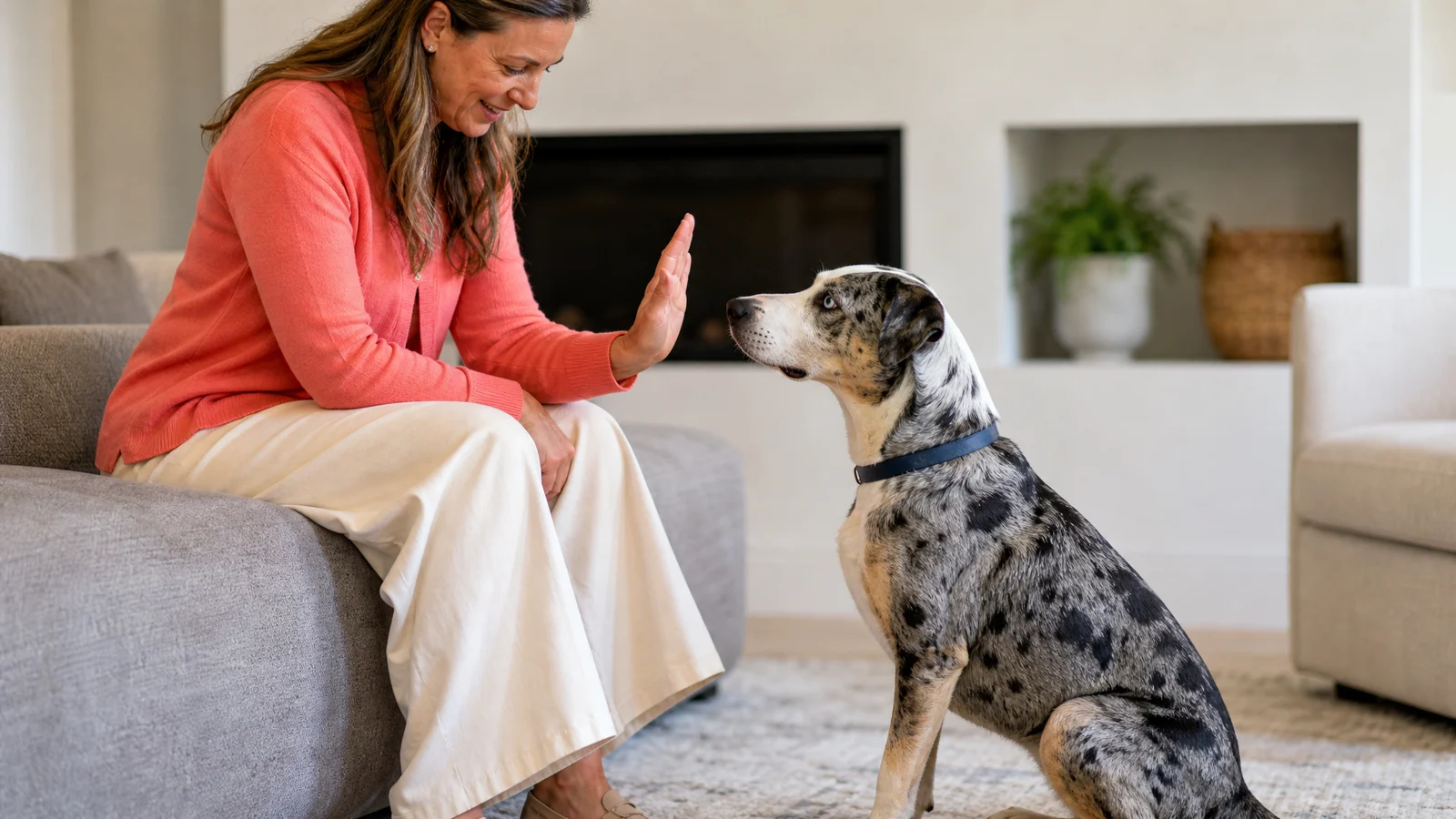 Training basicsTeaching Hand Signals to a Deaf Merle Catahoula Leopard Dog
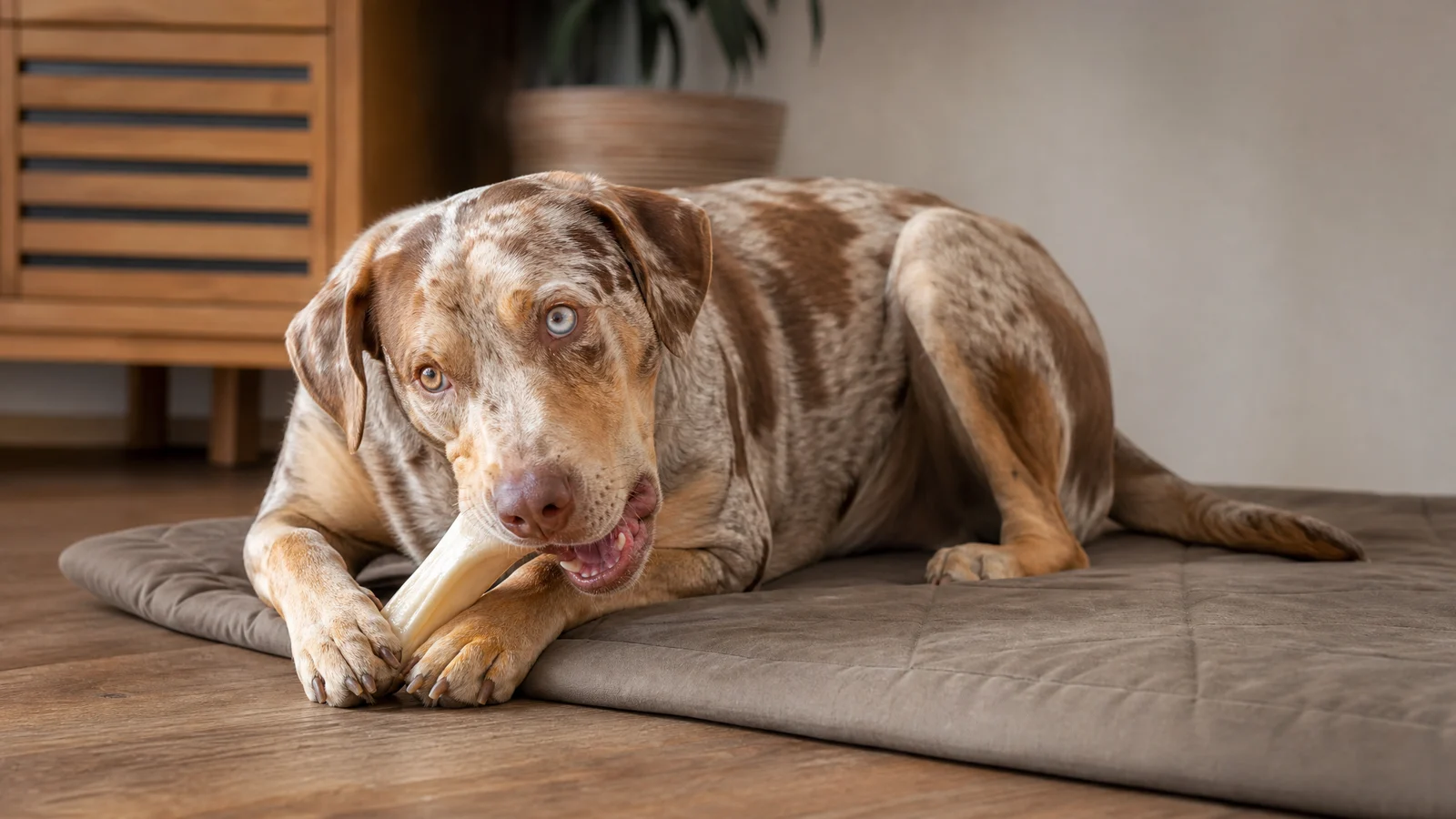 BehaviorTrading Up With a Catahoula Leopard Dog Who Guards Toys and Bones
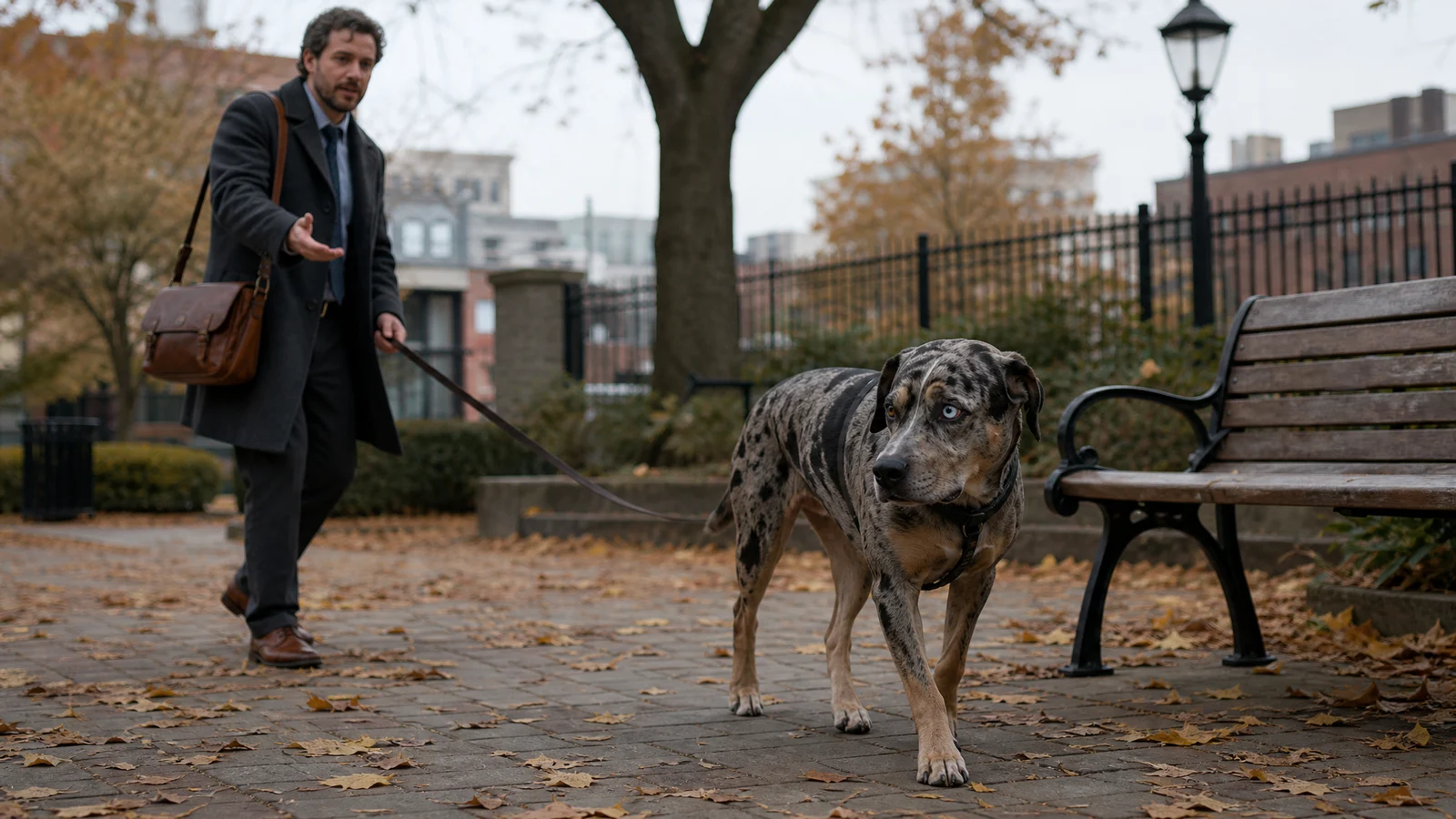 Training basicsAre Catahoulas Easy to Train? What an Independent Temperament Means