 Catahoula
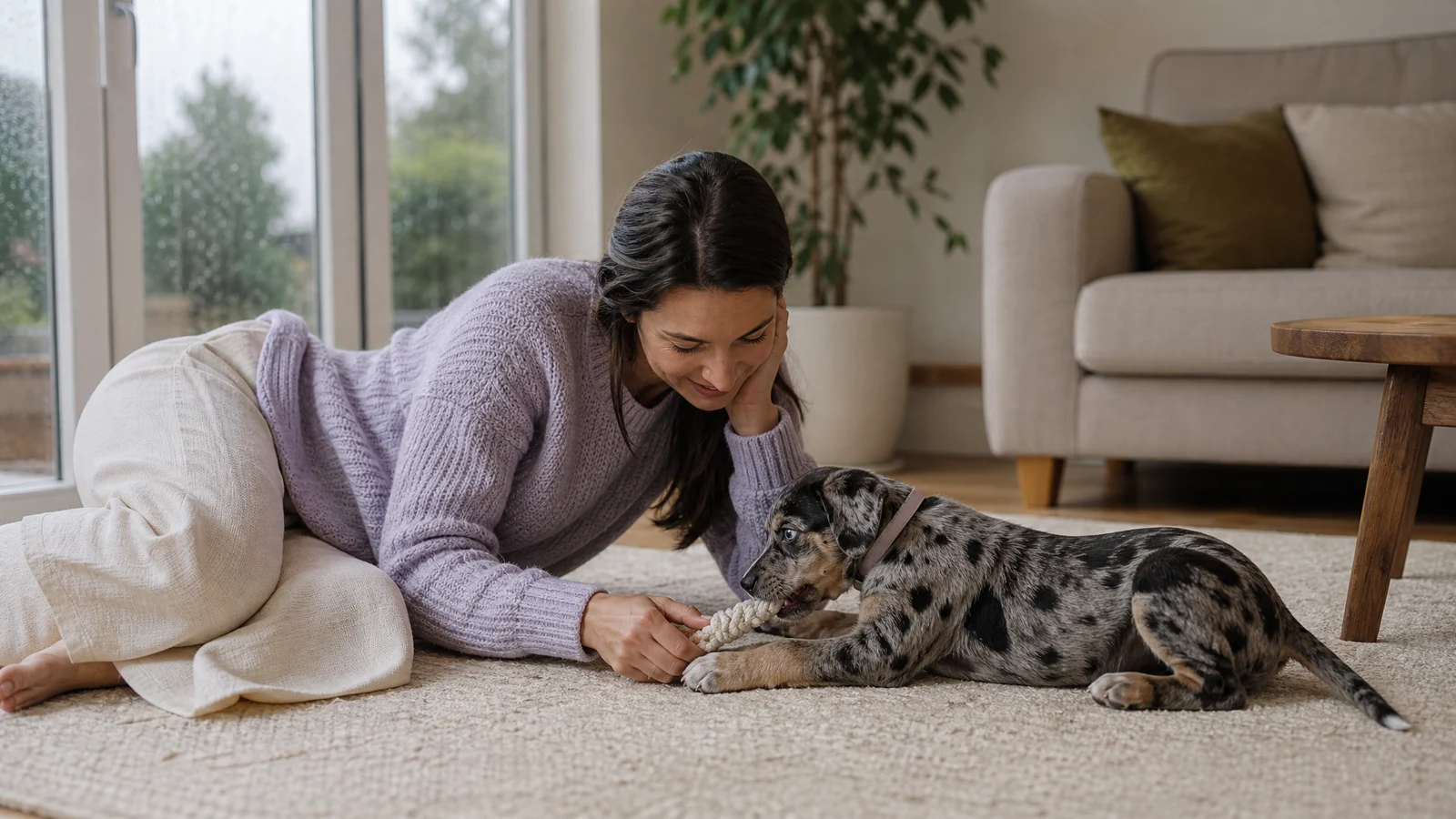
A Catahoula puppy whose jobs stay fun can be a keen worker at 10 months, while one who is drilled too hard and too early risks going sour or stubborn. The AKC advises keeping all jobs and exercises fun to avoid burnout at too early an age.
The difference matters in this breed. Done well, you get a loyal, clownish partner who can switch off at home. Done badly, you get a bored, busy dog who invents their own work. Catahoulas can work like adults at 10 months but are not fully mature until 2 years, so the plan has to protect the fun for a long stretch.
Read on for the stage-by-stage timeline, four household scenarios (a fourth-floor apartment, a home with toddlers, a second dog and a nine-hour workday), how to keep training fresh through adolescence, and one five-minute game to play today.
Puppy Training Milestones From Eight Weeks to Two Years
Start with socialization, because the window is short. Your puppy learns the most about the world between 3 and 14 weeks of age, and yours probably arrives at about 8 weeks, so the first days at home count. Everything else on this timeline is layered on top, a little at a time, with exercise growing slowly alongside the skills.
Here is the path in stages. Treat the ages as landmarks and not deadlines, since dogs vary.
| Stage | Skills to build | Exercise and play |
|---|---|---|
| 8 to 14 weeks | Name response, handling, crate and potty routine, calm meetings with people, sounds and surfaces | Short play, sniffing, lots of rest |
| After 14 weeks | Sit, down, come, leave it, settle on a mat | Free play on soft ground, sniffing walks, puzzle feeders |
| Adolescence | The same cues in new places, long-line recall, polite greetings | More outings, scent games, tricks |
| Around 10 months | Longer chains of cues, simple jobs | Games first, plenty of variety |
| Around a year and a half | Reliability around dogs and visitors, longer settles | Adult-style outings, built up slowly |
| By 2 years | Polish and maintenance | Regular exercise plus a job |
Work Readiness Versus Real Maturity
Catahoulas may work like adults at the early age of 10 months, and that is where well-meaning owners get into trouble. A puppy who can do a job is not a dog who has finished growing, since full maturity doesn't arrive until 2 years. Make every job a game and stop while your puppy still wants another round, and you will still have an eager worker at 2 years.
Keep exercise gentle on a body that is still changing. Favor free play on soft ground, sniffing walks and short training games, and hold off on long runs, repetitive jumping and hard surfaces. Keep regular vet visits going through puppyhood, and ask your veterinarian how much exercise suits each age.
Early Work Is a Foundation
We specialize in this breed's behavior, and the pattern we would stress is that early socialization does not guarantee an easygoing adult. Some Catahoulas stay reactive to other dogs and visitors despite excellent early exposure, and territorial behavior toward people near the home can appear months after a dog seems settled. That is no failure on your part. It means the foundation needs upkeep.
Our guide to reward-based Catahoula training covers the cues themselves. The case files below show how the same timeline bends to fit four different households.
A Fourth-Floor Apartment With a Catahoula Leopard Dog Puppy
An apartment is the case that worries owners most, and the worry is fair. This breed needs room to spend a great deal of energy and always wants a job, so a fourth-floor apartment works only if you supply the space and the work yourself. Plenty of owners do, and the plan is simpler than it sounds.
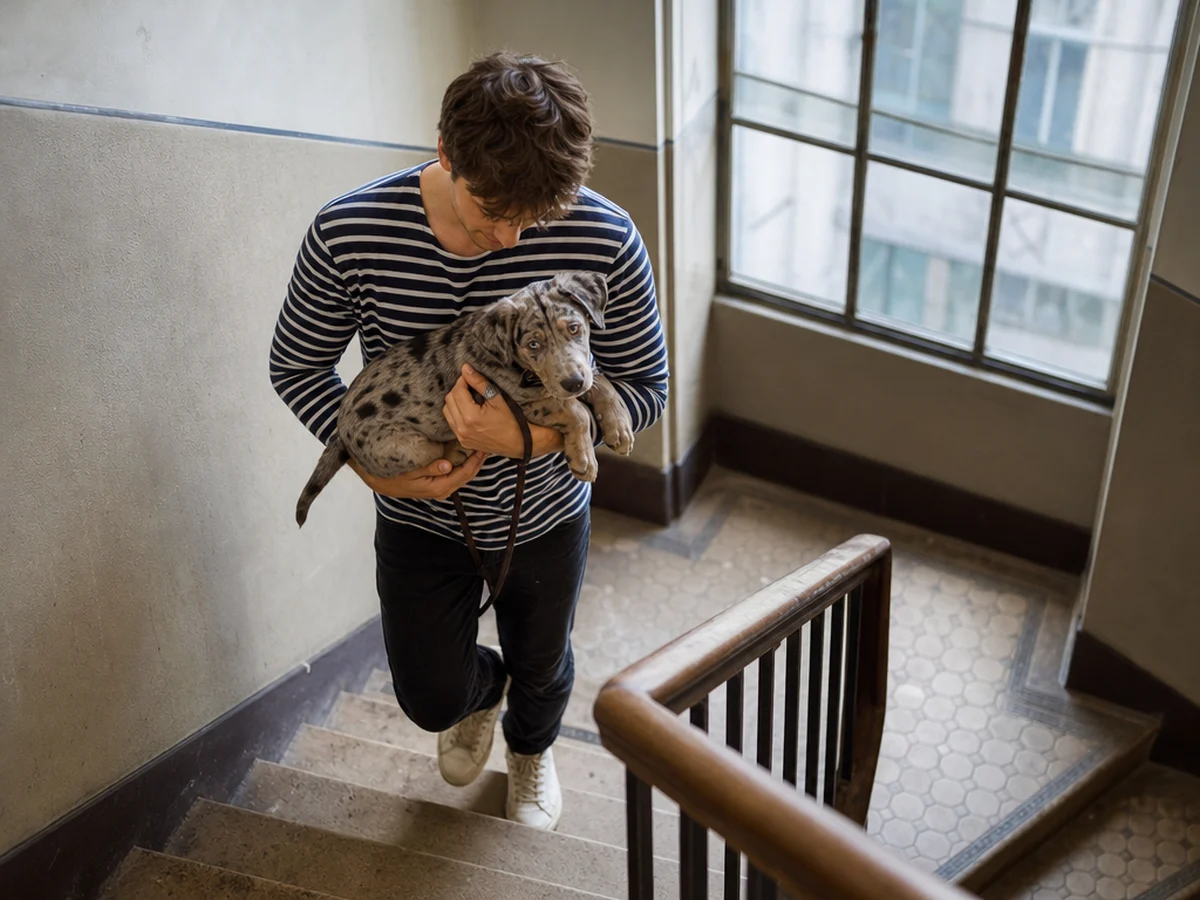
Start with the stairs and the potty trips. A young puppy has to go out often, so carry them down in the early weeks and let them walk as they grow, rather than treating flights of stairs as exercise. Some Catahoulas are exceptional jumpers and climbers, so respect a balcony railing too.
Noise is usually less of a problem than owners fear, because the breed is rated low for barking and tends to bark mostly to alert. The catch is the alerting. These are watchful dogs, so footsteps in the hallway can become a big event. Reward a quiet look toward the door and teach a settle on a mat before the sounds get exciting.
For energy, think short and busy indoors: food puzzles, a few cues before every meal, scent games and tricks. Pair them with real outings to open ground, but don't count on miles alone. Some Catahoulas stay wound up even after a long run, and the thinking games are what settle them. Keep watching after the honeymoon, too, because snarling and lunging at people near the building can emerge after a few months at home.
Toddlers and Catahoula Leopard Dog Puppy Training at Home
A home with young children is where this breed's wiring needs the most thought. Catahoulas are rated good with young children only with supervision, and they don't tolerate mistreatment, asserting themselves in self-defense. A toddler's grab at a tail or hug around the neck is exactly that kind of moment, so an adult needs to be within reach whenever the two are together.
Give the puppy and the kids separate rules. The puppy learns to sit for greetings, keep all paws on the floor and retreat to a mat. The kids learn no chasing, no hugging, no touching a puppy who is eating, chewing or resting, and tossing a treat instead of grabbing. A baby gate gives everyone a break, and both sides learn faster when the other is calm.
Early training is a foundation, not a guarantee, so keep expectations honest and keep managing as your puppy grows. If mouthing turns rough, stop play calmly for a few seconds, then redirect to a toy. For more, see our guide on socializing a Catahoula with kids, dogs and strangers.
Can a Second Dog Help or Hurt Puppy Training?
It can do both, depending on the dogs and how you run the day. A calm resident dog shows a puppy where to settle and what to do when the doorbell rings. A busy or reactive one teaches the puppy to bark at the window, and in a watchful breed that lesson sticks.
So plan one-on-one time. Teach new skills to each dog alone, with the other behind a gate or in another room, and feed and hand out chews apart. Practice together only on skills that are already solid, with treats handed to each dog separately. Breed ratings put Catahoulas at good with other dogs only with supervision, so keep an eye on play.
Common advice says a playmate will wear out a busy puppy. Sometimes it does, but a playmate doesn't supply the mental work this breed wants, and it can't promise a dog who stays friendly. A Catahoula who loved dogs as a puppy may turn choosy or intolerant of most of them around adolescence or early adulthood.
Expect that shift instead of treating it as a failure. Some owners report growling when other dogs approach to play, and occasionally a nip. Give a choosy dog more distance, skip crowded dog parks and keep rewarding calm.
How Does Puppy Training Work With a Nine-Hour Workday?
A young puppy cannot be on their own for a full workday, so the first step is a midday break from a friend, a walker or daycare. That one change makes house training, chewing and loneliness all easier to solve. After that, the job is spreading exercise, enrichment and training across the hours you do have.
Exercise alone isn't the answer, and it is the advice we would push back on hardest. Exercise alone often doesn't settle a Catahoula, and long crated stretches can add to acting out, even when the dog gets a daily run or hike. Mental work and time out of the crate matter as much as the miles. A break such as daycare can also leave a puppy rested on the other days.
Splitting the Day
In the morning, give a sniffing walk and one quick training game before you leave. At midday, the break should include a potty trip and a food puzzle. In the evening, play, practice a few cues before dinner and finish with a calm settle on the mat. After many years with this breed, we know a steady order makes the day predictable, and a predictable day is easier for a puppy to settle into.
When Chewing Means More Than Boredom
Without enough exercise and attention, Catahoulas dig holes and chew things. But chewing that happens only when alone, alongside whining, barking, pacing or house soiling, points toward separation anxiety. Talk with your veterinarian or a behavior professional if you see that pattern.
Keeping Training Fun for a Maturing Catahoula Leopard Dog
All four households arrive at the same place: adolescence. Cues your puppy knew well may seem to vanish, and recall slips around distractions. That is a phase and not a failure. Go back a step, pay more generously and use a long line so ignoring you never becomes a habit. During adolescence, add outings and mental work as well as rules.
Variety keeps a thinking breed keen. The temperament runs from serious and business-like at work to clownish at home, so give both sides a turn: a short serious task, then a silly game. Rotate places, rewards and cues, and lean on tricks, scent trails and find-the-treat games.
Space helps but doesn't fix everything. More space and quiet can ease anxiety in some dogs, but territorial habits near the property may need continued management. Energy often stays high for years, so plan enrichment for the long haul. Our piece on what independence means explains why patience pays off.
Today's Five-Minute Puppy Training Game
A Catahoula is a working breed that stays young for two years, needs early and gentle exposure, and does best when the work feels like play. Every case above comes back to that. Keep sessions fun, pair the miles with mental work, and expect the teenage and adult shifts without fearing them.
So start today with one small game. Choose a cue your puppy already knows, such as sit or their name, and run it as a five-minute session:
- Pick a quiet spot indoors and have tiny, soft treats ready.
- Give the cue a single time. The instant your puppy responds, say your marker word and follow it right away with a treat from your hand.
- After a few rounds, toss a treat away so your puppy can chase it, then ask for the cue again.
- Add one small twist, like asking from a different spot in the room.
- Stop at five minutes while your puppy still wants more, and finish with a game they love.
That is the whole assignment. Tomorrow you can repeat it with another cue, and the timeline takes care of itself one happy session at a time.
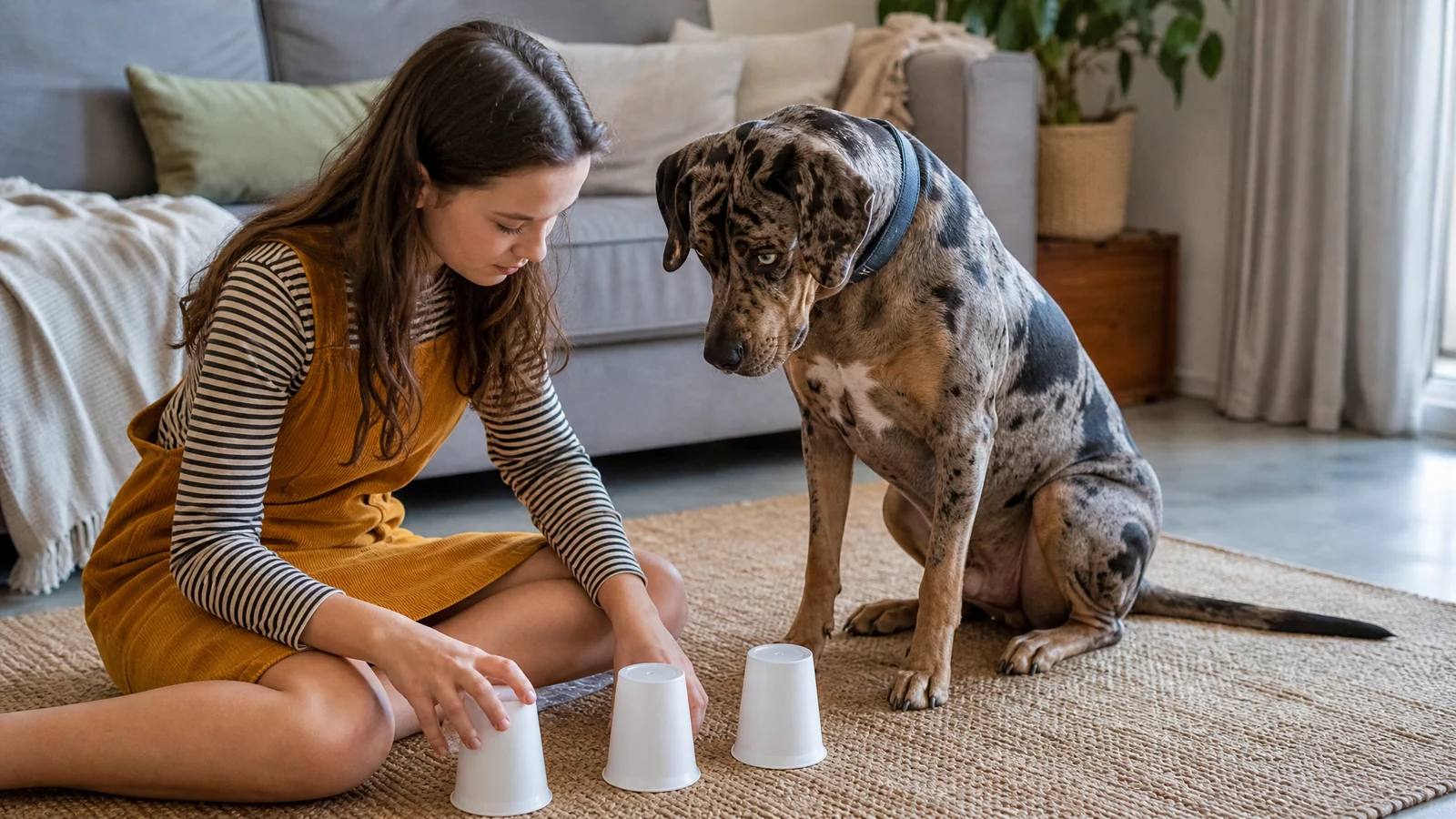 Exercise and jobsWhat Jobs Can a Catahoula Leopard Dog Do? Sports and Working Roles
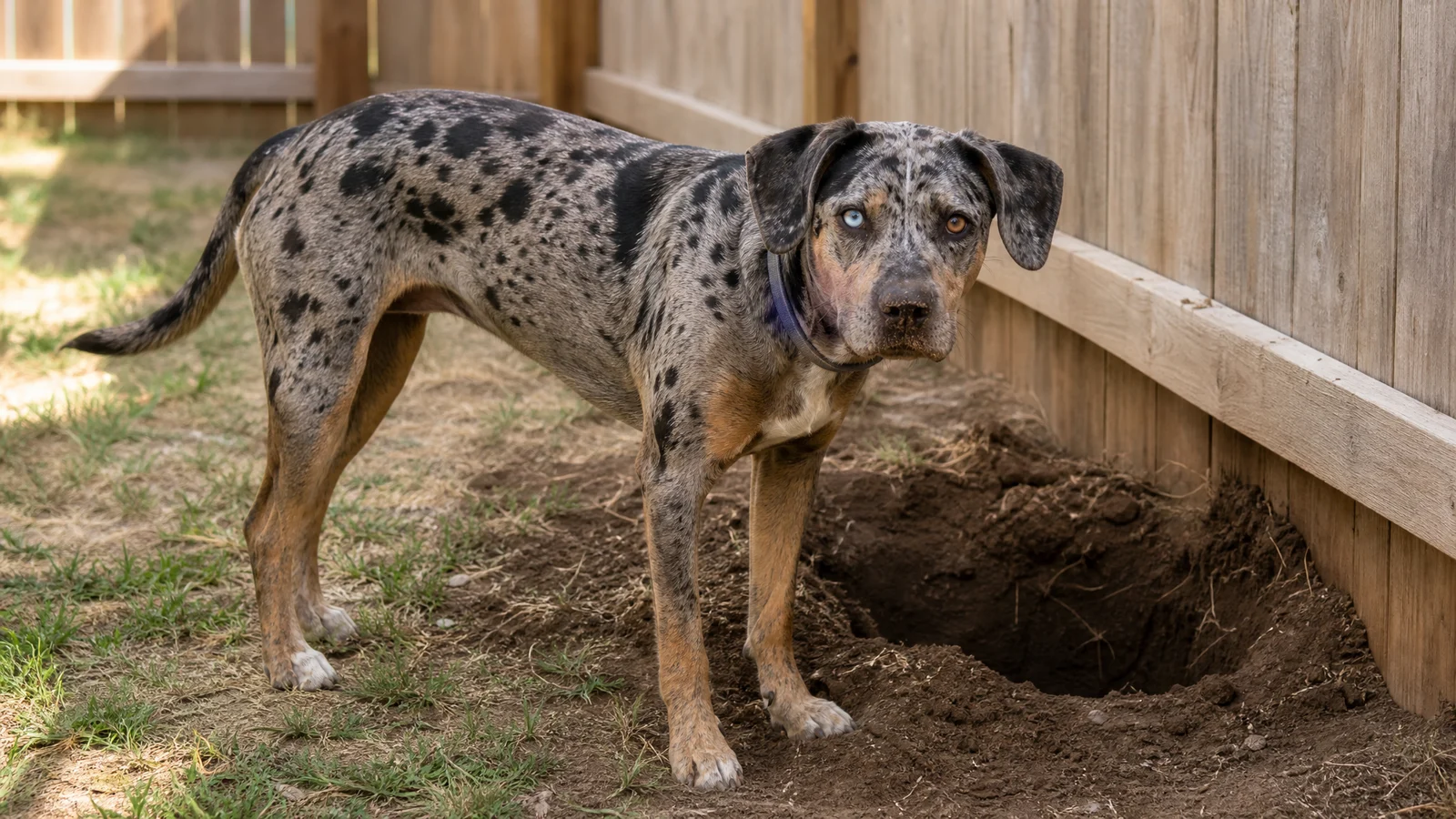 BehaviorCommon Catahoula Behavior Problems and the Instinct Behind Each
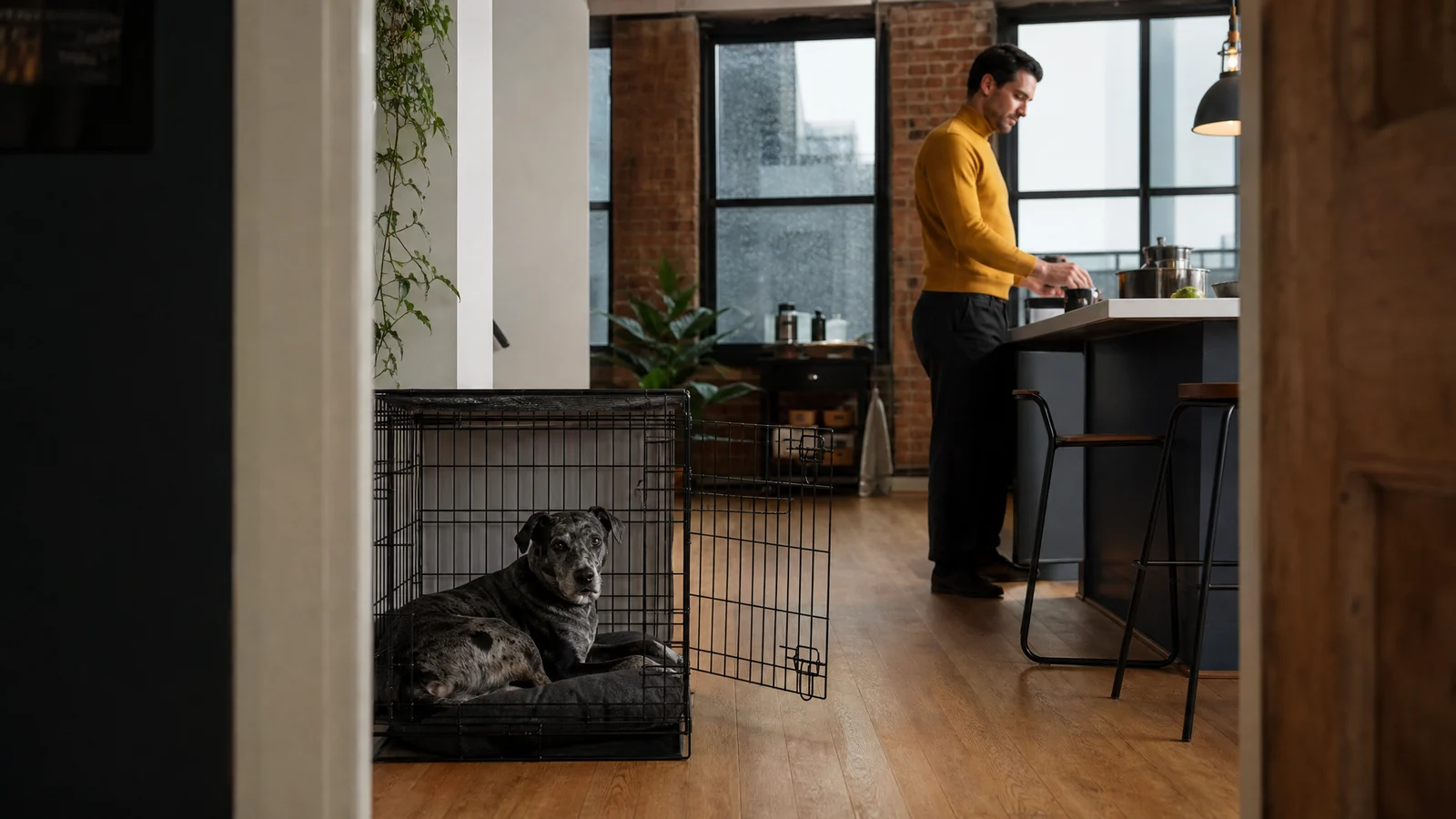 Training basicsCrate Training a Catahoula and Preventing Separation Anxiety